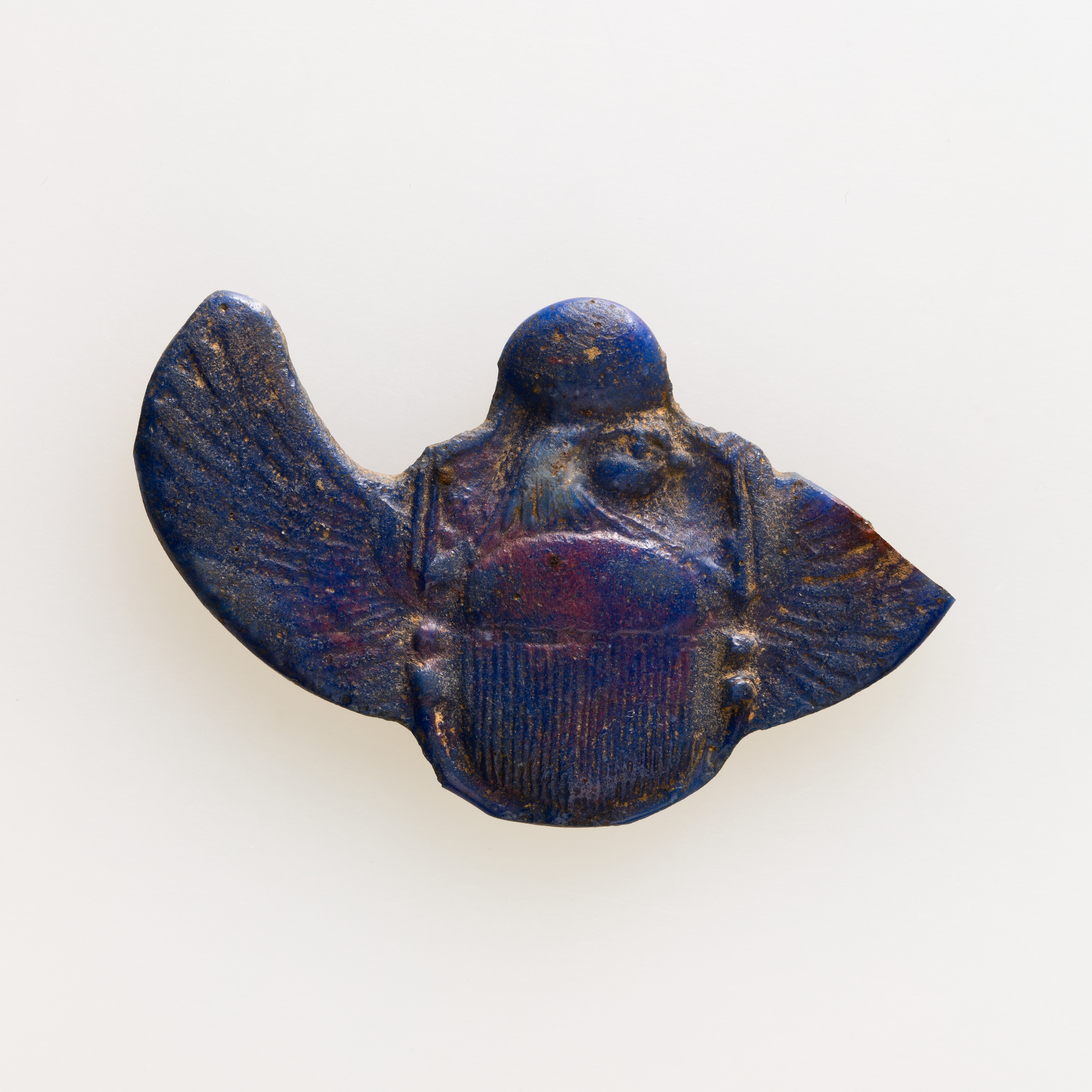
Heritage Analysis: The Winged Scarab with Falcon Head Amulet
The amulet of the winged scarab with a falcon head represents a singular convergence of protective symbolism, divine authority, and regenerative power within the ancient civilizations of the Nile Valley. Crafted from glass—a material that itself held profound spiritual and technological significance—this artifact embodies the highest expressions of ancient luxury, ritual adornment, and cosmological belief. For Katherine Fashion Lab, this object offers a strategic template for translating esoteric heritage into a 2026 high-end luxury narrative that resonates with contemporary desires for meaning, protection, and transcendent identity.
Symbolic Power: The Fusion of Solar and Celestial Authority
The scarab beetle (Scarabaeus sacer) was one of the most potent symbols in ancient Egyptian cosmology, representing the sun god Khepri, who rolled the solar disk across the sky each day. The scarab thus embodied creation, resurrection, and the eternal cycle of life, death, and rebirth. When combined with wings, the scarab’s protective and regenerative qualities were amplified, signifying not only earthly renewal but also celestial transcendence and the ability to traverse the liminal spaces between worlds.
The addition of a falcon head introduces a second layer of divine symbolism. The falcon was the sacred animal of Horus, the sky god and protector of pharaohs, whose eyes were the sun and moon. The falcon head thus imbues the amulet with royal authority, vigilant guardianship, and solar kingship. This hybrid creature—part scarab, part falcon—becomes a composite deity, merging the forces of creation and protection with the sovereignty of the heavens. For the wearer, the amulet was not merely decorative; it was a talisman that actively channeled the combined powers of Khepri and Horus, ensuring spiritual protection, physical vitality, and cosmic favor.
Historical Adornment: Glass as a Medium of Prestige and Transformation
In ancient Egypt, glass was a luxury material reserved for the elite, often associated with the divine and the eternal. The production of glass amulets required advanced technical knowledge and access to rare raw materials, including silica, soda, lime, and metallic oxides for color. The deep blues, greens, and golds achieved through these processes were not only aesthetically striking but also symbolically charged. Blue and green were colors of regeneration, water, and the Nile’s life-giving floods; gold represented the flesh of the gods and the imperishable sun.
Historical evidence from sites such as Amarna and Thebes indicates that glass amulets were worn by royalty and high-ranking officials as part of their daily adornment, as well as placed within mummy wrappings to protect the deceased in the afterlife. The winged scarab with falcon head would have been particularly prized for its ability to guard the wearer’s soul during the perilous journey through the underworld. The amulet’s placement on the chest, near the heart, reinforced its function as a protective seal over the seat of life and consciousness.
From a strategic standpoint, the choice of glass as the medium is significant. Unlike stone or metal, glass is both fragile and transformative—it is born from fire and sand, and it can be shaped into forms that mimic precious gems. This duality of vulnerability and metamorphosis aligns with the contemporary luxury consumer’s appreciation for materials that tell a story of alchemy, rarity, and artisanal mastery.
Spiritual Meaning: The Amulet as a Channel for Cosmic Protection
The spiritual function of the winged scarab with falcon head amulet extends beyond mere symbolism. In ancient Egyptian theology, amulets were understood as active agents of protection, not passive ornaments. They were consecrated through ritual, inscribed with spells, and charged with the energy of the gods they represented. The hybrid form of this amulet suggests a specialized spiritual purpose: to grant the wearer the regenerative power of the scarab and the vigilant, all-seeing protection of the falcon.
This amulet likely served as a “soul guardian” during life and death, ensuring that the wearer’s spirit remained intact and protected from malevolent forces. The wings imply the ability to ascend, to escape the confines of the physical world, and to achieve spiritual liberation. For the ancient elite, wearing such an amulet was an assertion of one’s divine lineage and a declaration of immortality.
In the context of 2026 high-end luxury, this spiritual dimension offers a powerful narrative. Modern consumers, particularly those in the luxury segment, are increasingly seeking objects that provide a sense of grounding, protection, and transcendence in a fragmented world. The amulet’s role as a spiritual conduit can be reimagined as a luxury accessory that offers not only aesthetic pleasure but also psychological and emotional security—a talisman for the contemporary soul.
2026 High-End Luxury Strategy: Translating Heritage into Modern Desire
For Katherine Fashion Lab, the winged scarab with falcon head amulet presents a blueprint for creating a 2026 luxury collection that is both historically informed and forward-looking. The following strategic pillars emerge from this heritage analysis:
1. Narrative of Transformation and Protection: The core story of the amulet—transformation through fire (glassmaking), protection through divine hybridity, and transcendence through wings—can be woven into a brand narrative that positions Katherine Fashion Lab as a guardian of heritage and a creator of talismanic luxury. Each piece in the collection should be presented not merely as jewelry, but as a modern amulet with a specific protective or empowering intention.
2. Material Storytelling: The use of glass as the primary medium should be elevated to a signature. Katherine Fashion Lab can collaborate with master glass artisans to produce limited-edition pieces that replicate the ancient techniques of core-forming and mosaic glass. The colors—deep lapis, emerald, and gold—should be trademarked as “Katherine Nile” hues, linking the brand directly to the historical palette of divine luxury.
3. Hybrid Symbolism as Brand Identity: The fusion of the scarab and falcon can be developed into a brand emblem—a “Katherine Hybrid” motif that represents the merging of tradition and innovation, protection and aspiration. This symbol can appear on packaging, digital assets, and exclusive membership cards, creating a cohesive visual language that speaks to the brand’s commitment to meaningful design.
4. Experiential Retail and Ritual: The spiritual dimension of the amulet can be activated through experiential retail. Katherine Fashion Lab boutiques could offer a “Consecration Ceremony” for each purchase, where the client’s chosen piece is blessed or charged with a personalized intention. This ritualistic approach elevates the transaction into a transformative experience, aligning with the luxury consumer’s desire for authenticity and emotional resonance.
5. Limited-Edition Heritage Capsule: A dedicated “Winged Guardian” capsule collection, released in 2026, could include pendants, brooches, and cufflinks that reinterpret the amulet’s form for modern wear. Each piece would come with a research card detailing its historical symbolism, material provenance, and spiritual meaning—turning the purchase into an acquisition of knowledge and power.
6. Digital and Metaverse Integration: For the 2026 luxury consumer, digital presence is paramount. Katherine Fashion Lab can create a virtual experience where clients explore the amulet’s journey from ancient ritual to contemporary luxury, including an augmented reality feature that allows them to “activate” the amulet’s protective properties through their smartphone. This bridges the gap between historical reverence and technological fluency.
Conclusion
The winged scarab with falcon head amulet is far more than an artifact of ancient craftsmanship; it is a repository of symbolic power, historical prestige, and spiritual depth. For Katherine Fashion Lab, this object offers a strategic foundation upon which to build a 2026 luxury narrative that is both intellectually rigorous and emotionally compelling. By honoring the amulet’s heritage while reimagining its form and function for the modern world, the brand can position itself at the intersection of history, art, and desire—offering clients not just adornment, but a connection to the eternal forces that have always defined true luxury.