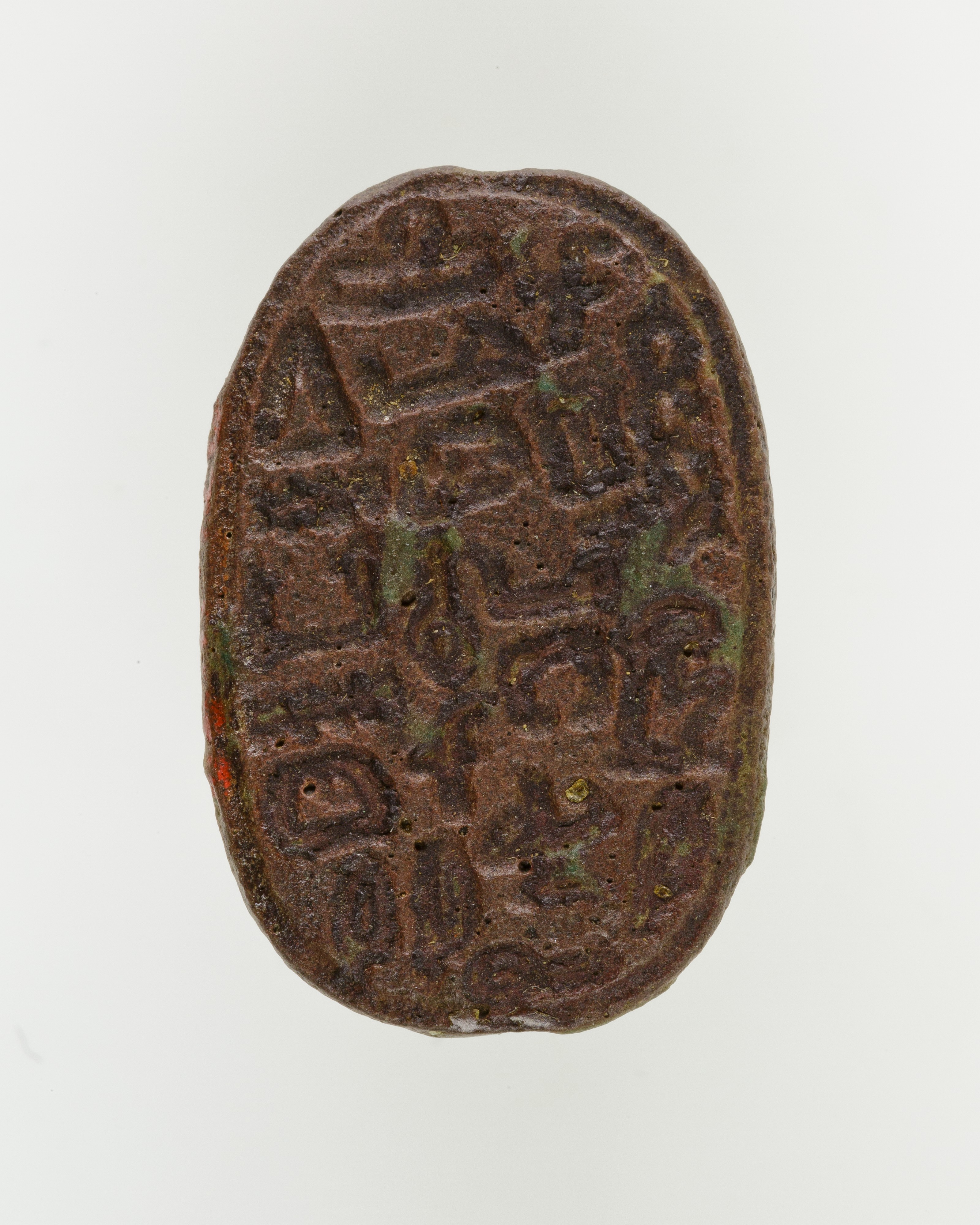
Heritage Analysis: The Scarab of an Official
The Scarab of an Official, rendered in green faience from an ancient civilization, represents a confluence of symbolic power, historical adornment, and spiritual meaning that transcends its original context. As a Lead Heritage Curator for Katherine Fashion Lab, this analysis examines the artifact through the lens of strategic standalone research, focusing on its potential to inform a 2026 high-end luxury strategy. The scarab, a ubiquitous symbol in ancient Egyptian culture, was not merely an ornamental object but a talisman imbued with metaphysical significance, particularly for officials who wielded administrative and ritual authority. Its medium—green faience—further amplifies its resonance, as this material was associated with rebirth, fertility, and the regenerative powers of the Nile. By deconstructing the scarab’s layered meanings, we can extract actionable insights for positioning Katherine Fashion Lab as a purveyor of heritage-inspired luxury that merges historical depth with contemporary exclusivity.
Symbolic Power: The Scarab as an Emblem of Authority and Transformation
The scarab beetle, derived from the Egyptian term kheper, meaning “to come into being” or “to transform,” was a potent symbol of the sun god Khepri, who rolled the sun across the sky each day. For an official—likely a scribe, priest, or high-ranking administrator—the scarab served as a visual declaration of their role as an intermediary between divine order and earthly governance. The beetle’s behavior of rolling dung balls, which contained its eggs, was analogized to the sun’s cyclical journey, representing creation, renewal, and the eternal cycle of life, death, and rebirth. In the context of an official’s seal or amulet, the scarab conferred the power to authenticate documents, enact decrees, and channel divine will. This symbolic power is directly applicable to high-end luxury branding, where authority and transformation are core values. For Katherine Fashion Lab, the scarab motif can be repositioned as a symbol of brand authority—a mark of exclusivity that signals the wearer’s discernment and connection to timeless narratives. By integrating the scarab into limited-edition collections, the lab can evoke a sense of transformative luxury, where each piece becomes a talisman for personal evolution and status elevation.
Historical Adornment: The Official’s Scarab as a Functional Ornament
Historical adornment in ancient civilizations was never purely decorative; it was a sophisticated language of social hierarchy, occupation, and spiritual allegiance. The Scarab of an Official was typically worn as a ring, pendant, or brooch, often mounted on a gold or silver base, and inscribed with the owner’s name, title, or a protective spell. The green faience medium—a glazed non-clay ceramic—was meticulously crafted to mimic the color of malachite, a stone associated with the heart and resurrection. For an official, the scarab was both a practical seal and a personal amulet, worn daily to ensure divine favor in administrative duties. This dual function—utility and symbolism—offers a blueprint for modern luxury adornment. In 2026, Katherine Fashion Lab can leverage this historical precedent by designing pieces that are not only visually striking but also purpose-driven. For example, a scarab-inspired cufflink or necklace could incorporate a hidden compartment for a personal inscription, blending ancient functionality with contemporary craftsmanship. The use of green faience as a primary material, reimagined through sustainable and artisanal techniques, would honor the original medium while appealing to eco-conscious luxury consumers. This approach elevates adornment from mere accessory to a narrative artifact, where each piece tells a story of heritage and intention.
Spiritual Meaning: The Scarab as a Conduit for Eternal Protection
The spiritual meaning of the Scarab of an Official is deeply rooted in its role as a protective amulet. In ancient Egyptian belief, the scarab guarded the heart during the weighing of the soul ceremony, ensuring the deceased’s passage to the afterlife. For the living, it warded off evil, brought good fortune, and reinforced the wearer’s connection to the divine. The green faience material amplified this spiritual function, as green was the color of vegetation, growth, and the heart—the seat of emotion and intellect. The scarab thus became a talisman of spiritual resilience, offering both physical and metaphysical protection. For Katherine Fashion Lab, this spiritual dimension can be harnessed to create a luxury experience that transcends materialism. In a 2026 market increasingly driven by mindfulness and intentionality, the scarab can be positioned as a wellness-centric symbol. Limited-edition scarab pieces could be accompanied by a narrative card explaining their protective origins, or even integrated into a collection that emphasizes “armor for the soul.” This aligns with the growing demand for luxury that offers emotional and spiritual value, not just aesthetic appeal. By framing the scarab as a conduit for eternal protection, Katherine Fashion Lab can differentiate its offerings in a saturated market, appealing to clients who seek depth and meaning in their acquisitions.
2026 High-End Luxury Strategy: From Ancient Artifact to Modern Icon
To translate the Scarab of an Official into a 2026 high-end luxury strategy, Katherine Fashion Lab must adopt a multi-faceted approach that balances heritage authenticity with contemporary innovation. The following strategic pillars are recommended:
1. Heritage-Driven Exclusivity: The scarab’s association with officialdom and authority positions it as a symbol of elite status. Katherine Fashion Lab can launch a “Scarab Collection” that is strictly limited to 100 pieces per design, each numbered and accompanied by a certificate of authenticity detailing its historical inspiration. This scarcity creates a collector’s market, where the scarab becomes an investment piece rather than a transient fashion item. Pricing should reflect this exclusivity, targeting ultra-high-net-worth individuals who value provenance and rarity.
2. Material Innovation with Historical Fidelity: The green faience medium can be reimagined using modern materials such as recycled glass, bio-ceramics, or lab-grown gemstones that mimic its iridescent finish. Collaborations with master ceramicists or heritage artisans from regions with faience traditions (e.g., Egypt, the Levant) would add a layer of cultural authenticity. This not only honors the original craft but also positions the lab as a champion of artisanal luxury, appealing to clients who prioritize sustainability and cultural preservation.
3. Narrative-Driven Marketing: The spiritual meaning of the scarab—protection, transformation, and eternal renewal—offers a rich storytelling platform. Katherine Fashion Lab can develop a marketing campaign titled “The Talisman of Power,” featuring short films or immersive digital experiences that trace the scarab’s journey from ancient seal to modern adornment. Each piece could be paired with a personalized ritual, such as a guided meditation or a digital “activation” that unlocks a virtual space for the wearer. This experiential luxury resonates with 2026 consumers who seek connection and meaning, not just products.
4. Strategic Collaborations: Partnering with museums (e.g., the Egyptian Museum in Cairo) or academic institutions specializing in Egyptology would lend credibility and exclusivity. A co-branded exhibition or limited-edition release tied to a major archaeological discovery could generate global buzz. For example, a “Scarab of the Official” capsule could coincide with a traveling exhibition on ancient administrative artifacts, positioning Katherine Fashion Lab as a cultural curator rather than merely a fashion brand.
5. Digital Integration for Modern Adornment: The scarab’s function as a seal can be modernized through digital technology. Consider a scarab-embedded smart ring that unlocks a private app or blockchain-based authentication for luxury goods. This phygital approach merges historical symbolism with 2026 tech-savvy luxury, appealing to younger, affluent demographics who value both tradition and innovation.
Conclusion: A Legacy of Power and Prestige
The Scarab of an Official, in its green faience splendor, is far more than a relic of an ancient civilization—it is a strategic blueprint for high-end luxury in 2026. Its symbolic power as an emblem of authority, its historical context as a functional adornment, and its spiritual meaning as a protective talisman offer Katherine Fashion Lab a rich tapestry of narratives to draw upon. By executing a strategy that prioritizes heritage-driven exclusivity, material innovation, narrative marketing, strategic collaborations, and digital integration, the lab can transform this artifact into a modern icon of luxury. The scarab’s enduring resonance lies in its ability to connect the wearer to a lineage of power, transformation, and eternal renewal—values that remain timelessly relevant. For Katherine Fashion Lab, this analysis confirms that the scarab is not merely a design motif but a strategic asset for building a brand that commands authority, inspires transformation, and offers spiritual depth in an increasingly commodified luxury landscape.