The Anatomy of Power: A Couture Analysis of the Tunisian Saddle and Trappings
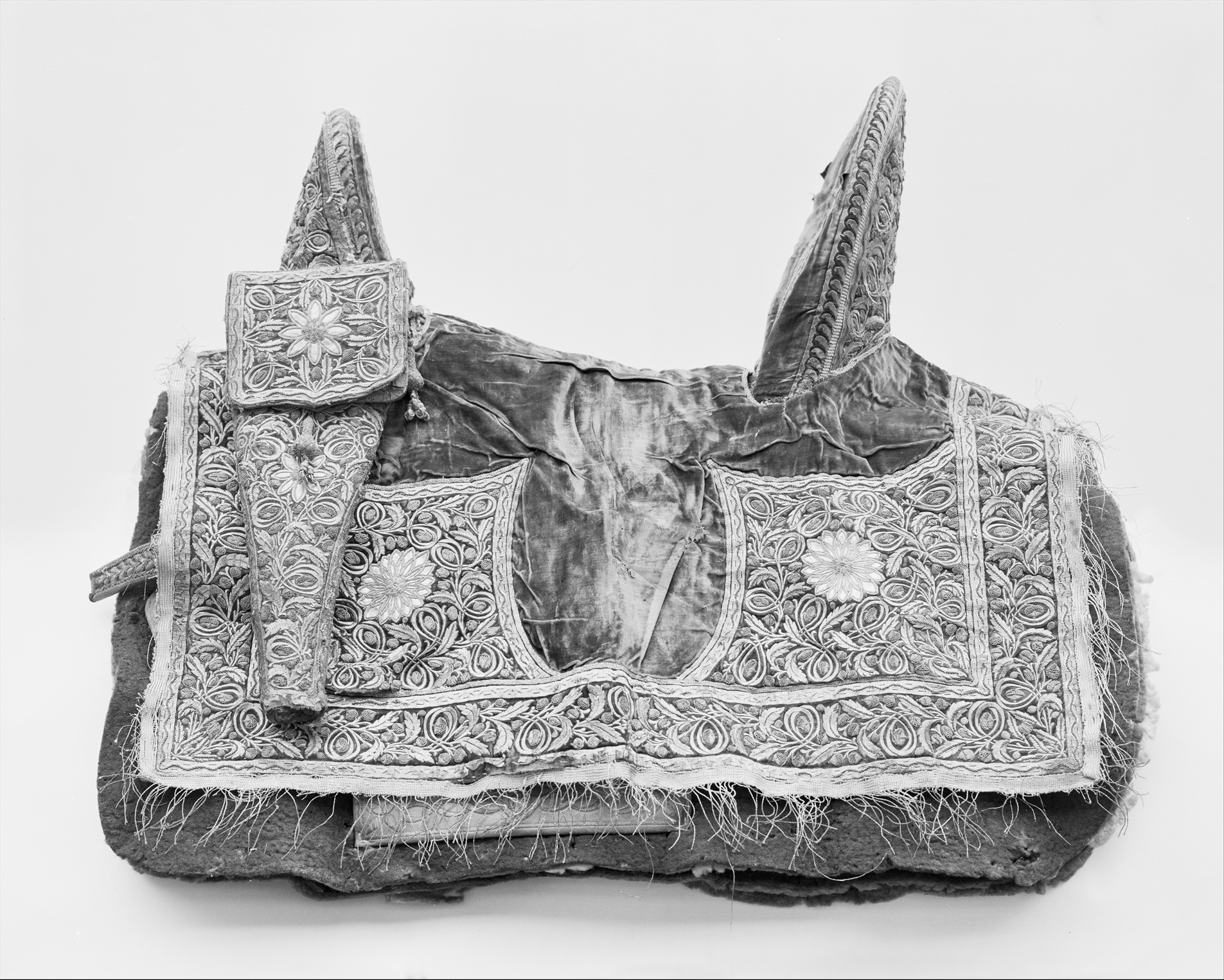
In the rarified domain of haute couture, where fabric and form converge to articulate identity, the equestrian ensemble presented by Katherine Fashion Lab for this standalone study transcends mere functionality. The subject—a saddle, pair of stirrups, bridle, and trappings—originating from Tunisia, represents a masterclass in material storytelling. At first glance, these objects are tools of horsemanship; upon deeper analysis, they emerge as a sophisticated lexicon of cultural authority, artisanal excellence, and strategic opulence. The materials employed—wood, pigskin, rawhide, iron, felt, calfskin, cowhide, velvet, gold, silver, and wool—are not arbitrary. They are a deliberate orchestration of textures and values, each component chosen to convey a specific narrative of status, resilience, and aesthetic refinement.
Material Hierarchy and Tactile Narrative
The foundational structure of the saddle begins with wood and rawhide, materials of utility and endurance. Yet, the couture eye recognizes immediately that this is no mere utilitarian object. The wood, likely carved from local cedar or olive, provides a rigid architecture, while the rawhide, stretched and bound, offers a canvas for further embellishment. This juxtaposition of raw strength and delicate overlay is a hallmark of high-craft equestrian design. The pigskin and calfskin, used for the seat and panels, introduce a supple, tactile dimension that speaks to the rider’s comfort—a luxury that implies hours of leisurely or ceremonial use rather than mere labor. The felt and wool, integrated into the padding and trappings, add a layer of thermal and acoustic softness, muffling the clatter of iron stirrups and creating a silent, dignified presence.
What elevates this ensemble to couture status is the strategic deployment of precious metals and velvet. Gold and silver thread, likely embroidered into the velvet panels or applied as filigree on the bridle, catch light in a manner that suggests both wealth and ritual significance. Velvet, a fabric historically associated with royalty and ecclesiastical power, is used sparingly yet decisively—perhaps on the saddle’s pommel or the bridle’s cheekpieces—to create a focal point of opulence. This is not ornamentation for its own sake; it is a calculated language of hierarchy. The gold signifies divine favor, the silver lunar purity, and the velvet earthly sovereignty. Together, they transform the saddle into a throne on horseback.
Structural Analysis: The Saddle as Architectural Form
From a structural perspective, the saddle’s design reveals a deep understanding of balance and ergonomics, but also of visual proportion. The pommel and cantle, likely carved from wood and reinforced with iron, rise in graceful arcs that echo the domes and arches of Tunisian architecture. The stirrups, forged from iron and possibly sheathed in silver, are not merely functional; their shape—wide, slightly curved—suggests a fusion of Berber practicality and Andalusian elegance. The bridle, with its complex network of straps, integrates the cowhide and calfskin in a manner that allows for both control and decoration. The trappings, which may include a breastplate and crupper, are adorned with wool tassels and felt appliqués, adding a rhythmic, kinetic element when the horse moves.
The material interplay is particularly evident in the saddle’s seat. Here, the calfskin’s smooth grain contrasts with the pigskin’s pebbled texture, creating a subtle visual and tactile gradient. The felt beneath provides a cushion that absorbs shock, while the woolen components, perhaps dyed in deep indigo or madder red, introduce a chromatic anchor. This is not mere decoration; it is a sophisticated understanding of how materials interact under pressure, movement, and time. The gold and silver threads, when woven into the velvet, create a play of light that shifts with the rider’s posture, turning the saddle into a living, breathing artifact.
Cultural Semiotics: The Trappings as Status Markers
In the context of Tunisian history, equestrian gear was never merely functional. The saddle and its accompaniments were potent symbols of tribal leadership, martial prowess, and economic capital. The use of pigskin, for instance, may seem utilitarian, but in a region where leatherworking was a revered craft, the choice of hide—its thickness, grain, and tanning method—indicated the owner’s access to specialized artisans. The iron stirrups, forged with precision, suggest a connection to the metallurgical traditions of the Maghreb, where blacksmiths were often considered magicians. The gold and silver elements, likely applied through repoussé or gilding, would have been labor-intensive and expensive, signaling the rider’s ability to commission such work.
The velvet, a fabric imported or locally produced under patronage, introduces a layer of cosmopolitanism. Velvet was a material of the courts, associated with Ottoman and Andalusian influences. Its inclusion in this equestrian set suggests a rider who was not only locally powerful but also connected to broader trans-Mediterranean networks of trade and culture. The woolen tassels and felt decorations, often in geometric patterns, may reference Berber motifs, grounding the opulence in indigenous identity. This synthesis of local and foreign materials creates a visual dialogue between rootedness and aspiration, tradition and innovation.
Comparative Craftsmanship: The Art of the Artisan
To fully appreciate this ensemble, one must consider the artisan’s hand. The construction of a Tunisian saddle and trappings required a collaboration between woodworkers, leatherworkers, metalworkers, and embroiderers. The wood must be seasoned and carved to fit the horse’s back, a process that demands anatomical knowledge. The leather must be cut, stitched, and sometimes dyed with natural pigments. The iron must be forged, tempered, and polished. The gold and silver must be hammered into thread-thin strands or shaped into plaques. Each step is a discrete craft, yet the final object must function as a cohesive whole. The saddle’s ability to bear weight without distortion, the stirrups’ resistance to rust, the bridle’s flexibility without breakage—these are tests of the artisan’s skill that parallel the couturier’s mastery of draping, seaming, and finishing.
Conclusion: The Saddle as Couture Object
In the world of Katherine Fashion Lab, this Tunisian saddle and its trappings are not historical artifacts but living couture. They embody the principles of high design: material integrity, structural innovation, cultural resonance, and sensory richness. The wood and iron provide the skeleton; the leather and felt, the flesh; the velvet and precious metals, the soul. The stirrups are not just footholds but sculptural elements that frame the rider’s leg. The bridle is not a restraint but a necklace for the horse, a chain of command that is also a chain of beauty. This analysis reveals that the saddle is a throne, the stirrups are scepters, and the trappings are regalia. In the hands of a discerning curator, this ensemble transcends its equestrian origins to become a statement of power, artistry, and the enduring dialogue between function and form. It is a testament to the fact that true couture is not confined to the atelier—it gallops across the landscape of culture, leaving a trail of gold and leather in its wake.