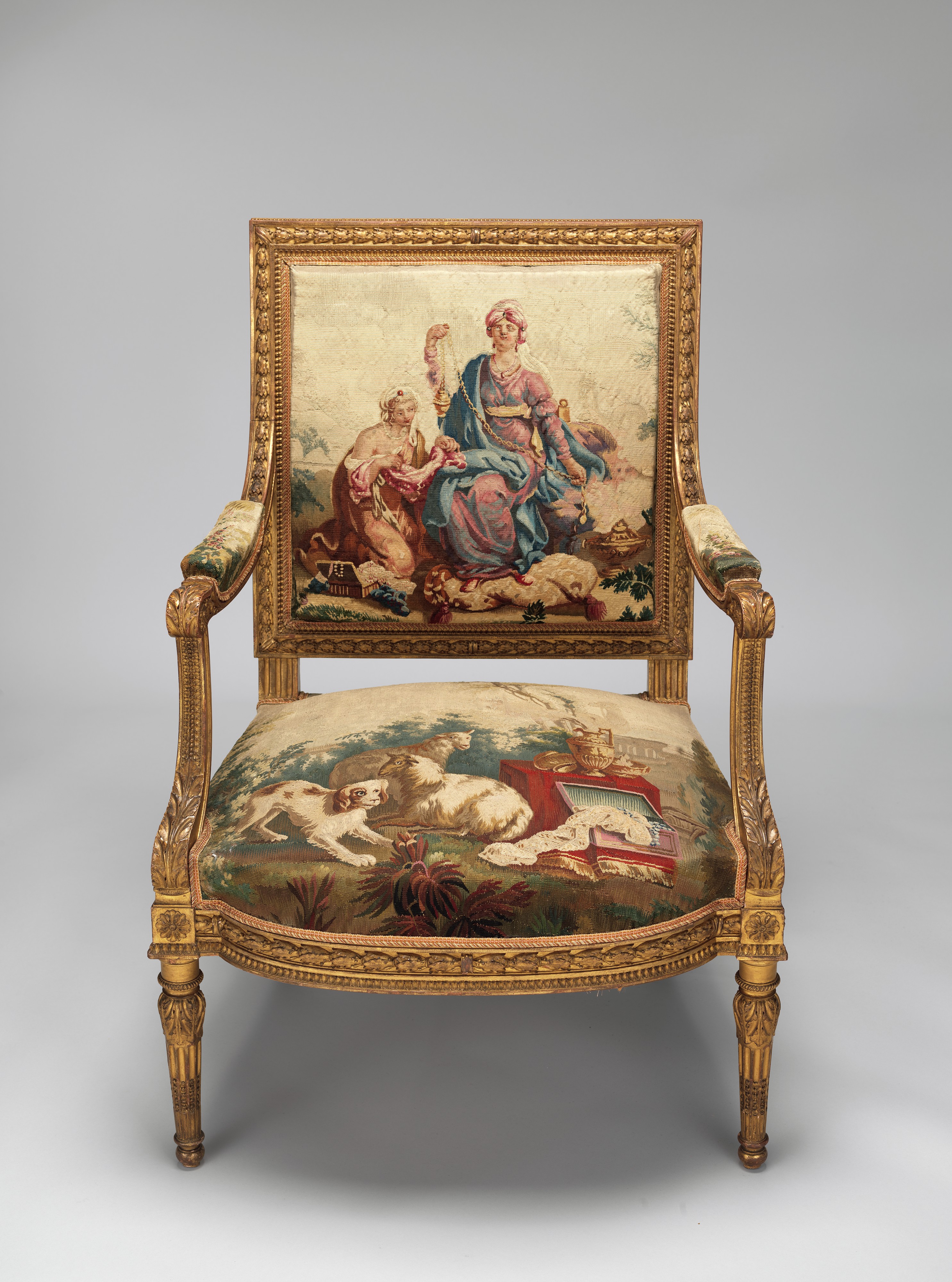
Heritage Analysis: The Armchair as a Symbol of Sovereign Authority and Spiritual Consecration in Ancient Civilization
In the pantheon of material culture, few objects possess the dual capacity for functional utility and profound symbolic resonance as the armchair. Within the context of Katherine Fashion Lab’s strategic research for 2026 high-end luxury positioning, the armchair—specifically an artifact from an ancient civilization, carved and gilded in wood and adorned with wool and silk—emerges as a masterclass in the articulation of power, status, and metaphysical belief. This analysis deconstructs the armchair not merely as a piece of furniture, but as a throne of authority, a canvas for historical adornment, a vessel for spiritual meaning, and a blueprint for contemporary luxury strategy.
Symbolic Power: The Armchair as a Throne of Temporal and Divine Authority
The armchair in ancient civilizations—whether from the dynastic courts of Egypt, the imperial palaces of Persia, or the ritual centers of Mesopotamia—was never a passive object. It was an active signifier of hierarchical supremacy. The very act of sitting, elevated above the ground and framed by a high back and armrests, mimicked the posture of gods and rulers upon their celestial or earthly thrones. In the context of Katherine Fashion Lab’s heritage analysis, the carved and gilded wood of this armchair serves as a material declaration of sovereignty. Gilding, a process that requires immense skill and resources, was reserved for the divine and the sovereign. The application of gold leaf to the wood transformed the armchair from a utilitarian seat into a radiant object of veneration, symbolizing the ruler’s role as an intermediary between the mortal realm and the divine.
Furthermore, the armchair’s design—often featuring winged beasts, solar discs, or lotus motifs—reinforced a narrative of invincibility and cosmic order. For Katherine Fashion Lab, this offers a critical lesson in 2026 luxury strategy: true luxury is not about comfort alone, but about the deliberate construction of an aura of unassailable authority. A high-end brand that wishes to command respect in a saturated market must infuse its products with symbolic weight that transcends mere aesthetics. The armchair’s carved and gilded wood is a testament to the fact that material opulence, when imbued with meaning, becomes an instrument of influence.
Historical Adornment: The Textile Tapestry of Wool and Silk as Cultural Narrative
The armchair’s medium—wool and silk—adds a layer of historical adornment that is both tactile and narrative. In ancient civilizations, textiles were not mere coverings; they were encoded with cultural memory, social rank, and ritual purpose. Wool, derived from sheep, was a humble yet durable material, often associated with pastoral traditions and the earth. Silk, by contrast, was a precious commodity, often imported from distant lands, and signified wealth, exoticism, and refined taste. The combination of these two fibers on a single armchair is a strategic juxtaposition: the wool grounds the object in the practical, everyday world, while the silk elevates it into the realm of the extraordinary.
Historically, the patterns woven into these textiles—geometric, floral, or mythological—served as a form of non-verbal communication. A ruler’s armchair might be adorned with silk brocade depicting hunting scenes, symbolizing mastery over nature, or with woolen fringes that echoed the garments of priests, linking the seat to spiritual authority. For Katherine Fashion Lab, this underscores a pivotal principle for 2026 high-end luxury: adornment must tell a story. In an era where consumers seek authenticity and depth, luxury brands must move beyond surface-level decoration and embrace textiles and materials that carry historical and cultural resonance. The armchair’s wool and silk are not merely upholstery; they are a woven archive of identity.
Spiritual Meaning: The Armchair as a Conduit for the Sacred
Beyond its political and social functions, the armchair in ancient civilization held profound spiritual meaning. It was often placed in temples, tombs, or ceremonial halls, serving as a seat for the deity’s statue or the ruler’s soul during rituals. The carved and gilded wood was not just decorative; it was thought to house protective spirits or to channel divine energy. The armchair’s elevated position—often on a dais or platform—mirrored the cosmic mountain, the axis mundi, where heaven and earth met. This spatial arrangement was deliberate: the armchair was a threshold between the mundane and the sacred.
For Katherine Fashion Lab, this spiritual dimension offers a transformative insight for 2026 luxury strategy. The modern luxury consumer is increasingly drawn to objects that offer a sense of transcendence, mindfulness, or ritual. The armchair’s spiritual meaning suggests that luxury can be reimagined as a sacred experience. A high-end brand that positions its products as tools for personal elevation—whether through design, material, or narrative—can tap into a deep human longing for meaning. The armchair’s carved and gilded wood, combined with its wool and silk adornment, becomes a metaphor for the luxury brand’s role as a curator of the sublime.
2026 High-End Luxury Strategy: Lessons from the Ancient Armchair
The armchair from an ancient civilization offers Katherine Fashion Lab a robust framework for a 2026 high-end luxury strategy that is both heritage-driven and forward-looking. The following strategic pillars emerge from this analysis:
1. Material as Metaphor
The armchair’s carved and gilded wood, wool, and silk are not just materials; they are metaphors for power, narrative, and spirituality. In 2026, luxury brands must treat every material choice as a deliberate act of meaning-making. Gilded accents, raw textures, and layered fibers can communicate exclusivity, craftsmanship, and cultural depth. Katherine Fashion Lab should consider sourcing rare woods, artisanal gold leaf, and heritage textiles to create products that are not just seen but felt as embodiments of timeless authority.
2. The Throne as Archetype
The armchair’s archetypal form—the throne—can be leveraged as a design motif across product categories. Whether in fashion, accessories, or home decor, the concept of the “seat of power” can be translated into silhouettes that command presence. For 2026, Katherine Fashion Lab might explore collections that reference throne-like proportions, elevated bases, and regal backrests, inviting the consumer to inhabit a role of sovereignty.
3. Ritual and Experience
The armchair’s spiritual meaning points to the importance of ritual in luxury consumption. In 2026, Katherine Fashion Lab should design not just products but experiences. This could include limited-edition pieces that are “consecrated” through craftsmanship rituals, or immersive storytelling campaigns that transport consumers to ancient courts. The armchair teaches us that luxury is most potent when it offers a gateway to the sacred.
4. Cultural Authenticity and Global Narrative
The armchair’s origin in an ancient civilization reminds us that luxury must be rooted in authentic cultural narratives. For 2026, Katherine Fashion Lab should avoid superficial appropriation and instead collaborate with historians, archaeologists, and artisans from relevant cultures to ensure that the symbolic power of objects like the armchair is respected and accurately represented. This approach builds trust and deepens brand equity.
Conclusion: The Armchair as a Strategic Artifact for Modern Luxury
The armchair, carved and gilded in wood and draped in wool and silk, is far more than a relic of an ancient civilization. It is a strategic artifact that illuminates the enduring principles of symbolic power, historical adornment, and spiritual meaning. For Katherine Fashion Lab, this heritage analysis serves as a foundational text for a 2026 high-end luxury strategy that prioritizes authority, narrative, and transcendence. In a world of fleeting trends, the armchair stands as a timeless reminder that luxury, at its core, is the art of making the invisible visible—power, identity, and the sacred—through the careful curation of form and material.