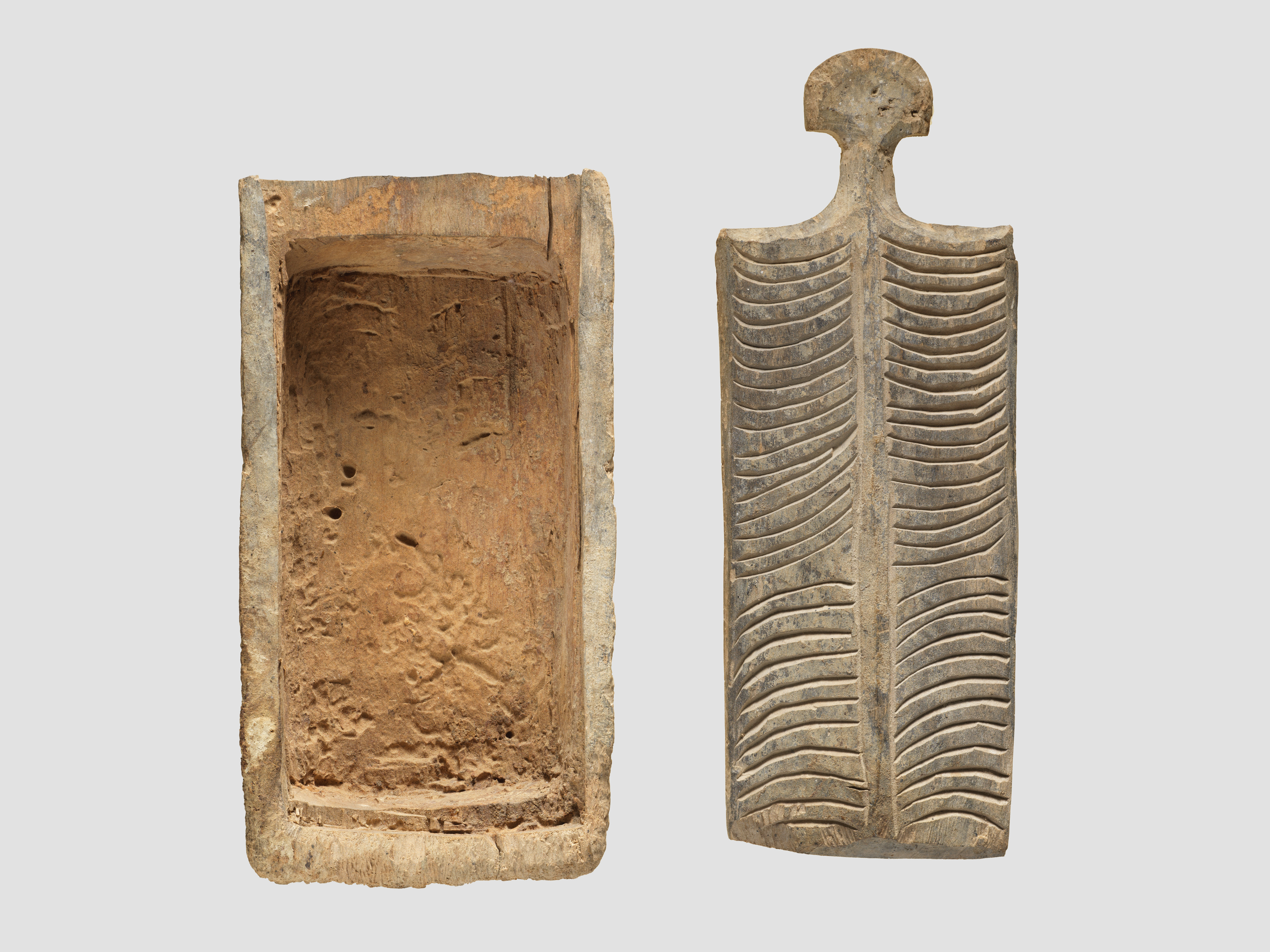
Executive Summary: The Alano-Sarmatian Casket as a Strategic Heritage Asset
This analysis examines a rectangular wooden cosmetic or amulet box of Alanic origin, proposed as a primary heritage artifact for Katherine Fashion Lab's 2026 strategic positioning. The object, a portable vessel of personal adornment and spiritual safeguarding, transcends its functional purpose to embody a complex narrative of nomadic luxury, symbolic power, and intimate ritual. By deconstructing its materiality, iconography, and cultural context, we can architect a unique brand mythology that directly addresses the evolving demands of the 2026 luxury consumer: a quest for authenticity, spiritual resonance, and narrative depth beyond mere material opulence. This artifact provides a non-Western, archaeologically-grounded foundation for a collection that redefines modern adornment as an act of personal power and protected identity.
Historical and Cultural Provenance: Nomadic Luxury of the Eurasian Steppe
The Alans, a Sarmatian Iranian nomadic people dominant in the North Caucasus and Pontic-Caspian steppe from approximately the 1st to the 5th centuries AD, cultivated a sophisticated material culture defined by mobility and status display. Their artistic lexicon, a fusion of Hellenistic, Persian, and indigenous "Animal Style" influences, was applied to personal objects that traveled with the individual. A wooden box, likely crafted from local poplar, represents a deliberate choice. Unlike precious metals reserved for elite grave goods, wood was a living, breathable material for daily use. Its survival is exceptional, speaking to its cherished role. As a container for cosmetics (pigments, unguents) or amulets (protective stones, relics), it served as a portable sanctum for the curation of both physical appearance and spiritual aura. This duality is central to its symbolic power.
The Adornment Ritual: Armor for the Soul and Body
For the Alano-Sarmatians, adornment was not vanity but a critical interface with the world—a visual language denoting tribe, rank, and supernatural alliance. The act of applying pigments from this box was a ritual of transformation and preparation. Cosmetic adornment, particularly for warriors of both genders as noted by classical historians, was believed to confer ferocity, honor, and divine favor. Simultaneously, if used for amulets, the box housed objects charged with apotropaic (warding off evil) and prophylactic power. Thus, the box managed the tools for constructing a protected identity. Its sliding lid mechanism implies controlled access and revelation, a private ritual preceding public presentation. This transforms the object from a mere container to a ceremonial instrument in the daily performance of identity.
Deconstruction of Symbolic Power: The Container as Talisman
The box’s power is derived from its inherent symbolism as much as its contents. Its rectangular form, a microcosm of bounded space, represents order and security against the chaotic expanse of the steppe. The wood itself, a organic material, connects the user to the natural and spiritual world. While specific surface carvings on the subject artifact are not described, typical Alanic decorative motifs would include geometric patterns (solar symbols, meanders representing eternity) and stylized phytomorphic (plant) or zoomorphic (animal) forms. Each motif carried specific meaning: solar discs for vitality and celestial protection, interlacing patterns for the interconnectedness of life, and animal figures (wolves, eagles, stags) embodying clan totems and desired attributes like strength, speed, and nobility.
The box, therefore, operates on three levels of symbolic power: Functional (safekeeping), Representational (displaying status through craftsmanship and material), and Metaphysical (acting as a talismanic object in its own right through its form and iconography). It is a compact nexus of personal archaeology, where every item inside contributes to the wearer's socio-spiritual arsenal.
Strategic Translation: The "Katherine Fashion Lab 2026 Alano-Sarmatian Code"
For the 2026 high-end luxury market, characterized by "quiet luxury," experiential value, and intellectual engagement, this artifact provides a profound strategic blueprint. The strategy moves beyond literal replication to an abstracted, conceptual adoption of its core principles.
Brand Mythology & Product Architecture
Katherine Fashion Lab can position itself as a modern "curator of personal sanctums." The 2026 collection, potentially titled Vault or Reliquary, would frame luxury items as contemporary amulets and instruments of intentional self-presentation. The product architecture should mirror the box’s duality:
Hardware & Leather Goods: Structured handbags and clutches with innovative, satisfying sliding closures or secret compartments, crafted from woods (stabilized, inlaid), lacquers, and metals. Interior lining becomes a critical canvas, printed with abstracted patterns from Alanic metalwork, transforming the private experience of opening the bag into a personal ritual.
Jewelry & Adornment: Amuletic jewelry in sculptural forms inspired by Sarmatian animal style, but refined into abstract silhouettes. Pieces serve as modern talismans—cuffs, signet rings, and pendants that are meant to be "charged" with personal meaning. Cosmetic compacts and objet d’art directly reference the original box, rendered in precious materials with tactile, sliding mechanisms.
Textiles & Surface: Prints and embroideries featuring geometric, non-figurative motifs derived from archaeological findings. The concept of "layered protection" translates into sophisticated layering of fabrics—structured outer shells over delicate, ritualistic inner layers.
Experiential and Narrative Marketing
The launch narrative must educate and immerse. Marketing campaigns should evoke the ritual of preparation and the concept of adorned resilience. Key initiatives could include:
Collaborative Archaeology: Partner with institutions like The State Hermitage Museum (holding key Sarmatian collections) for authentic, research-backed storytelling, lending scholarly credibility.
The Digital Reliquary: An AR experience where customers can "place" their Katherine Fashion Lab pieces into a 3D-rendered version of the Alanic box, learning the historical symbolism behind each design element they own.
Content Focus: Shift from mere product showcasing to editorial content on "The Ritual of Dressing," "Modern Amulets," and "Adornment as Armor," featuring artists, thinkers, and clients who use style as a means of intentional identity construction.
Conclusion: From Archaeological Fragment to Luxury Framework
The rectangular Alanic box is far more than an ancient accessory; it is a complete philosophical system for understanding adornment. It validates the idea that true luxury is the luxury of meaning—of carrying one's history, protection, and power in a personally curated form. For Katherine Fashion Lab, its strategic adoption provides a defensible, unique, and deeply resonant heritage narrative. By translating its principles of protected interiority, symbolic communication, and ritualistic use, the brand can craft a 2026 luxury proposition that is intellectually substantial, emotionally compelling, and distinct from the retrograde nostalgia of established European houses. It positions Katherine not as a follower of trends, but as an archaeologist of the human desire for identity, building the future of luxury from the foundations of a powerful, overlooked past.