Heritage Analysis: The British Flintlock Pistol as a Symbol of Sovereign Power and Luxury Strategy
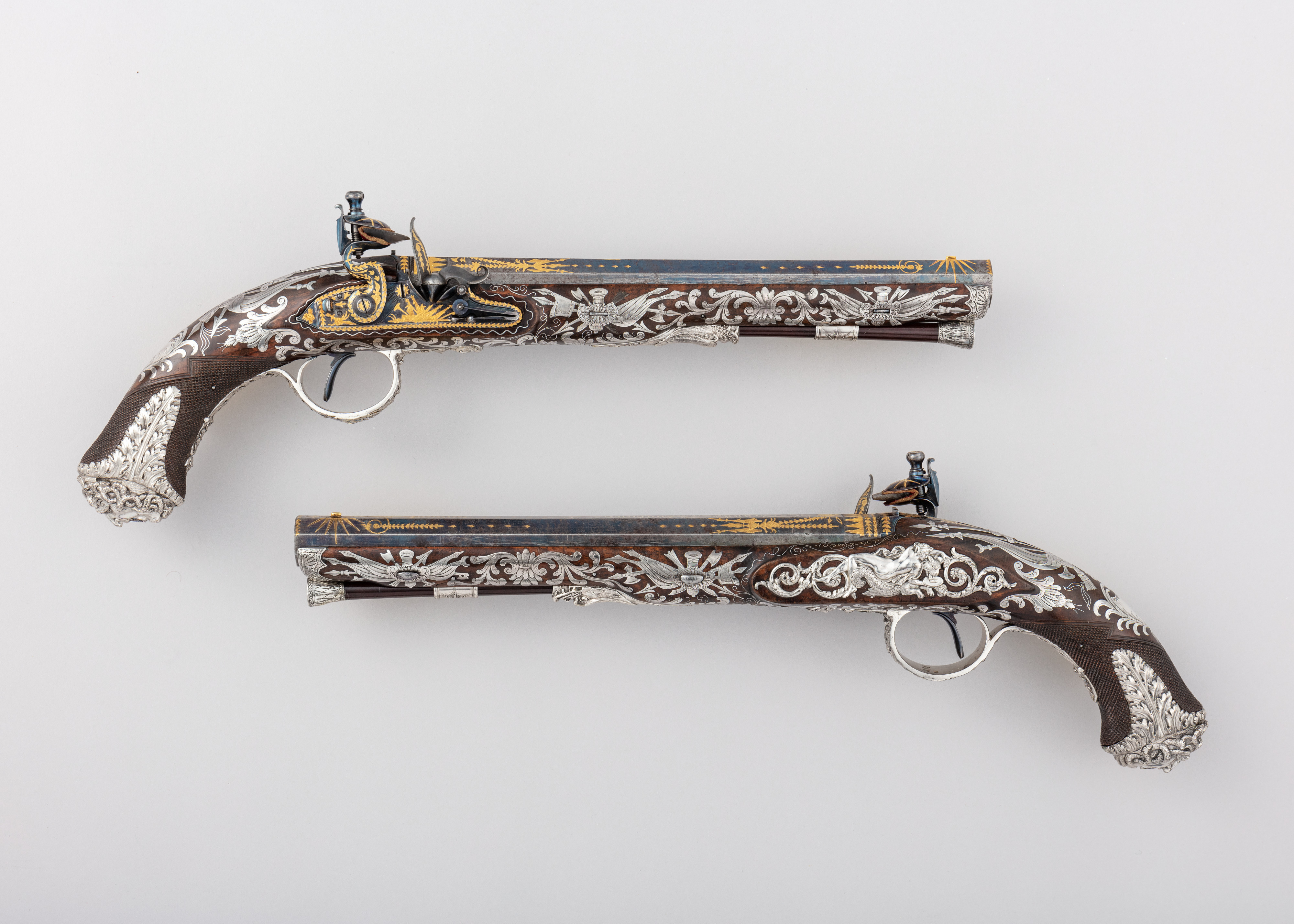
This strategic standalone research paper examines a pair of British flintlock pistols, crafted in London from steel, walnut, rosewood, silver, and gold. As objects of historical adornment and spiritual meaning, these pistols transcend their functional purpose to embody a complex lexicon of power, status, and ritual significance. For Katherine Fashion Lab, a 2026 high-end luxury strategy must decode these layers to inform a collection that resonates with contemporary elites seeking authenticity, mastery, and symbolic authority.
The Symbolic Power of the Flintlock: Authority, Duality, and the Sovereign Gaze
The flintlock pistol, particularly in its paired form, is not merely a weapon but a potent emblem of sovereign control. In 18th-century London, such pistols were commissioned by aristocrats, military officers, and gentleman travelers as instruments of self-defense and displays of social rank. The very act of carrying a pair—balanced, matched, and ready—signaled a readiness to command one’s domain, whether on a dueling ground, a colonial frontier, or a London street.
Duality and Balance: The pairing of pistols introduces a critical symbolic dimension: duality. In Western heraldry and ceremonial tradition, paired objects represent justice, equilibrium, and the balance of power. A single pistol is a threat; a pair is a statement of controlled force. This dual form echoes the scales of justice, the twin pillars of sovereignty, and the complementary forces of action and restraint. For luxury strategy, this duality offers a rich narrative framework—collections that explore symmetry, partnership, and the tension between protection and prestige.
Spiritual and Ritual Meaning: Beyond secular power, flintlock pistols carried spiritual connotations. The flash of the flint striking steel—the ignition of powder—was a microcosmic creation event: fire from stone, sound from silence, death from a spark. In esoteric and masonic circles common among British elites, the pistol symbolized the transformative power of will, the sudden illumination of truth, and the finality of judgment. The walnut and rosewood stocks, often carved with intricate scrollwork, were not merely decorative but talismanic, intended to channel the owner’s resolve and ward against ill fortune. The silver and gold inlays, frequently engraved with family crests or Latin mottos, served as permanent invocations of lineage and divine favor.
Historical Adornment: Craftsmanship as a Language of Status
These pistols are masterclasses in material hierarchy. The combination of steel—cold, functional, masculine—with warm walnut and rosewood, and the precious accents of silver and gold, creates a dialogue between utility and ornament. In London’s 18th-century gunmaking trade, masters like Joseph Manton or Henry Nock elevated firearm production to an art form, rivaling silversmiths and cabinetmakers in prestige.
Wood as Living Memory: Walnut, prized for its shock resistance and rich grain, was often sourced from English estates, linking the weapon to the land itself. Rosewood, imported from the Caribbean and Brazil, signaled global reach and colonial wealth. The choice of rosewood for the pair under analysis suggests a patron of considerable means, one who understood exotic materials as markers of cosmopolitan sophistication. The wood was not merely a handle; it was a tactile narrative of empire and resource mastery.
Precious Metal Inlays: Silver and gold accents were not applied arbitrarily. Silver, associated with the moon, purity, and protection, was often used for trigger guards and barrel bands—points of contact and control. Gold, the metal of the sun, divinity, and eternal value, was reserved for touchholes, sights, and decorative panels that caught the eye. This deliberate placement created a visual hierarchy that guided the observer’s gaze from the practical (the grip) to the symbolic (the crest). The pistols thus functioned as wearable architecture, where every material choice reinforced the owner’s narrative of power and taste.
Strategic Implications for 2026 High-End Luxury
Katherine Fashion Lab can leverage this heritage analysis to develop a 2026 strategic collection that reinterprets the flintlock’s symbolic and material language. The following considerations are drawn from the research context of strategic standalone analysis.
1. The Narrative of Controlled Power: The flintlock’s essence—power held in reserve, ready but not deployed—is profoundly relevant to contemporary luxury consumers. In an era of digital saturation and fleeting influence, the quiet authority of a well-crafted object offers distinction. A collection themed around “The Sovereign Pair” could feature matched accessories (belts, bags, cufflinks) that emphasize duality, balance, and the idea of protection. Marketing language should evoke the ritual of preparation: the moment before ignition, the calm of mastery.
2. Material Storytelling as Brand Architecture: The pistols’ material hierarchy—steel, walnut, rosewood, silver, gold—provides a template for product stratification. Katherine Fashion Lab can create a “Heritage Tier” system: base collections in steel and walnut (accessible luxury), mid-tier with rosewood and silver accents (aspirational), and top-tier pieces incorporating gold and bespoke engraving (exclusive). Each tier tells a story of ascending craftsmanship, mirroring the patron’s journey from function to art.
3. Spiritual and Ritual Resonance: The flintlock’s spiritual dimension—transformation, judgment, protection—can be translated into a brand philosophy of “Conscious Craft.” For 2026, consumers increasingly seek objects with perceived energy or intention. Katherine Fashion Lab could offer limited-edition pieces with “blessed” or “charged” materials—wood from sustainably managed estates, metals purified through traditional methods. Packaging could include a small card explaining the spiritual history of the flintlock, creating a ritual unboxing experience that elevates the product beyond commodity.
4. Gendered Duality and Inclusivity: The paired pistols challenge binary gender associations. While historically masculine, their dual nature invites reinterpretation. A 2026 strategy could launch a “Duality” line for all genders, featuring matched but not identical items—a belt and a bracelet, a coat and a clutch—that speak to the wearer’s multifaceted identity. The flintlock’s balance of force and elegance aligns with contemporary luxury’s move toward fluidity and self-definition.
5. Limited-Edition “Crest” Program: Borrowing from the pistols’ engraved crests, Katherine Fashion Lab can offer a bespoke service where clients commission personal symbols—heraldic, abstract, or modern—to be integrated into select pieces. This creates emotional ownership and transforms the product into a heirloom. The 2026 launch should include a “Master Engraver” collaboration, highlighting artisans who work in silver and gold, directly referencing the flintlock tradition.
Conclusion: From Firearm to Fashion Icon
The British flintlock pistol, in its paired, adorned form, is a document of power, spirituality, and material mastery. For Katherine Fashion Lab, this heritage analysis reveals a blueprint for 2026 luxury strategy that goes beyond aesthetics. By embracing the flintlock’s symbolic duality, material hierarchy, and ritual significance, the brand can create collections that resonate with discerning clients seeking not just beauty, but meaning. The pistols remind us that true luxury is not about display alone—it is about the quiet, confident readiness to act. In a world of noise, that silence is the ultimate statement.