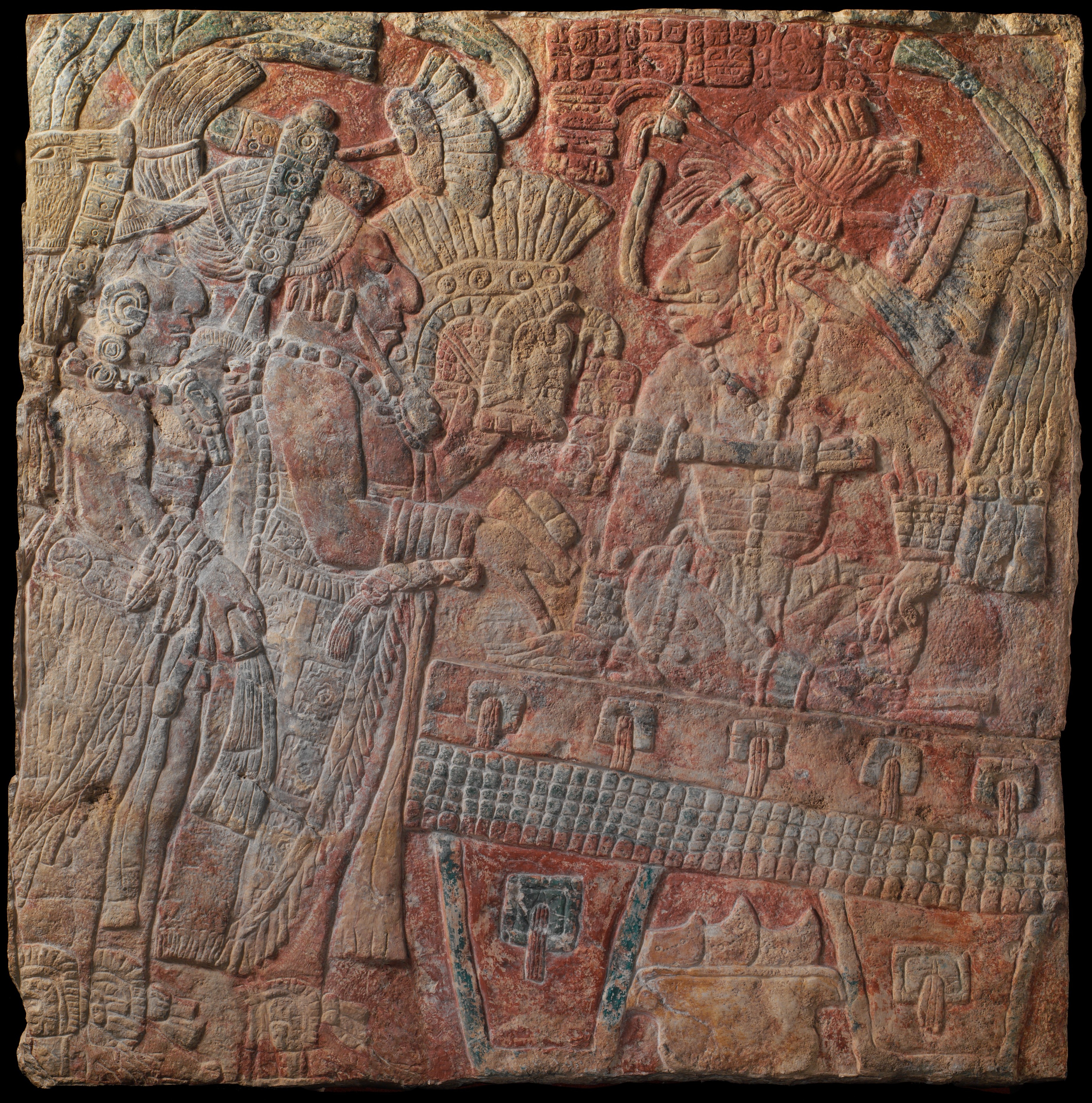
Heritage Analysis: The Maya Relief with Enthroned Ruler
This research paper, prepared for Katherine Fashion Lab, presents a strategic heritage analysis of a Maya limestone relief depicting an enthroned ruler, dating to the Classic Period (c. 250–900 CE). The artifact, crafted from limestone with surviving traces of paint, serves as a profound testament to the intersection of symbolic power, historical adornment, and spiritual meaning within Maya civilization. By deconstructing these layers, we derive actionable insights for a 2026 high-end luxury strategy that positions Katherine Fashion Lab as a curator of cultural narratives rather than mere aesthetics.
Symbolic Power: The Enthroned Ruler as Political and Cosmic Axis
The relief’s central figure—a ruler seated upon a throne—embodies the Maya concept of k’uhul ajaw, or divine lord, whose authority was both terrestrial and celestial. The throne itself is not merely furniture but a sacred locus, often carved with motifs such as the Witz Monster (mountain spirit) or Jaguar God of the Underworld, connecting the ruler to the earth’s fertility and the underworld’s regenerative powers. The ruler’s posture—legs crossed or one foot pendant—signals hieratic calm, a visual language of absolute control over time and space.
Strategically, this symbolism offers Katherine Fashion Lab a powerful narrative for 2026: authority as service. In high-end luxury, the modern patron seeks not dominance but stewardship of heritage and environment. By invoking the Maya ruler’s role as mediator between worlds, a luxury collection can position the wearer as a custodian of legacy—someone who commands through responsibility, not force. This aligns with the growing consumer demand for purpose-driven luxury, where purchase is an act of cultural preservation.
Historical Adornment: Materials, Techniques, and Status Signaling
The limestone relief, originally coated in vibrant mineral paints—Maya blue (indigo and palygorskite), cinnabar red, and hematite black—demonstrates a sophisticated understanding of material permanence and color symbolism. The ruler’s regalia includes a feathered headdress (quetzal plumes signifying royalty and sky association), a jade pectoral (the stone of life and breath), and spondylus shell ornaments (water and fertility). These were not decorative but performative: each element communicated lineage, conquest, and cosmic favor.
For Katherine Fashion Lab’s 2026 strategy, this translates into a material lexicon that prioritizes rarity and provenance. Jade, for instance, was more valuable than gold in Maya society due to its spiritual resonance. A luxury line could reinterpret this via sustainable, ethically sourced gemstones or handwoven textiles dyed with natural pigments—each piece carrying a certificate of cultural authenticity. The historical practice of adornment as biography offers a blueprint for personalization: limited-edition items that allow clients to embed personal or familial symbols, mirroring the Maya ruler’s use of glyphic texts on their attire.
Spiritual Meaning: The Ruler as Axis Mundi and Ritual Performer
In Maya cosmology, the enthroned ruler was the axis mundi, the living link between the heavens, earth, and underworld. The relief likely depicts a bloodletting or vision serpent ritual, where the ruler, through self-sacrifice or trance, accessed the spirit world to ensure agricultural cycles and community survival. The throne’s iconography—often framed by cosmic bands (sky, earth, underworld) and ancestor figures—reinforces the ruler’s role as a spiritual conduit. Traces of paint, particularly the sacrificial red on the ruler’s hands, suggest ritual blood was considered a vital offering.
For high-end luxury in 2026, this spiritual dimension offers a counter-narrative to materialism. The modern luxury consumer increasingly values ritual and mindfulness—from wellness retreats to bespoke ceremonies. Katherine Fashion Lab can integrate this by designing adornment as amulet: pieces that are blessed, consecrated, or imbued with intentional symbolism. A “Ritual Collection” could include items meant for specific life transitions (marriage, leadership, mourning), echoing the Maya ruler’s use of regalia for life-stage ceremonies. This transforms luxury from commodity to spiritual tool, resonating with the 2026 trend of experiential and transformational consumption.
2026 High-End Luxury Strategy: From Artifact to Archetype
Brand Positioning as Cultural Steward
Katherine Fashion Lab must position itself not as a fashion house but as a cultural archive—a brand that “excavates” and “recontextualizes” heritage. The Maya relief offers a template for narrative-driven collections where each garment or accessory tells a story of power, material, and spirit. This requires collaboration with Maya descendants and archaeologists to ensure ethical representation, a move that builds trust and differentiation in a saturated market.
Product Architecture: The Three Pillars
Drawing from the relief’s elements, the 2026 collection can be structured around three pillars:
1. Symbolic Power (The Throne): Structured silhouettes—architectural shoulders, high collars, and belted waists—that evoke the ruler’s authoritative posture. Fabrics should be heavy, sculptural wools and silks, dyed in deep blues and reds reminiscent of Maya pigments. Embroidery can feature abstracted throne motifs (geometric steps, jaguar spots) as subtle power signals.
2. Historical Adornment (The Regalia): Focus on limited-edition accessories: hand-carved jade pendants, feathered headpieces (using ethical feathers), and shell-encrusted belts. Each piece should come with a “material provenance card” detailing the historical significance of its components. This creates a collector’s market where items appreciate in cultural value.
3. Spiritual Meaning (The Ritual): A bespoke service where clients commission items for specific rites of passage—a “Coronation Cape” for a corporate promotion, a “Vision Serpent Necklace” for a personal milestone. These are not fashion but ceremonial objects, sold with a guide to their intended use, perhaps even a virtual consultation with a Maya spiritual advisor.
Marketing and Consumer Experience
The launch campaign should be museum-quality: a traveling exhibition of Maya artifacts alongside the collection, with immersive VR experiences allowing clients to “sit” on a digital throne. Storytelling should emphasize continuity—that the modern wearer inherits the ruler’s mantle of stewardship, not dominion. Digital lookbooks can include short documentaries on Maya history, co-created with indigenous scholars. Pricing should reflect the cultural premium: items start at $5,000 for ready-to-wear and $50,000+ for bespoke ritual pieces.
Conclusion: The Ruler’s Legacy as Luxury Blueprint
The Maya relief with enthroned ruler is far more than a historical artifact; it is a strategic archetype for 2026 high-end luxury. By decoding its symbolic power, historical adornment, and spiritual meaning, Katherine Fashion Lab can create a brand ecosystem that transcends fashion to become a cultural institution. The ruler’s throne becomes the brand’s foundation—a seat of authority, responsibility, and transcendence. In an era where luxury seeks authenticity and depth, the Maya ruler offers a timeless model: adornment as identity, power as service, and beauty as a bridge to the sacred.