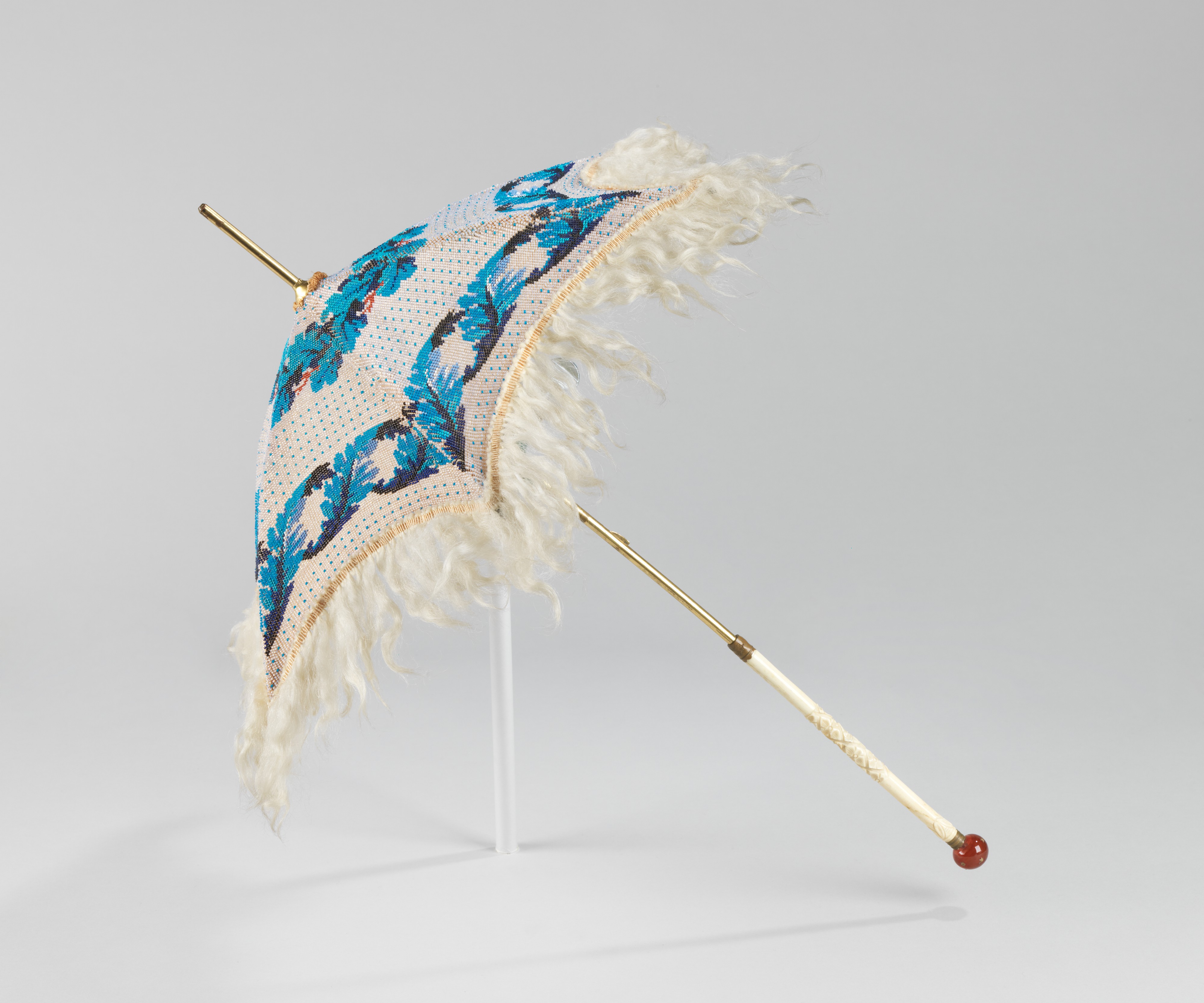
Heritage Analysis: The French Parasol as a Conduit of Symbolic Power and Luxury Strategy
The parasol, as a luxury object, transcends its utilitarian function of sun protection. In the French cultural imagination, it has long served as a potent symbol of social status, spiritual mystery, and refined adornment. For Katherine Fashion Lab, understanding the parasol’s layered heritage—from its material composition to its metaphysical connotations—offers a strategic blueprint for 2026 high-end collections. This analysis examines the parasol through four critical lenses: symbolic power, historical adornment, spiritual meaning, and actionable luxury strategy, drawing upon the specific medium of glass, linen, hair, metal, ivory, and silk.
Symbolic Power: The Parasol as a Marker of Authority and Exclusivity
In 17th- and 18th-century French court culture, the parasol was not merely an accessory but a declaration of rank. The glass beads and metal frames often used in aristocratic parasols signified wealth and technological sophistication, while ivory handles—carved from rare materials—demarcated the bearer as a member of the elite. The parasol’s ability to cast a shadow was also a metaphor for power: to shield oneself from the sun was to assert control over one’s environment, a privilege reserved for those who could afford leisure and protection from labor.
For Katherine Fashion Lab, this symbolism offers a potent narrative for 2026. The brand can position the parasol not as a nostalgic relic but as a contemporary emblem of personal sovereignty. In an era of digital oversharing, the parasol becomes a tool for selective visibility—a statement of who is allowed to see, and who is kept in shadow. This aligns with the luxury consumer’s desire for privacy and exclusivity, reinforcing the parasol’s role as a signifier of controlled access.
Historical Adornment: Craftsmanship and Material Hierarchy
The French parasol reached its zenith of artistry during the Rococo and Belle Époque periods. Artisans employed silk canopies dyed in pastel hues, often embroidered with gold thread or inset with glass cabochons. The linen undercarriage provided structural integrity, while hair—sometimes woven into the handle or tassels—introduced an intimate, almost talismanic quality. Ivory and metal components were carved or filigreed, transforming the parasol into a miniature sculpture.
This hierarchy of materials is instructive for a 2026 luxury strategy. The combination of fragile glass and resilient metal reflects a balance between delicacy and durability—a metaphor for the modern luxury consumer who values both beauty and longevity. Katherine Fashion Lab can reinterpret this by using hand-painted silk canopies with laser-cut metal frames, or by incorporating recycled glass beads to appeal to sustainability-minded clients. The inclusion of hair, historically used to memorialize loved ones, can be adapted as a bespoke service: clients could incorporate a lock of their own hair into the parasol’s design, creating a deeply personal heirloom.
Spiritual Meaning: The Parasol as a Protective Vessel
Beyond the secular, the French parasol carried spiritual weight. In Catholic and folk traditions, the parasol was associated with the Virgin Mary’s protective mantle, as seen in processional umbrellas used during Feast of the Assumption. The glass elements, often faceted, were believed to deflect evil spirits, while linen—a fabric of purity—was used for ecclesiastical parasols. The hair woven into handles was thought to channel the owner’s life force, creating a spiritual barrier against harm.
For a 2026 luxury strategy, this spiritual dimension offers a compelling narrative of protection and intention. Katherine Fashion Lab can market the parasol as a “sanctuary object”—a personal talisman that shields not only from UV rays but from negative energy. This aligns with the growing consumer interest in wellness and ritual. The brand could launch a limited-edition “Sanctuary Collection” featuring parasols with clear quartz glass tips (for energetic cleansing) and silk canopies printed with protective geometric patterns. Such a strategy elevates the product from accessory to artifact, commanding higher price points and deeper emotional resonance.
2026 High-End Luxury Strategy: Synthesis and Innovation
To translate this heritage into a viable luxury strategy for 2026, Katherine Fashion Lab must consider three pillars: heritage storytelling, material innovation, and experiential retail.
Heritage Storytelling as Brand Capital
The brand should develop a narrative arc that traces the parasol’s journey from French court to contemporary couture. This can be achieved through a digital “Atelier Archive” that documents the historical use of ivory (with modern ethical alternatives, such as tagua nut or fossilized mammoth ivory) and glass beadwork. Each parasol sold should include a “provenance card” that explains the symbolic meaning of its materials—for example, how linen represents purity or metal represents strength. This transforms the purchase into an educational experience, justifying premium pricing.
Material Innovation for Modern Luxury
While respecting tradition, the 2026 collection must embrace innovation. Smart glass can be integrated into the canopy to adjust UV opacity, merging historical protection with modern technology. Recycled metal frames can be anodized in jewel tones, while silk can be replaced with lab-grown spider silk for unparalleled strength and sheen. The use of hair can be reimagined as a commissioned service: clients can submit a hair sample, which is then embedded into a resin handle, creating a unique, biometric accessory. This approach honors the spiritual and historical significance while meeting contemporary demands for personalization and sustainability.
Experiential Retail: The Parasol as Performance
Finally, the parasol’s theatrical history—it was once a prop in French opera and ballet—should inform the retail experience. Katherine Fashion Lab can launch pop-up “Parasol Pavilions” in Paris, London, and Shanghai, where clients are fitted for custom pieces in a setting reminiscent of a 19th-century salon. Lighting designers can use glass prisms to cast rainbows across the space, while linen curtains evoke the intimacy of a boudoir. The purchase process becomes a ritual: clients select their silk color, metal finish, and ivory handle style, then watch as artisans assemble the parasol in real time. This performative luxury taps into the consumer’s desire for authenticity and spectacle, driving brand loyalty and social media engagement.
Conclusion: The Parasol as a Blueprint for Timeless Luxury
The French parasol, with its intricate blend of glass, linen, hair, metal, ivory, and silk, is far more than a historical curiosity. It is a repository of symbolic power, a testament to artisanal mastery, and a vessel for spiritual protection. For Katherine Fashion Lab, leveraging this heritage in 2026 requires a strategy that respects tradition while embracing innovation—one that positions the parasol as a tool for personal sovereignty, a bespoke heirloom, and a ritual object. By doing so, the brand can capture the imagination of a new generation of luxury consumers who seek meaning, craftsmanship, and exclusivity in equal measure.