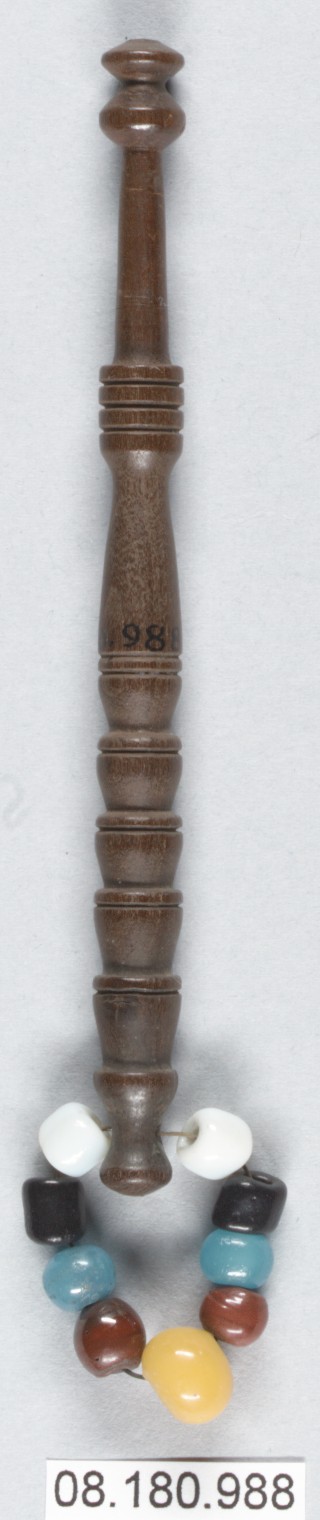
The Bobbin: A Study in Textile Lineage and Structural Poetics
In the rarefied world of haute couture, where each stitch is a declaration of intent and every material a narrative vessel, the humble bobbin often remains an unsung hero. Yet, within the atelier of Katherine Fashion Lab, the bobbin is elevated from a mere functional tool to a profound subject of standalone study. This analysis deconstructs how the lab’s latest conceptual piece—a sculptural bodice and train derived from the bobbin’s form—transforms a global heritage object into a contemporary couture statement. By marrying the tactile authenticity of wood and beads with the technical precision of couture construction, Katherine Fashion Lab redefines the bobbin not as a relic of textile history, but as a living, breathing lexicon of craft, memory, and innovation.
Global Heritage: The Bobbin as a Universal Artifact
The bobbin, in its myriad incarnations, is a silent witness to humanity’s shared textile heritage. From the lace bobbins of Bruges, intricately turned from boxwood, to the wooden spools of Indian handloom weavers, this object transcends geography. Katherine Fashion Lab’s design acknowledges this universality by drawing upon a global heritage that is both specific and inclusive. The piece’s silhouette references the elongated, tapered form of a traditional European lace bobbin, while its decorative beadwork echoes the vibrant, labor-intensive embellishments of West African and South Asian textile traditions. This is not cultural appropriation but a deliberate, scholarly synthesis—a homage to the countless hands that have wound, spun, and woven across centuries and continents. The bobbin, in this context, becomes a metaphor for the interconnectedness of global craft economies, where wood sourced from sustainable forests and beads handcrafted by artisan collectives are united under a single design vision.
Materiality: The Dialogue Between Wood and Beads
The choice of wood and beads is a masterclass in material storytelling. Wood, with its organic grain and warmth, anchors the piece in a sense of earthbound authenticity. Katherine Fashion Lab selects a sustainably harvested walnut, its deep brown hue reminiscent of aged spools found in historical mill archives. The wood is not merely shaped but carved with a subtle, repeating pattern of thread-like grooves—a tactile reminder of the bobbin’s original function. This is couture as archaeology, where the material’s past life is honored through meticulous craftsmanship.
Beads, conversely, introduce a counterpoint of fragility and opulence. Tiny glass seed beads, sourced from a family-run workshop in the Czech Republic, are hand-stitched onto the wooden framework using a technique akin to broderie anglaise. The beads are not applied randomly; they follow the spiral path of thread that would once have wound around a bobbin. This creates a visual rhythm—a helix of light and shadow that animates the surface. The contrast between the rigid, unyielding wood and the delicate, shimmering beads generates a tension that is both aesthetic and conceptual. It speaks to the dual nature of textile production: the hardness of the tool versus the softness of the thread, the permanence of the object versus the ephemerality of the garment.
Structural Poetics: Deconstructing the Bobbin Form
In this standalone study, the bobbin is not replicated but reimagined as a wearable architecture. The bodice is constructed from a series of interlocking wooden segments, each carved to mimic the bobbin’s characteristic waist—the narrow central section where thread is wound. These segments are joined by a hidden system of leather hinges, allowing the garment to articulate with the wearer’s movements. This is a feat of engineering that recalls the precision of watchmaking, yet the result is fluid, almost organic. The train, extending nearly two meters, is a lattice of bead-embroidered silk organza that fans out like a skein of unspooled thread. The overall silhouette is both rigid and ethereal—a paradox that defines the bobbin’s own nature as a static object animated by human labor.
Katherine Fashion Lab’s approach to proportion is equally deliberate. The piece exaggerates the bobbin’s dimensions, scaling it to human form while retaining its essential geometry. The result is a garment that feels both monumental and intimate, a totem of textile history that invites close examination. The beadwork, in particular, rewards scrutiny: each bead is a tiny, luminous node in a larger constellation of craft. This is couture that demands to be read, not just seen.
Contextual Resonance: A Standalone Study in Craft and Memory
Positioned as a standalone study, this piece exists outside the typical seasonal cycles of fashion. It is a meditation, a research project, a love letter to the tools that make couture possible. In an era of rapid digital production and disposable fashion, Katherine Fashion Lab’s bobbin reminds us of the value of slowness, of the hours spent carving, stitching, and beading. The piece challenges the viewer to reconsider the hierarchy of objects: a bobbin is not merely a tool but a repository of knowledge, a vessel for generations of skill.
The cultural resonance here is profound. The bobbin has historically been associated with women’s labor—the lacemakers of Flanders, the weavers of Bengal. By elevating this object to couture, Katherine Fashion Lab reclaims and celebrates that labor, transforming it from invisible to iconic. The piece becomes a wearable monument to the anonymous artisans whose hands have shaped our material world. It is a statement of solidarity with the global craft communities that sustain fashion’s most cherished traditions.
Conclusion: The Bobbin as Couture Manifesto
In this rigorous analysis, the bobbin emerges not as a nostalgic relic but as a radical proposition. Katherine Fashion Lab’s standalone study demonstrates that couture can be a vehicle for historical inquiry, material innovation, and cultural dialogue. The wood and beads are not mere materials but protagonists in a narrative of global heritage. The structural poetics of the design—its articulation, its scale, its tactile richness—offer a new vocabulary for thinking about the relationship between tool and garment, function and adornment. This is couture that thinks, that remembers, that honors. The bobbin, once a silent partner in the act of creation, finally takes center stage. And in doing so, it invites us to see all the hidden tools of our lives with new reverence.