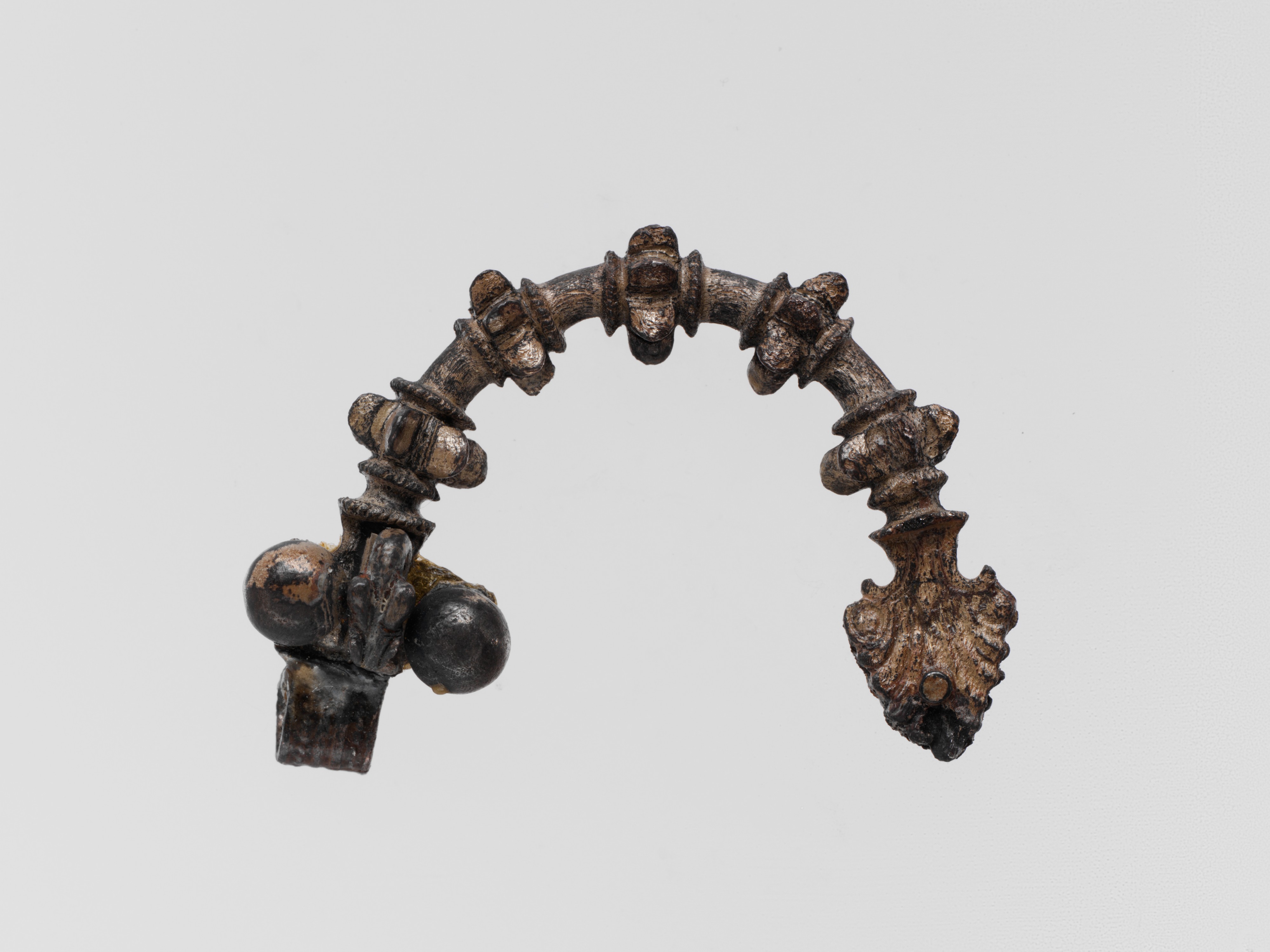
Heritage Analysis: The Greek Silver Fibula as a Strategic Archetype for Katherine Fashion Lab
In the pursuit of a distinctive and intellectually resonant luxury identity, heritage is not merely a repository of past aesthetics but a dynamic framework for strategic innovation. For Katherine Fashion Lab, the ancient Greek silver fibula presents a potent archetype. This analysis, conducted as a standalone strategic research initiative, deconstructs the object beyond its functional role as a garment fastener to reveal a dense nexus of symbolic power, corporeal adornment, and spiritual meaning. These historical dimensions provide a critical foundation for articulating a forward-facing, high-end luxury strategy for the 2026 horizon, one that transcends ephemeral trends to build upon enduring human narratives.
Deconstructing the Artefact: Form, Function, and Inherent Power
The fibula, a precursor to the modern safety pin, was a technical marvel of its era. Crafted in silver—a metal associated with the moon, purity, and discernible value—its primary function was pragmatic: to secure garments, most notably the himation or cloak. However, its placement at the shoulder or chest immediately imbued it with a significance far beyond utility. The act of fastening was not hidden but celebrated; the fibula was a visible, often ornate, declaration of the junction between the body and the social fabric. Its form, typically involving a pin, a bow, and a catchplate, created a dynamic structure of tension and release, a miniature architecture of security and accessibility. This inherent duality—between constraint and freedom, private garment and public display—establishes the first layer of its symbolic power. The silver medium further amplified this, denoting a wearer of means and status, for whom adornment was an integrated component of social and political presentation.
The Semiotics of Adornment: Body as Canvas, Fastener as Statement
Historical adornment, particularly in the Greek context, was a sophisticated language. The fibula functioned as a crucial syntactic mark in this language. Its location at the shoulder often served as a focal point, drawing the eye and anchoring the drapery of the garment, which itself was a symbol of civic identity and moral character. The complexity and craftsmanship of the fibula communicated directly. A simple, severe design might denote philosophical austerity or military readiness, while an elaborate piece featuring intricate filigree, granulation, or mythological motifs spoke of wealth, cultural refinement, and divine favor. The fibula thus operated as a micro-commission, a portable and personal piece of art that curated the perception of the body it adorned. It transformed the act of dressing into an act of self-definition, positioning the wearer within a precise social and aesthetic hierarchy. For Katherine Fashion Lab, this underscores a fundamental luxury principle: that true luxury items are not passive accessories but active agents in the wearer’s projected narrative.
Spiritual and Amuletic Resonance: The Sacred in the Secular
Beyond the social and aesthetic, the fibula frequently carried a profound spiritual and amuletic charge. The catchplate, often enlarged and decorated, served as a canvas for protective symbols: the Gorgoneion to ward off evil, spirals representing eternity, or animal motifs linked to specific deities. Silver, sacred to Artemis and associated with lunar purity, added a layer of celestial protection. The fibula was therefore positioned at a critical threshold—the point where a garment closed, symbolically sealing the wearer within a protected space. It functioned as a conduit for divine favor and a shield against malign forces, blending seamlessly into daily life. This integration of the sacred into an object of daily use reveals a holistic worldview where beauty, function, and spirituality were indivisible. In a modern context marked by seeking and meaning, this dimension offers a profound emotional and symbolic depth often absent in contemporary luxury, which can prioritize overt branding over intrinsic symbolic value.
Strategic Transposition: A 2026 Luxury Framework for Katherine Fashion Lab
The 2026 luxury consumer will demand authenticity, narrative depth, and intelligent design that resonates on personal and symbolic levels. The Greek silver fibula provides a robust conceptual framework to meet these demands through four strategic pillars:
1. Archetypal Engineering: Move beyond literal revival. Abstract the fibula's core principles—the junction as jewel, the architecture of tension, the visible mechanism. This could manifest in innovative closures for outerwear and dresses, where the fastening system is the centerpiece of design: sculptural silver clasps, interlocking forms that echo the pin-and-catch dynamic, or magnetic closures engineered as standalone art pieces. Each becomes a modern fibula, declaring its purpose and craftsmanship.
2. Symbolic Personalization: Leverage the amuletic tradition. Develop a system of small, interchangeable signifiers—modern glyphs or abstract motifs inspired by Greek symbolism (protection, journey, knowledge)—that can be attached to garment closures or standalone jewelry. This allows the client to curate a personal talismanic language, reviving the spiritual meaning of adornment in a deeply individualized manner.
3. The "Third Space" Narrative: Position Katherine Fashion Lab pieces as occupying the "third space" the fibula inhabited: between function and art, between body and society, between secular display and sacred intent. Marketing and brand storytelling should emphasize this philosophical duality, appealing to consumers who view luxury as a means of intelligent self-construction rather than conspicuous consumption.
4. Material Allegiance & Patina: Champion silver not as a secondary metal but as the primary medium of this heritage narrative. Explore its full range—oxidized, highly polished, textured—and educate on its historical significance. Embrace the concept of patina, both physical and metaphorical, where pieces gain character and narrative through wear, mirroring the journey of ancient artefacts.
Conclusion: From Archaeological Artefact to Strategic Asset
The Greek silver fibula is far more than an ancient clothing fastener. It is a compact treatise on power, identity, and belief, worn on the body. For Katherine Fashion Lab, its strategic value lies in this rich confluence of meanings. By deconstructing and transposing its core principles—its symbolic utility, its language of adornment, its amuletic depth—the brand can develop a 2026 luxury offer that is both intellectually rigorous and emotionally resonant. This approach moves heritage integration from aesthetic pastiche to strategic foundationalism, allowing Katherine Fashion Lab to create not merely garments, but modern heirlooms imbued with the timeless authority of the fibula: securing more than fabric, they secure meaning.