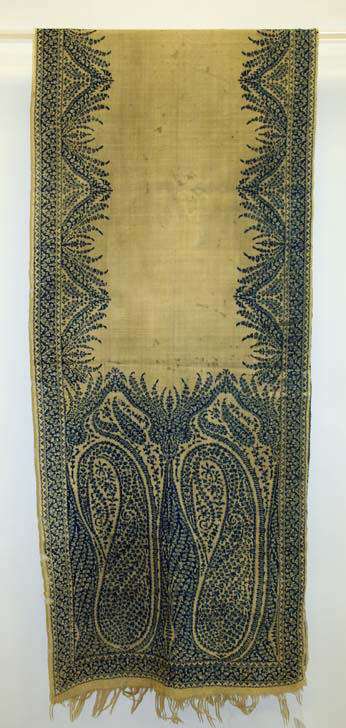
The Scarf as an Object of Couture: A Standalone Study of a French Woolen Artifact
In the rarefied world of haute couture, the scarf is often relegated to the status of an accessory—a secondary element designed to complement a larger garment. Yet, within the curatorial framework of Katherine Fashion Lab, we challenge such hierarchical assumptions. A scarf, particularly one of French origin and composed of fine wool, is not merely an appendage; it is a self-contained statement of textile mastery, cultural narrative, and sartorial intelligence. This analysis dissects the scarf as an autonomous object of couture, examining its material integrity, constructional philosophy, and the silent dialogue it establishes with the wearer and the observer. Through this lens, we elevate the scarf from a simple neck wrap to a standalone sculpture of draped significance.
Material Provenance: The Wool as a Primary Text
The foundation of any couture piece lies in its material, and here, the choice of wool is both a pragmatic and poetic decision. French wool, particularly sourced from regions such as the Île-de-France or the Pyrenees, carries a legacy of pastoral refinement. Unlike cashmere or silk, which dominate luxury discourse, wool offers a distinct haptic vocabulary: it is resilient yet soft, structured yet breathable. In this scarf, the wool’s fiber density suggests a worsted process, where long staples are combed to align parallel, resulting in a smooth, lustrous surface that resists pilling. The weave—likely a twill or a subtle herringbone—introduces a diagonal tension that allows the fabric to hold its shape when folded, yet drape fluidly when left to fall. This duality is essential for a standalone piece: the scarf must be both a rigid architectural element and a malleable canvas for movement.
From a color perspective, the scarf exhibits a muted palette typical of French understatement—perhaps a deep charcoal, a warm taupe, or a nuanced Bordeaux. These hues are not accidental; they are the result of vegetable-based dyes, applied in small batches to ensure chromatic depth. The absence of bold prints or logos is a deliberate assertion of quiet luxury. In couture, the fabric itself becomes the statement, and the wool’s natural luster, when caught in light, reveals a subtle iridescence that no synthetic alternative can replicate. This material provenance transforms the scarf into a tactile chronicle of French artisanal heritage, where the shepherd’s craft meets the designer’s vision.
Construction and Draping: The Geometry of the Unframed
A scarf, unlike a tailored jacket or a structured gown, possesses no fixed form. Its construction is defined by its edges—the hem, the fringe, the selvedge—and its potential for transformation. In this French woolen example, the edges are meticulously finished with a hand-rolled hem, a technique requiring hours of manual labor to ensure that the fabric’s integrity is preserved without bulk. The fringe, if present, is not merely decorative; it is an extension of the warp threads, left unbound to create a tactile fringe that catches the air and adds kinetic energy to the piece. This attention to termination points is a hallmark of couture: the scarf’s boundaries are not endings but invitations for the wearer to define its silhouette.
The scarf’s weight—likely between 200 and 300 grams per square meter—places it in a Goldilocks zone: heavy enough to provide warmth and drape without sagging, yet light enough to be manipulated into complex knots, wraps, or even a temporary cowl. When studied in isolation, the scarf’s geometric potential becomes apparent. A simple rectangular form can be folded into a triangle, twisted into a rope, or gathered into a rose-shaped cinch. Each transformation alters the interplay of light and shadow across the wool’s surface, creating a dynamic visual experience. This is not accidental; the scarf’s proportions—typically a 1:4 or 1:5 length-to-width ratio—are calibrated to allow for such versatility. In couture, the designer anticipates the wearer’s agency, and the scarf becomes a co-authored object, completed only through human interaction.
Cultural Context: The French Scarf as a Signifier of Identity
To analyze this scarf is to also decode its cultural resonance. French scarves, particularly those from houses like Hermès or from independent ateliers in Lyon or Paris, have long been symbols of intellectual sophistication. Historically, the scarf has served as a marker of class, gender, and political allegiance—from the foulard of the 18th-century aristocracy to the silk squares of the 1960s Left Bank intellectuals. Yet, this woolen variant eschews overt branding in favor of a more subtle code. Its lack of a printed logo is a statement of confidence: the object does not need to announce its origin; it is known through its touch and behavior.
In a standalone study, the scarf also occupies a liminal space between utility and art. It is neither purely functional (like a winter muffler) nor purely decorative (like a jeweled brooch). Instead, it functions as a transitional object, mediating between the body and the environment. When worn, it frames the face, drawing attention to the wearer’s expressions and voice. When removed and studied, it becomes a textile artifact, its folds and creases telling the story of its previous lives. This duality is central to its couture value: the scarf is not a passive object but an active participant in the wearer’s daily narrative.
Comparative Analysis: The Scarf Versus Other Couture Categories
To fully appreciate the scarf as a standalone piece, one must contrast it with other couture categories. Unlike a tailored blazer, which relies on rigid interfacing and precise seam allowances, the scarf’s construction is almost entirely dependent on the fabric’s intrinsic properties. There are no darts, no linings, no closures—only the raw material and the edge finish. This simplicity is deceptive; it requires a profound understanding of textile behavior to ensure that the scarf does not buckle, fray, or lose its shape over time. In this sense, the scarf is a purer test of textile engineering than many garments.
Furthermore, the scarf’s scale invites a different kind of scrutiny. A gown may be viewed from a distance, its silhouette dominating a room. A scarf, by contrast, demands proximity. It is an intimate object, meant to be touched, adjusted, and examined closely. This intimacy aligns with the contemporary shift toward personal, wearable art. In an era of mass production, a hand-finished French wool scarf stands as a quiet rebellion—a reminder that luxury is not about volume but about the depth of engagement between the object and its owner.
Conclusion: The Scarf as a Manifesto of Minimalist Couture
In conclusion, this French woolen scarf, when studied as a standalone object, reveals itself to be a masterclass in couture principles. Its material provenance speaks to centuries of textile innovation; its constructional geometry offers infinite possibilities for personal expression; and its cultural context anchors it in a lineage of French sophistication. At Katherine Fashion Lab, we advocate for a redefinition of what constitutes a “major” piece in a wardrobe. The scarf, in its quiet elegance, is not an afterthought—it is a manifesto. It challenges the wearer to find beauty in restraint, to value craftsmanship over ornamentation, and to recognize that true luxury is often found in the smallest, most deliberate details. This scarf is not merely an accessory; it is a standalone study in the art of less being infinitely more.