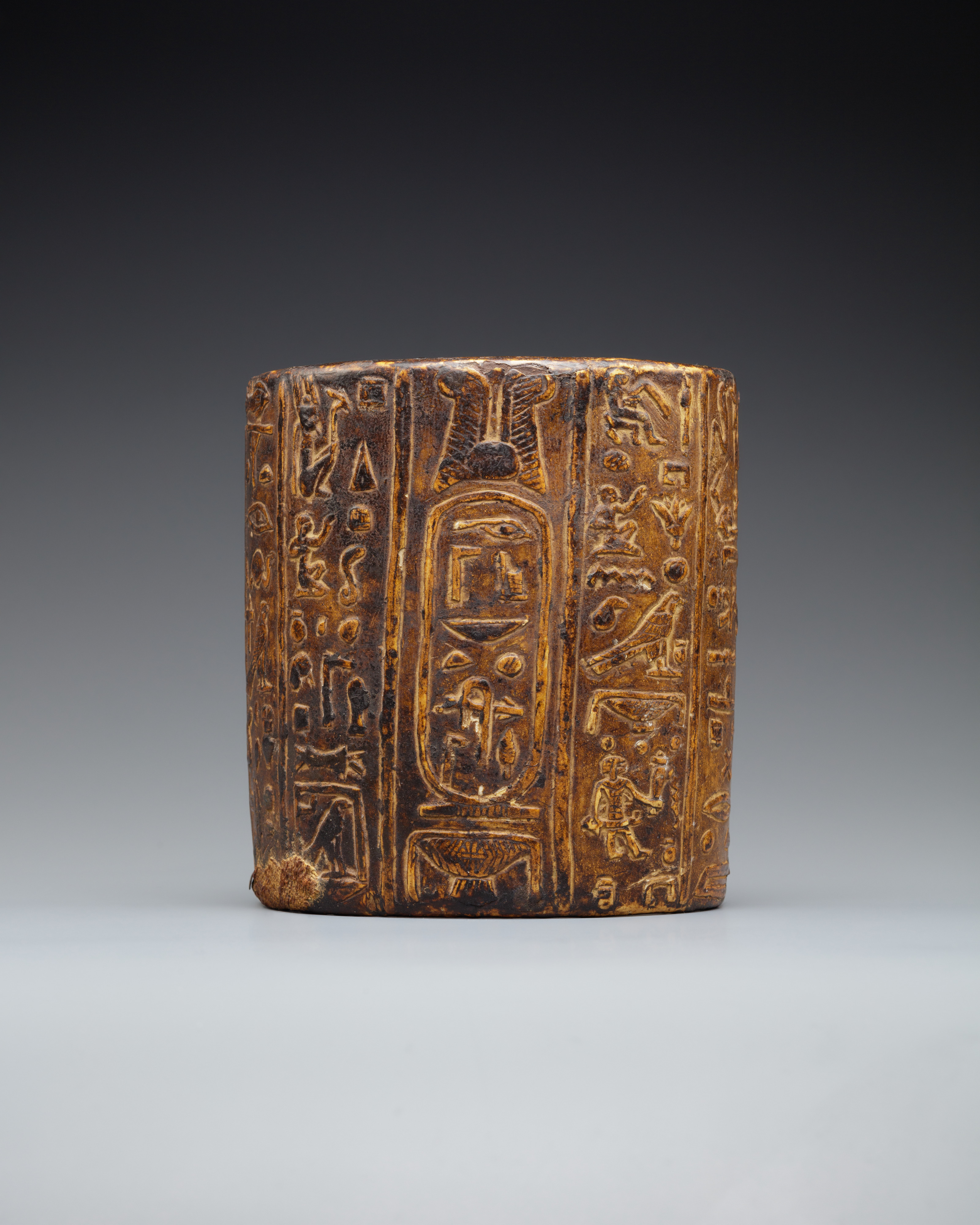
Heritage Analysis: The Gilded Armlet of Pedi-amun-pa-sheri
Introduction: Artifact as Strategic Asset
The gilded armlet of Pedi-amun-pa-sheri, a priest of ancient Egypt’s Third Intermediate Period (circa 1070–664 BCE), represents a convergence of material opulence, spiritual authority, and political symbolism. Crafted from wood, plaster, and gold leaf, this armlet is not merely an ornament but a codified statement of divine intermediation. For Katherine Fashion Lab, this artifact offers a profound template for 2026 high-end luxury strategy, where heritage, exclusivity, and narrative depth define brand value. This analysis examines the armlet’s symbolic power, historical adornment, and spiritual meaning, translating these elements into actionable insights for a luxury house seeking to differentiate through cultural resonance.
Symbolic Power: The Armlet as Hieroglyph of Authority
The armlet’s design—likely featuring motifs such as the scarab beetle, lotus, or winged sun disk—functions as a visual hieroglyph of priestly authority. In ancient Egyptian cosmology, the armlet was not decorative but ritualistic, worn during temple ceremonies to channel divine energy. The gold leaf, a material associated with the flesh of the gods (particularly Ra), imbued the priest with solar immortality. For Katherine Fashion Lab, this symbolic power translates into a strategic imperative: every luxury piece must encode a narrative of transcendence. In 2026, high-end consumers seek objects that elevate personal identity beyond materialism. The armlet suggests that luxury brands should embed symbols of protection, wisdom, or legacy—akin to the scarab’s rebirth—into their designs, creating talismanic value that justifies premium pricing and fosters emotional loyalty.
Historical Adornment: Material Hierarchy and Craft Prestige
The armlet’s medium—wood as base, plaster as structure, gold leaf as surface—reveals a deliberate material hierarchy. Wood, often sourced from imported cedar or acacia, symbolized earthly grounding; plaster provided a canvas for intricate relief; gold leaf signified the divine. This layering mirrors the priest’s role as a mediator between the mortal and eternal. For Katherine Fashion Lab, this offers a material strategy for 2026 luxury: juxtapose humble, sustainable bases (e.g., recycled metals, bio-resins) with precious finishes (e.g., 24-karat gilding, hand-painted enamel) to create a narrative of transformation. The armlet’s craftsmanship—likely executed by temple artisans—highlights the value of artisanal scarcity. In an era of mass production, Katherine Fashion Lab can adopt a “temple workshop” model: limited-edition pieces produced by master craftspeople, each armlet accompanied by a provenance certificate detailing its creation story. This aligns with the 2026 consumer trend toward “slow luxury” and cultural authenticity.
Spiritual Meaning: The Armlet as Ritual Interface
Pedi-amun-pa-sheri’s armlet served a spiritual function: it was a conduit for heka (magical power) during rituals, protecting the priest and amplifying his prayers. The placement on the arm—near the heart and hands—linked physical action to divine will. Inscriptions or motifs likely included the ankh (life) or djed pillar (stability), reinforcing cosmic order (Ma’at). For Katherine Fashion Lab, this spiritual dimension is critical for 2026 luxury positioning. Modern affluent consumers increasingly seek “meaningful materialism”—objects that promote well-being, mindfulness, or connection to heritage. The armlet suggests a product line where adornment functions as a personal ritual: a gilded cuff designed to be worn during meditation, or a bracelet inscribed with affirmations in ancient scripts. By framing jewelry as a spiritual tool, Katherine Fashion Lab can tap into the wellness economy, projected to reach $7 trillion by 2026. The brand could collaborate with cultural historians to develop “ritual kits” that include the armlet, a guide to its symbolism, and a meditation practice inspired by Egyptian temple rites.
2026 High-End Luxury Strategy: Translating Heritage into Market Dominance
To leverage the armlet’s heritage, Katherine Fashion Lab must execute a three-pillar strategy: Narrative Scarcity, Material Alchemy, and Ritual Experience.
Narrative Scarcity: The armlet’s uniqueness—only one priest wore it, in one temple, for one lifetime—informs a limited-edition “Pedi-amun-pa-sheri Collection.” Each piece (e.g., gilded cuffs, arm cuffs, or brooches) will be numbered and accompanied by a digital NFT that traces its design to the original artifact. This creates verifiable exclusivity, appealing to Gen Z and Millennial luxury buyers who prioritize provenance over price. The brand can host private viewings at museums (e.g., the Metropolitan Museum of Art’s Egyptian wing) to anchor the collection in institutional prestige.
Material Alchemy: The armlet’s wood-plaster-gold hierarchy inspires a “Layered Luxury” technique. Katherine Fashion Lab will use sustainable bamboo (symbolizing flexibility) as a base, coated in bio-plaster (derived from algae) to reduce carbon footprint, and finished with recycled gold leaf. This aligns with the 2026 luxury consumer’s demand for eco-consciousness without sacrificing opulence. Marketing copy should emphasize the “transformation” narrative: from earth to divine, much like the priest’s role.
Ritual Experience: The armlet’s spiritual function suggests a brand extension into “Sacred Adornment Workshops.” Clients can book sessions with Egyptologists to learn about the armlet’s symbolism, then customize their own piece with personal motifs (e.g., a chosen hieroglyph). This experiential luxury—priced at $25,000+ per session—creates deep emotional attachment and word-of-mouth advocacy. Additionally, Katherine Fashion Lab can launch a “Ma’at Collection” of everyday jewelry (e.g., gold-plated rings, earrings) inspired by the armlet’s motifs, accessible at $500–$2,000, democratizing the heritage while maintaining the core brand’s exclusivity.
Conclusion: The Armlet as Strategic Compass
The gilded armlet of Pedi-amun-pa-sheri is more than an ancient artifact; it is a blueprint for 2026 luxury strategy. By decoding its symbolic power, material hierarchy, and spiritual meaning, Katherine Fashion Lab can create a brand ecosystem that merges heritage with innovation, scarcity with sustainability, and adornment with ritual. In a market saturated with generic opulence, this artifact reminds us that true luxury is not about possessing gold—it is about embodying the divine. For Katherine Fashion Lab, the armlet’s legacy offers a path to market leadership: where every piece tells a story of cosmic order, and every client becomes a priest of their own identity.