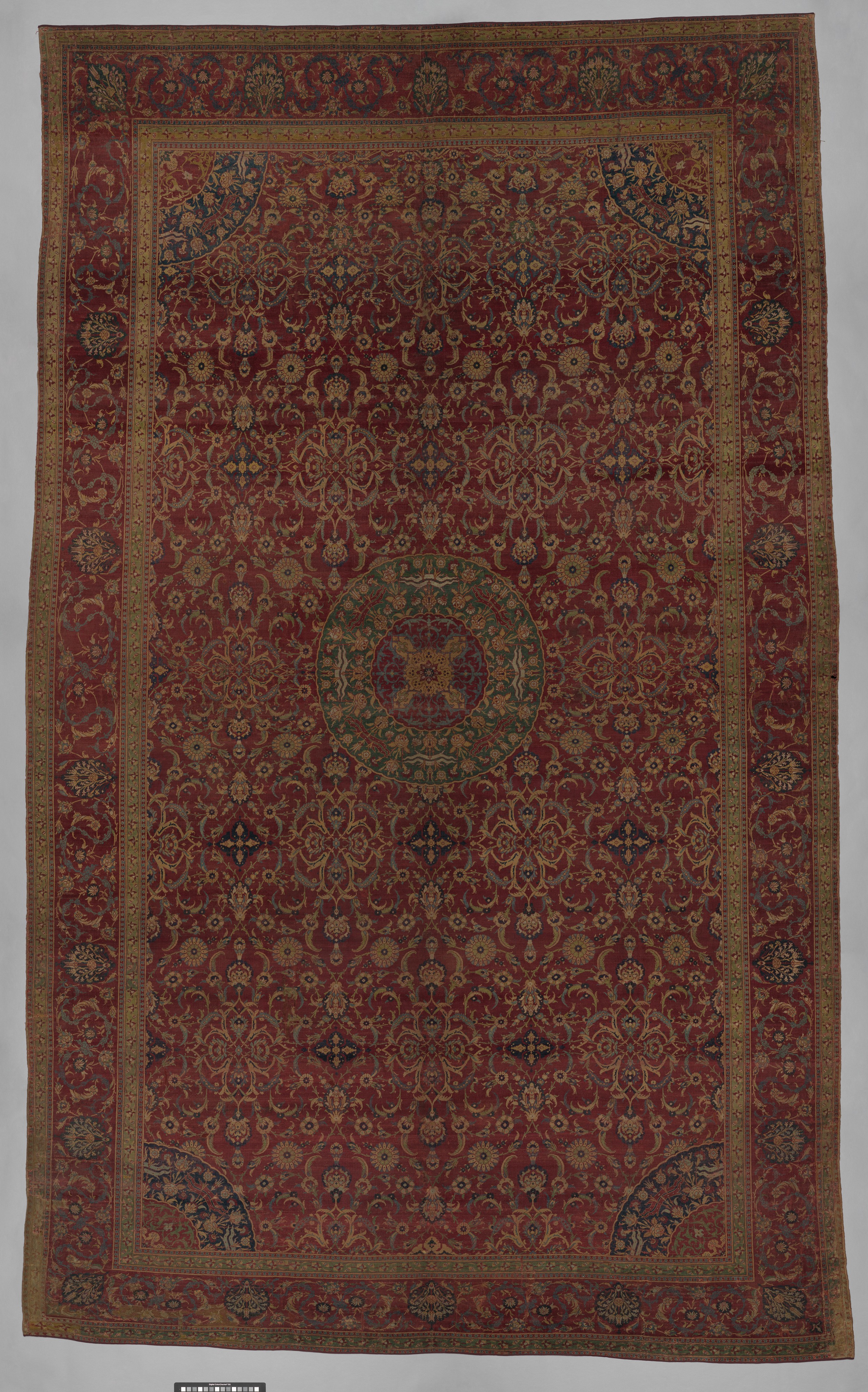
Executive Summary: The Carpet as Foundational Code
For Katherine Fashion Lab, heritage is not a static archive but a dynamic, codified system of meaning waiting to be translated. This analysis examines the carpet, specifically the ancient asymmetrically knotted pile construction, as a profound source of strategic brand equity. Originating in the crucibles of ancient Persian, Anatolian, and Central Asian civilizations, the carpet transcends its utilitarian function to emerge as a concentrated locus of symbolic power, spiritual narrative, and corporeal adornment. By deconstructing its materiality (silk warp, wool weft and pile) and its intricate craftsmanship, we unlock a non-verbal language of status, protection, and cosmology. This research positions the carpet not as a mere textile, but as the original wearable architecture—a portable domain of power. The strategic imperative for Katherine Fashion Lab’s 2026 high-end luxury strategy is to transcode this dense heritage into a contemporary lexicon of extreme luxury, moving beyond surface pattern appropriation to embody the carpet’s structural intelligence and talismanic authority.
Material Semiotics: Silk, Wool, and the Hierarchy of Substance
The specified material composition—silk warp, wool weft and pile—is itself a deliberate statement of symbolic and structural power. The silk warp forms the hidden, vertical foundation. In ancient contexts, silk was a sovereign material, a currency of empires and a fiber associated with divinity, immortality, and the celestial. Its use as the unseen backbone signifies a hidden strength and a luxury that is known but not fully visible, a core tenet of quiet, confident opulence. The wool, forming the weft and the visible, tactile pile, connects to terrestrial realms: pastoral life, warmth, resilience, and community. This material dialectic creates a metaphysical tension: the celestial (silk) structures the earthly (wool), which in turn manifests the visible design. The asymmetrical or Persian knot, allowing for greater curvature and detail than its symmetrical counterpart, is the technological innovation that enabled the translation of complex spiritual and symbolic concepts into textile form. This knot is the binary code of this ancient medium, permitting a fidelity of expression that made carpets into narrative canvases.
The Pile as Proto-Pixel: Encoding Narrative and Status
Each knot of wool pile functioned as a proto-pixel, a unit of information in a larger symbolic program. The density of knots directly correlated with wealth, power, and artistic ambition. To own or commission a densely knotted carpet was to advertise one’s command over immense resources—time, skilled labor, and materials. The patterns knotted into the pile were rarely decorative whimsy; they were heraldic, botanical, and cosmological codes. The boteh (later Westernized as the paisley) symbolized life eternal, the cypress tree denoted mourning and eternity, and intricate geometric guls acted as tribal identifiers and protective talismans. The carpet was thus a form of historical adornment that adorned not just the floor, but the very identity and spiritual standing of its owner.
Symbolic Power and Spiritual Meaning: The Portable Sacred Domain
In ancient civilizations, the carpet performed a critical spiritual function: it demarcated sacred space within the profane. It was a portable plot of paradise, a microcosm of the ordered universe. Prayer carpets, with their architectural mihrab (prayer niche) design, physically oriented the believer and created a clean, defined space for communion. This concept extends beyond the explicitly religious. The carpet defined the locus of authority—the throne sat upon it, the elder’s word was given upon it. Its borders contained and protected, while its field represented a world in perfect, harmonious order.
Adornment of the Body and the Chamber
As an instrument of historical adornment, the carpet adorned the environment to elevate the human within it. It was the ultimate accessory to power and piety. To walk or sit upon such intricate symbolism was to literally place oneself within a narrative of power, protection, and divine favor. It transformed architecture, making the tent palatial and the stone chamber intimate. The body, in contact with this surface, participated in its symbolism. The tactile experience of the wool pile—its resilience underfoot, its visual depth—engaged the senses in a holistic performance of luxury that was both private and performative.
Strategic Translation: 2026 High-End Luxury Brand Strategy
For Katherine Fashion Lab’s 2026 strategy, the carpet offers a rich, untapped vein of codes far beyond the oft-referenced “oriental print.” The strategy must be one of deep transposition, not appropriation. The goal is to engineer contemporary pieces that carry the carpet’s intrinsic weight of meaning, crafting a silent language of extreme luxury for the discerning connoisseur.
Pillar 1: Structural Transposition vs. Surface Citation
Move beyond printing carpet patterns onto fabric. Instead, transpose the structural principles. Engineer garments with a hidden, foundational structure of rare, luminous materials (akin to the silk warp) that support a lush, textured, three-dimensional surface (the wool pile). Explore innovative knitwear, embroidery, and felting techniques that replicate the density and relief of knotted pile, creating garments that are architectural in their construction and tactilely immersive. A coat is not merely inspired by a carpet; it is engineered like one, with a hidden matrix supporting a narrative-rich, textured surface.
Pillar 2: The Talismanic Garment
In an era seeking meaning and protection, revive the carpet’s role as a spiritual and protective domain. Develop pieces conceived as modern talismans. Integrate symbolic motifs from carpet iconography—protective borders, eternal gardens, cosmic diagrams—into the functional details of garments: the lining of a blazer, the underside of a collar, the interior of a sleeve. This creates a private, potent symbolism for the wearer, a return to adornment with intent. Each piece is accompanied by a “codex” explaining its symbolic program, adding a layer of intellectual and spiritual luxury.
Pillar 3: The Portable Domain – Curated Experiences
Extend the concept of the carpet as a portable, defining space into experiential luxury. The 2026 strategy should include limited, ultra-high-end offerings that are not single garments, but curated “domains.” This could be a travel ensemble presented in a custom, carpet-inspired case that unfolds to define a personal space in a hotel suite, or a collection where each look is paired with a bespoke textile object (a throw, a cushion) to transform the wearer’s immediate environment. This positions Katherine Fashion Lab not just as a clothier, but as a curator of atmospheric, personal power.
Conclusion: Weaving Legacy into Future Code
The ancient knotted carpet, in its sophisticated material dialectic and symbolic density, provides a masterclass in non-verbal communication of status, spirituality, and domain. For Katherine Fashion Lab, its value lies in its complete ecosystem of meaning—from its sovereign material hierarchy to its function as a wearable, spiritual architecture. The 2026 luxury strategy must undertake a forensic, respectful deconstruction of this code to rebuild it within a contemporary sartorial context. By focusing on structural intelligence, talismanic intent, and the creation of portable domains, the Lab can craft a luxury proposition of profound depth and resonance. This moves the brand from fashioning garments to engineering modern heirlooms imbued with the silent, powerful language of an ancient civilization’s most cherished artifact.