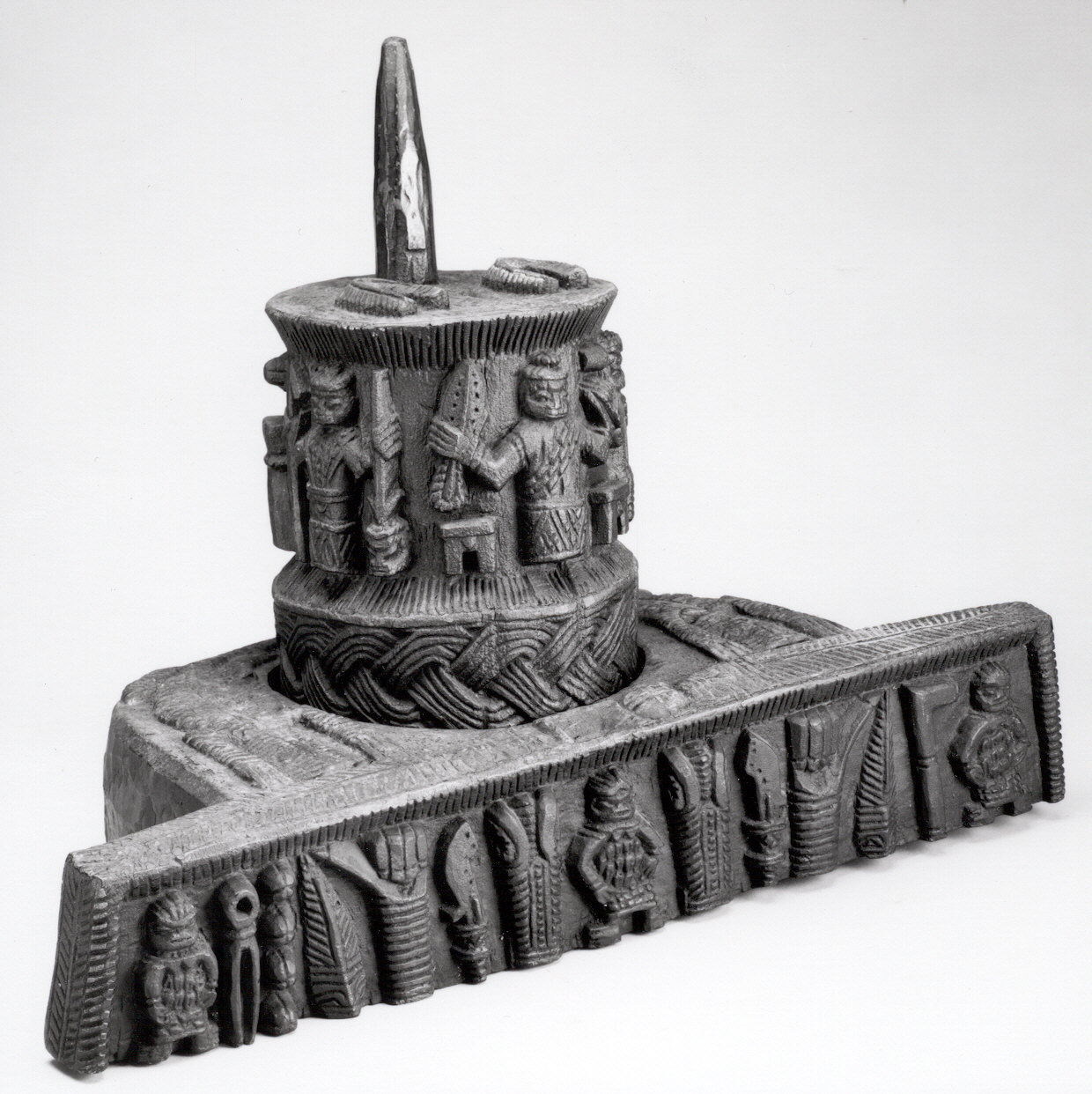
Heritage Analysis: The Ikẹ̀gòbọ̀ (Altar to the Hand) of the Edo Peoples
Introduction: The Object as a Nexus of Power and Identity
The Ikẹ̀gòbọ̀, or Altar to the Hand, represents a profound intersection of spiritual belief, social hierarchy, and material culture within the Edo civilization of present-day Nigeria. Crafted primarily from wood and layered with sacrificial materials such as kaolin, camwood, and animal residues, this object is not merely a decorative artifact but a functional conduit for divine favor. For Katherine Fashion Lab’s 2026 high-end luxury strategy, the Ikẹ̀gòbọ̀ offers a compelling blueprint for embedding symbolic power into wearable adornment—transforming fashion from an aesthetic statement into a talismanic expression of legacy, agency, and spiritual protection.
Symbolic Power: The Hand as a Metaphor for Agency and Prosperity
In Edo cosmology, the hand (ọwọ́) is the primary instrument of human action, labor, and creation. The Ikẹ̀gòbọ̀ is consecrated to Ọ̀gún, the deity of war, iron, and craftsmanship, or to the individual’s personal destiny (ẹ̀lẹ́dàá). The altar functions as a visual and ritual petition for success in one’s endeavors—whether in trade, artistry, or governance. The carved hand motifs, often rendered with exaggerated fingers and open palms, symbolize generosity, reception, and the capacity to seize opportunity. Sacrificial materials like cowrie shells and red camwood paste are applied to the wood, each layer accumulating spiritual potency. For a luxury brand, this concept translates into adornment as a site of intention: rings, bracelets, and gloves that are not just accessories but repositories of the wearer’s aspirations. The 2026 high-end consumer seeks objects with narrative weight; the Ikẹ̀gòbọ̀ validates that power is not worn—it is invoked.
Historical Adornment: The Aesthetics of Ritual Accumulation
Historically, the Ikẹ̀gòbọ̀ was commissioned by Edo nobles, warriors, and merchants who sought to amplify their influence. The materiality of the altar—rough-hewn wood, glossy camwood, and the stark white of kaolin—creates a textural dialogue between the organic and the ceremonial. Adornment in this context was not about symmetry or minimalism but about layered significance. The Edo peoples understood that beauty derived from ritual use, not static display. The altar’s surface, scarred by repeated offerings and libations, tells a story of endurance and devotion. For Katherine Fashion Lab, this principle challenges the luxury industry’s obsession with pristine perfection. Instead, it proposes adornment that evolves with the wearer—pieces that can be marked, engraved, or infused with personal symbols over time. This aligns with the 2026 trend toward patina-rich, bespoke luxury, where the object’s history becomes its primary value proposition.
Spiritual Meaning: The Altar as a Portal Between Realms
The Ikẹ̀gòbọ̀ is not a passive sculpture; it is an active spiritual technology. Priests (ọbọ̀) and devotees engage in regular rituals—prayers, drumming, and the application of fresh sacrificial materials—to recharge the altar’s energy. The hand, as the central motif, is believed to channel the divine into human action. This concept of reciprocity between the spiritual and the material is critical for a luxury strategy rooted in authenticity. The 2026 consumer, particularly in the high-end market, is increasingly drawn to brands that offer intangible benefits: protection, confidence, and a sense of connection to something greater than oneself. By referencing the Ikẹ̀gòbọ̀, Katherine Fashion Lab can position its adornments as modern talismans—objects that the wearer activates through intention, ritual, or personal narrative. This moves the brand beyond mere aesthetics into the realm of spiritual commerce, a niche that commands premium pricing and deep loyalty.
2026 High-End Luxury Strategy: Translating Heritage into Market Dominance
To operationalize the Ikẹ̀gòbọ̀’s principles, Katherine Fashion Lab must adopt a three-pillar strategy:
1. Material Storytelling: The altar’s use of wood, camwood, and kaolin should inspire a signature material palette for 2026 collections. Consider ebony inlaid with red coral (a nod to camwood) and matte white enamel (evoking kaolin). Each piece should come with a ritual card explaining the symbolic meaning of the materials, transforming the purchase into an educational experience.
2. Customization as Consecration: Offer a “Hand of Destiny” service where clients commission a piece—ring, cuff, or brooch—that is personalized with their own symbols of agency (e.g., a miniature tool, a coin, or a family crest). This mirrors the Edo practice of adding sacrificial materials to the altar for specific petitions. The act of customization becomes a rite of empowerment, justifying a price point of $10,000+.
3. Experiential Retail as Ritual Space: Design flagship stores that function as contemporary altars. Use dark wood, subdued lighting, and scent diffusers with camwood and frankincense. Sales associates, trained as “heritage curators,” guide clients through a brief consultation on their personal goals—career, creativity, relationships—and recommend pieces that align with those intentions. This creates an emotional transaction, not just a sale.
Conclusion: The Altar as a Blueprint for Meaningful Luxury
The Ikẹ̀gòbọ̀ is a testament to the Edo understanding that true power is earned through intention, ritual, and material sacrifice. For Katherine Fashion Lab, this heritage object offers a roadmap to differentiate in a saturated market. By embracing symbolic power, historical adornment, and spiritual meaning, the brand can craft a 2026 strategy that resonates with consumers seeking depth, authenticity, and agency. The hand that gives, receives, and creates—this is the ultimate luxury. Let the Ikẹ̀gòbọ̀ guide the way.