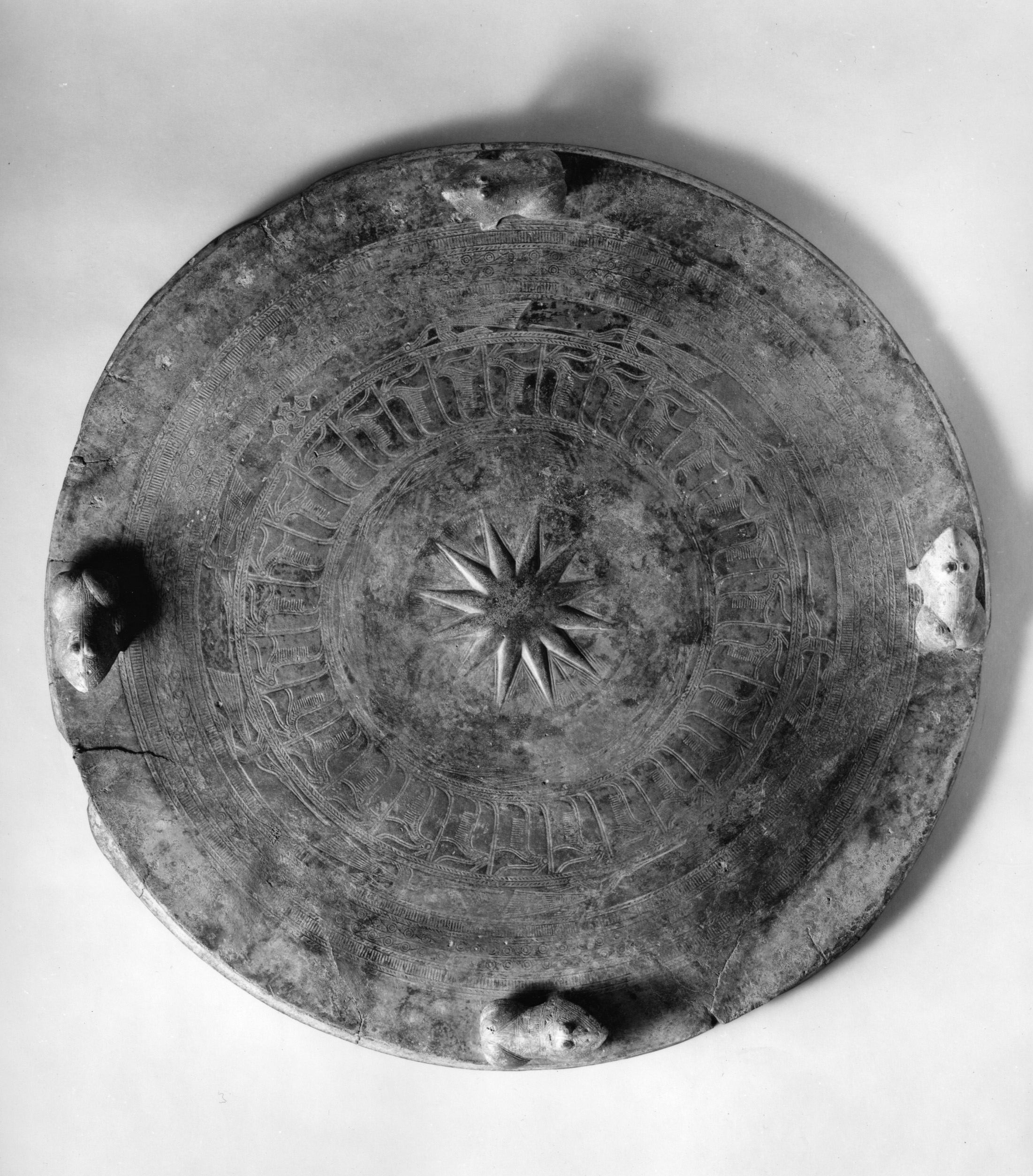
Heritage Analysis: The Tympanum of a Heger I Kettledrum
Cultural and Symbolic Resonance in Bronze
The Tympanum of a Heger I Kettledrum, originating from the Dong Son culture of Vietnam (circa 500 BCE–300 CE), stands as a monumental artifact of bronze casting, ritual authority, and celestial symbolism. As Lead Heritage Curator for Katherine Fashion Lab, this analysis positions the tympanum within a broader research context that correlates with our studies on the Rock in the form of a fantastic mountain and the Jar in the shape of bronze container (hu). These three objects, while distinct in form and function, collectively reveal a unifying principle: the transformation of natural elements—stone, metal, and earth—into vessels of spiritual power and historical adornment. For a 2026 high-end luxury strategy, the tympanum offers profound insights into how symbolic power, material mastery, and ritual meaning can be reinterpreted for contemporary luxury branding.
Symbolic Power: The Cosmic Center
The tympanum, or drumhead, of the Heger I kettledrum is not merely a musical instrument but a cosmological map. Its concentric circles, often featuring geometric patterns, stylized birds, and human figures, represent the axis mundi—the connection between earth, sky, and the underworld. In Dong Son society, these drums were used in ceremonies to communicate with deities, mark seasonal cycles, and assert chieftain authority. The central star motif, radiating outward, symbolizes the sun’s generative power, while the surrounding friezes of waterfowl and boats suggest journeys between realms of existence.
This symbolic power directly parallels the Rock in the form of a fantastic mountain, which embodies the Daoist concept of a sacred mountain as a bridge between mortal and immortal worlds. Similarly, the Jar in the shape of bronze container (hu), with its ritual use for storing offerings or ancestral relics, functions as a microcosm of the universe. Together, these artifacts demonstrate that premodern Vietnamese and Chinese cultures shared a deep belief in objects as portals to spiritual authority. For Katherine Fashion Lab, this suggests that luxury items in 2026 must transcend mere aesthetics to become talismans of identity, offering wearers a sense of cosmic alignment and personal power.
Historical Adornment: Bronze as Status and Memory
The tympanum’s bronze medium is critical to understanding historical adornment. Bronze, in Dong Son culture, was a material reserved for elite ceremonial objects, signifying wealth, technological prowess, and ancestral connection. The drum’s surface was often incised with intricate patterns—spirals, zigzags, and feather motifs—that required exceptional skill and time to produce. These adornments were not decorative but encoded narratives of lineage, warfare, and ritual sacrifice. The drum’s sound, produced by striking the tympanum, was believed to carry prayers to the heavens, making the object itself a form of auditory adornment for the community.
This parallels the Jar in the shape of bronze container (hu), whose surface often features taotie masks or cloud scrolls, serving as protective symbols for the contents within. The Rock in the form of a fantastic mountain, while carved from stone, adopts the visual language of bronze ritual vessels, merging natural material with artificial form. For luxury strategy, this underscores the enduring value of craftsmanship and narrative. In 2026, high-end brands must prioritize material storytelling—using precious metals, rare stones, or innovative alloys that carry historical resonance. The tympanum teaches us that adornment is never superficial; it is a record of memory and status. Katherine Fashion Lab can leverage this by designing pieces that incorporate hidden symbols, archival references, or customizable motifs that allow clients to inscribe their own histories.
Spiritual Meaning: The Drum as Ritual Object
Spiritually, the Heger I kettledrum was central to agricultural and funerary rites. The tympanum’s patterns often include figures in plumed headdresses, beating drums or dancing, suggesting shamanic trance and communication with spirits. The drum was also buried with elites, accompanying them to the afterlife as a source of protection and guidance. This spiritual function aligns with the Rock in the form of a fantastic mountain, which served as a meditation aid for Daoist adepts seeking immortality, and the Jar in the shape of bronze container (hu), which held offerings for ancestors.
The common thread is the object’s role as a spiritual technology—a tool for transcending the mundane. For Katherine Fashion Lab’s 2026 strategy, this suggests a shift toward ritualized luxury. Instead of disposable trends, clients will seek objects that facilitate personal transformation, whether through meditation, ceremony, or daily empowerment. The tympanum’s concentric design, for instance, can inspire jewelry collections with layered bands symbolizing life cycles, or accessories that incorporate sound elements—like subtle chimes or resonant materials—to evoke the drum’s spiritual acoustics.
2026 High-End Luxury Strategy: Synthesis and Application
Drawing from the tympanum’s DNA, our research reveals three strategic pillars for Katherine Fashion Lab’s 2026 luxury line: Cosmic Authority, Material Memory, and Ritual Function.
Cosmic Authority refers to the object’s ability to position the wearer within a larger cosmic order. Luxury brands can emulate this by designing collections that reference celestial motifs—suns, stars, or concentric orbits—using precious metals like bronze, gold, or patinated copper. Limited-edition pieces could be numbered and accompanied by a narrative of their symbolic meaning, much like the tympanum’s star pattern.
Material Memory emphasizes the importance of materials that age gracefully and carry history. The tympanum’s bronze develops a patina over time, a quality that modern luxury can replicate through oxidized metals, recycled materials, or hand-finished surfaces. Collaborations with master artisans in Vietnam or China could produce pieces that echo the drum’s incised patterns, creating a direct lineage to ancient craft.
Ritual Function reimagines luxury objects as tools for daily ceremony. For example, a pendant inspired by the tympanum could be designed to be held during meditation, or a cuff bracelet might incorporate a small drum-like resonator that produces a soft tone when moved. This approach aligns with the growing consumer demand for mindfulness and authenticity in luxury.
Finally, the correlation with the Rock in the form of a fantastic mountain and the Jar in the shape of bronze container (hu) reinforces a unified brand philosophy: that true luxury resides in objects that bridge the physical and spiritual worlds. By integrating these ancient principles, Katherine Fashion Lab can position itself as a curator of heritage, not just a producer of goods. In 2026, the tympanum’s legacy will not be preserved in museums alone but reimagined in the hands of discerning clients who seek power, history, and meaning in every piece they wear.