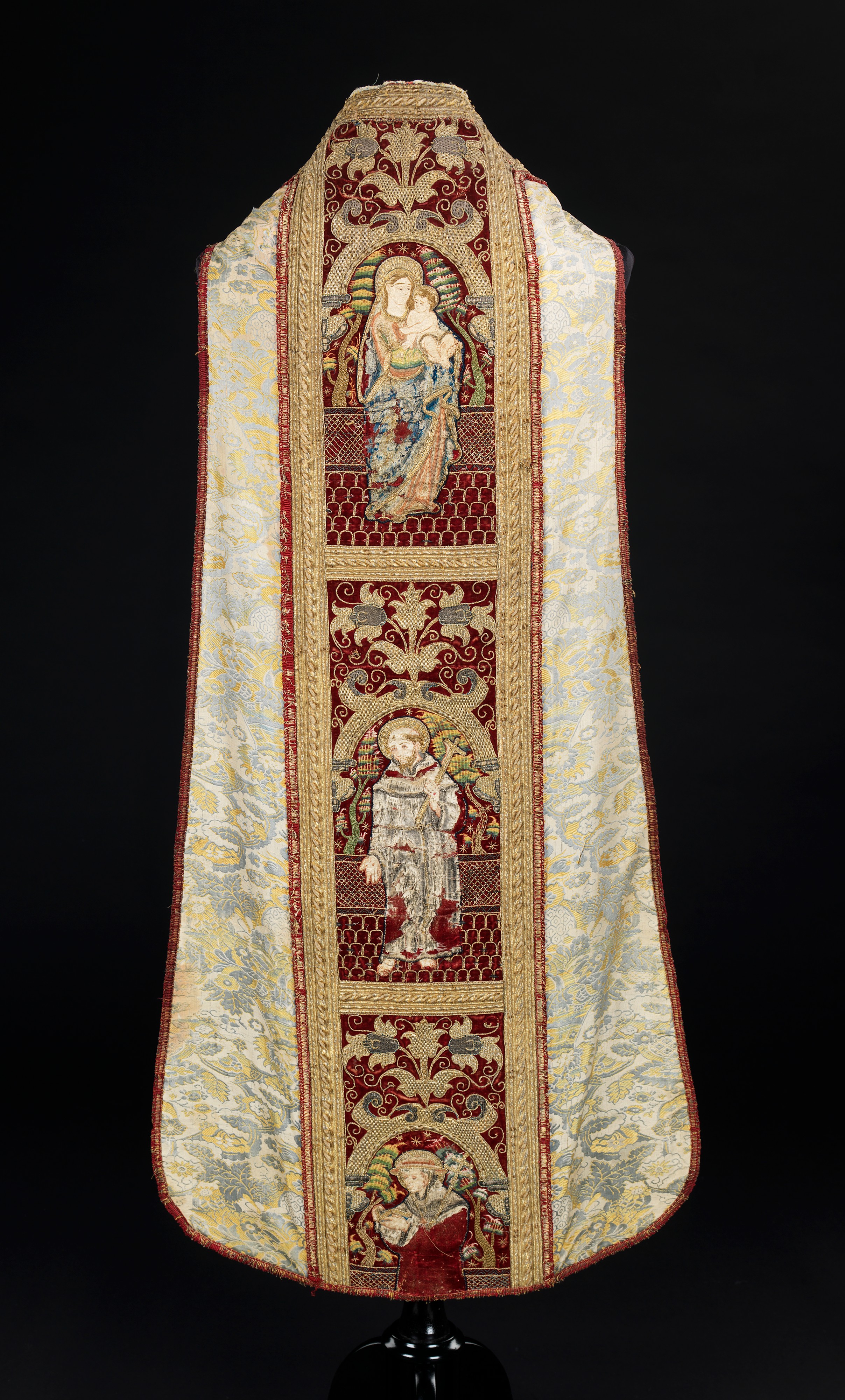
The Chasuble as Couture: A Study in Global Heritage and Material Mastery
The chasuble, historically a liturgical vestment, has long been relegated to the realms of religious ceremony and ecclesiastical tradition. Yet, within the atelier of Katherine Fashion Lab, this garment is reborn as a profound statement of couture—a standalone study in the intersection of global heritage, material alchemy, and sculptural form. This analysis deconstructs how the chasuble, stripped of its exclusively sacred context, emerges as a canvas for narrative and innovation, articulated through the deliberate selection of silk, metal, and linen.
Historical Resonance and the Reclamation of Form
To understand the chasuble as couture, one must first acknowledge its origins. Deriving from the Latin casula (meaning “little house”), the chasuble was a simple, circular cloak worn by celebrants in early Christian rites. Over centuries, it evolved—its shape abbreviated for practicality, its decoration laden with iconography. Katherine Fashion Lab reclaims this silhouette not as a relic, but as a sculptural archetype. The garment’s inherent volume—its generous draping, its architectural shoulders, its unbroken fall of fabric—offers a unique opportunity to explore negative space and bodily extension. Here, the chasuble is not worn to conceal but to amplify the human form, creating a dialogue between the wearer and the void they inhabit.
This recontextualization is deliberate. By removing the chasuble from its liturgical setting, the Lab invites a secular reverence—a respect for craftsmanship and ritual that transcends any single faith. The garment becomes a vessel for cultural memory, its shape echoing the vestments of Byzantine priests, the ponchos of Andean weavers, and the ceremonial robes of East Asian dynasties. Global heritage is not a decorative afterthought; it is the foundational grammar of the design.
Material Narratives: Silk, Metal, Linen
The triumvirate of materials—silk, metal, linen—is not arbitrary. Each fiber carries its own history, weight, and tactile language, and their interplay is the core of the Lab’s couture philosophy.
Silk, the undisputed aristocrat of textiles, introduces luminosity and fluidity. Sourced from heritage sericulture traditions—whether from the mulberry groves of China, the wild looms of India, or the artisan workshops of Como—silk in this context is not merely a fabric but a liquid metal. It catches light, creating a halo effect around the wearer. For the chasuble, silk is used in layers: a matte charmeuse for the inner lining that whispers against the skin, and a heavier, iridescent organza for the outer shell that holds its shape. The contrast between the two—one yielding, one resistant—generates a dynamic tension that mirrors the chasuble’s historical duality of humility and grandeur.
Metal enters the composition not as armor, but as structural poetry. Fine-gauge silver and gold threads are woven into the silk at specific stress points—the shoulders, the nape, the hem—creating a subtle armature. These metallic elements are not merely ornamental; they serve a functional couture purpose. They weight the fabric, ensuring the chasuble falls in prescribed folds rather than collapsing into chaos. Additionally, small, hand-hammered metal discs, reminiscent of ancient Roman fibulae, are sewn along the front closure. They catch the light like scattered stars, referencing the celestial motifs found in medieval manuscripts and Islamic geometric patterns. The metal is a bridge between the earthly and the transcendent, grounding the ethereal silk in a tangible, almost industrial reality.
Linen, often considered the humblest of fibers, is elevated here to a status of quiet authority. A heavy, unbleached linen is used for the chasuble’s understructure—the interior yoke and the hidden seams. This choice is a testament to the Lab’s commitment to integrity of construction. Linen breathes, it ages gracefully, and it develops a patina of wear that tells a story. In a garment as voluminous as a chasuble, the linen substructure prevents the silk from stretching or distorting over time. It is the backbone, unseen but essential, much like the cultural traditions that underpin the design. The contrast between the rough, organic texture of linen and the polished sheen of silk and metal creates a sensory dialogue—a reminder that couture is as much about touch as it is about sight.
Construction and the Sculptural Silhouette
The chasuble’s construction in this standalone study is a masterclass in draping and tailoring. Unlike conventional garments that follow the body’s contours, the chasuble is designed to create a new silhouette. The pattern is cut on the bias for the silk panels, allowing the fabric to stretch and curve around the shoulders without darts or seams. The metal threads are hand-stitched into the bias cuts, acting as internal stays that guide the fabric’s fall. The result is a garment that appears both weightless and anchored—a contradiction resolved through precision.
The sleeves, or lack thereof, are reimagined. Traditional chasubles often have open sides; here, the Lab introduces a subtle, integrated sleeve cap cut from a single piece of linen-silk blend. This cap extends just to the upper arm, allowing the main body to drape freely while providing a point of structural stability. The hem is left raw, the silk and linen threads allowed to fray slightly, echoing the unfinished edges of ancient textiles. This deliberate imperfection is a signature of couture—a nod to the hand that made it, resisting the sterile perfection of mass production.
Color Palette and Symbolic Resonance
The color story is restrained yet potent. The primary palette draws from global heritage: deep indigo from West African indigo vats, parchment white reminiscent of Egyptian linen, and oxidized silver that references the patina of Byzantine icons. These hues are not merely aesthetic; they carry symbolic weight. Indigo speaks to labor and transformation—the dyeing process itself is a ritual. White evokes purity and possibility, a blank slate for the wearer’s narrative. Silver bridges the sacred and the profane, reflecting the world around the garment. The metal discs are left unpolished, their tarnish a deliberate embrace of time’s passage.
Cultural Synthesis and the Wearer’s Role
This chasuble is not a costume; it is a portable artifact. It invites the wearer to become a participant in a broader cultural conversation. The garment’s global heritage is not appropriated but synthesized—each element is researched, respected, and recontextualized. The silk pays homage to the Silk Road, the linen to ancient Mediterranean trade, the metal to pre-Columbian metallurgy. The wearer, whether at a gallery opening, a private ritual, or a moment of solitary reflection, activates these histories. The chasuble does not demand a specific belief system; it demands presence. It asks the wearer to stand differently, to move with deliberation, to inhabit space with intention.
Conclusion: The Chasuble as a Couture Manifesto
Katherine Fashion Lab’s chasuble is a manifesto for a new kind of couture—one that honors heritage without being bound by it, that employs luxury materials not for ostentation but for narrative depth, and that elevates a forgotten silhouette into a contemporary icon. In this standalone study, the chasuble is no longer a garment of the past; it is a lens through which we examine the future of fashion. It is a testament to the power of material intelligence, cultural reverence, and the enduring relevance of the handcrafted. For the discerning collector, this chasuble is not merely an acquisition but an heirloom—a piece of global history, rewoven for the present.