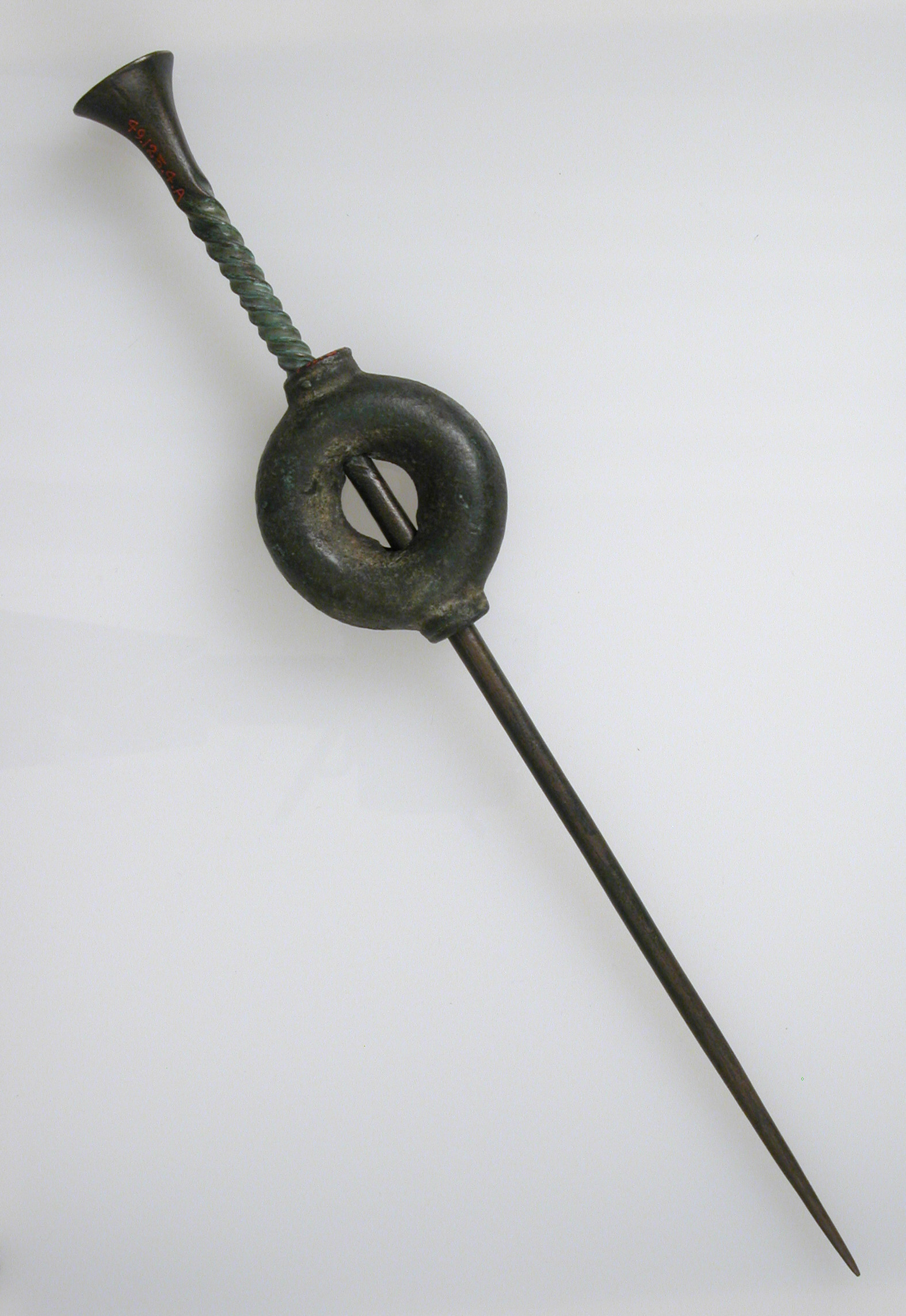
Heritage Analysis: The Irish Copper Alloy Pin
Introduction: The Pin as a Portal to Power
The humble pin, often dismissed as a mere functional fastener, occupies a profound position within the Irish cultural and spiritual lexicon. When crafted from copper alloy—a material revered for its conductive properties and ancient associations with the goddess Brigid—the pin transcends utility to become a vessel of symbolic power, historical adornment, and spiritual meaning. For Katherine Fashion Lab, this analysis serves as a strategic standalone research document, designed to inform a 2026 high-end luxury strategy that harnesses the pin’s latent heritage as a talisman of identity, protection, and prestige. By decoding the pin’s role in Irish history, we unlock a narrative that aligns seamlessly with contemporary luxury consumers’ yearning for authenticity, craftsmanship, and metaphysical resonance.
Symbolic Power: The Pin as a Marker of Status and Sovereignty
In early Irish society, the pin was not merely an accessory; it was a declaration of rank, allegiance, and authority. The penannular brooch, a precursor to the modern pin, was worn by chieftains, druids, and warriors to secure their cloaks. Its open ring design, often terminating in ornate animal heads or geometric patterns, symbolized the cyclical nature of life and the unbroken bond between the wearer and their tribe. The copper alloy used in these artifacts was particularly significant. Copper, mined from the ancient hills of Mount Gabriel in County Cork, was associated with the earth goddess Danu, mother of the Tuatha Dé Danann. Wearing a copper alloy pin was thus an act of claiming divine favor and territorial dominion.
For Katherine Fashion Lab, this symbolic power translates into a luxury strategy centered on exclusivity and lineage. A 2026 collection could feature limited-edition pins engraved with Celtic knotwork or Ogham script, each piece accompanied by a provenance card detailing its symbolic meaning. The pin becomes a status cipher—a silent declaration of the wearer’s sophistication and connection to ancient sovereignty. This appeals to the high-net-worth individual who seeks not just beauty, but a narrative of power and belonging.
Historical Adornment: From Function to Fashion
The evolution of the Irish pin from a utilitarian object to an adornment of high artistry mirrors the trajectory of luxury fashion itself. During the Early Medieval period (5th–10th centuries), Irish metalworkers achieved unparalleled mastery in copper alloy casting. Pins were often gilded, inlaid with enamel, or studded with imported glass. The Tara Brooch, though silver, exemplifies the pinnacle of this craft, with its intricate filigree and amber settings. However, copper alloy pins were the democratic luxury of their time—accessible to the emerging merchant class yet still imbued with prestige.
The penannular pin evolved into the ringed pin, a simpler variant that became a staple of Irish dress until the 17th century. Its design—a straight shank with a rotating ring—allowed for quick fastening and removal, reflecting a society that valued both practicality and ornamentation. This duality is critical for Katherine Fashion Lab’s 2026 strategy. The modern luxury consumer demands pieces that are both functional and iconic. A copper alloy pin designed for the collection could feature a detachable ring that transforms from brooch to pendant, echoing the adaptability of its historical predecessor while offering contemporary versatility.
Spiritual Meaning: The Pin as Talisman and Threshold Guardian
Beyond its social function, the Irish copper alloy pin held deep spiritual significance. In Celtic cosmology, the pin was a threshold object, often buried at the entrances of homes or worn during rites of passage. Copper, as a conductor of energy, was believed to channel the sídhe (fairy folk) and protect against malevolent spirits. The act of pinning a garment was akin to binding fate—securing the soul within the body and the body within the community. Pins were also used in divination rituals, where they were dropped into water to predict the future or cast into sacred wells as offerings to Brigid, the goddess of poetry, healing, and smithcraft.
This spiritual dimension offers Katherine Fashion Lab a unique positioning in the 2026 luxury market. Consumers are increasingly drawn to mindful luxury—objects that serve as anchors for intention and well-being. A pin designed with a small, hidden compartment for a personal blessing or gemstone (e.g., a sliver of Connemara marble or a tiny crystal) would resonate with this trend. Marketing could emphasize the pin as a personal talisman, with each piece blessed in a ceremony inspired by ancient Irish traditions. This transforms the purchase from a transaction into a ritualistic acquisition, elevating brand loyalty and emotional connection.
2026 High-End Luxury Strategy: The Copper Alloy Pin as a Heritage Asset
Integrating the Irish copper alloy pin into Katherine Fashion Lab’s 2026 collection requires a multi-tiered strategy that leverages heritage, scarcity, and storytelling. The following framework is recommended:
1. Material Provenance and Artisan Collaboration
Source copper alloy from reclaimed or ethically mined Irish copper, partnered with contemporary metalsmiths from the Dublin School of Metalwork or the Burren College of Art. Each pin should be hallmarked with a unique code linking it to its geographic and historical origin. This creates a certificate of authenticity that appeals to collectors and investors.
2. Narrative-Driven Design Language
Offer three thematic lines: Sovereignty (inspired by chieftain brooches), Threshold (inspired by spiritual and protective pins), and Cycle (inspired by the penannular ring). Each line uses copper alloy with patina finishes that evoke ancient oxidation, paired with modern minimalist silhouettes to ensure wearability in high-fashion contexts.
3. Ritualized Unboxing and Digital Storytelling
Package each pin in a hand-stitched linen pouch with a card explaining its symbolic meaning. Include a QR code linking to a short film featuring an Irish historian or archaeologist discussing the pin’s heritage. For the Threshold line, offer an optional blessing ceremony via live stream, conducted by a modern druid or cultural custodian.
4. Limited Edition and Price Positioning
Release only 500 units per design, with prices starting at $2,500 for standard models and $10,000+ for bespoke, commission-only pieces featuring personalized Ogham inscriptions. This scarcity mirrors the original rarity of high-status Irish pins and justifies the luxury price point.
5. Strategic Collaborations and Cultural Partnerships
Partner with the National Museum of Ireland for an exclusive exhibition of historical pins, with a pop-up retail experience at the museum’s Kildare Street location. Collaborate with Irish fashion designers (e.g., Simone Rocha or J.W. Anderson) for a limited co-branded capsule that integrates the pin into contemporary runway looks.
Conclusion: The Pin as a Legacy Object
The Irish copper alloy pin is far more than a historical artifact; it is a living symbol of power, protection, and prestige. For Katherine Fashion Lab, this heritage analysis reveals a clear pathway to creating a 2026 luxury strategy that is both commercially viable and culturally profound. By honoring the pin’s symbolic power, historical adornment, and spiritual meaning, the brand can offer discerning clients an object that is not merely worn, but experienced. In an era of mass production and digital saturation, the pin stands as a testament to the enduring value of the handmade, the sacred, and the sovereign. This is not simply fashion—it is the reclamation of a heritage that has been waiting to be pinned into place.