Theatrical Transcendence: Deconstructing the Sartorial Code of the Kabuki Aragoto Hero
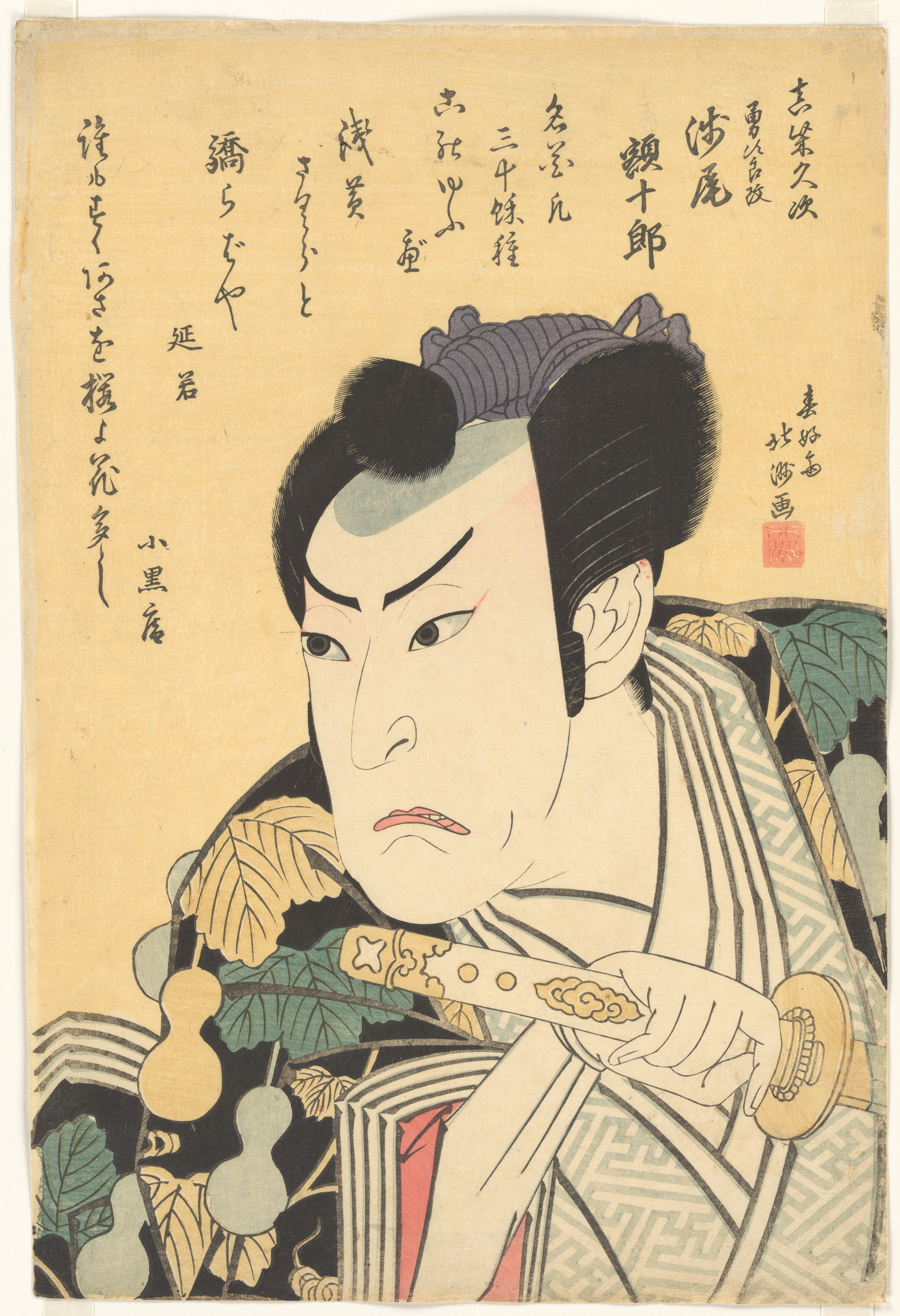
Within the curated archives of Katherine Fashion Lab, the woodblock print depicting the actor Asao Gakujūrō I in the role of Mashiba Hisatsugu stands as a masterclass in narrative costume. This is not mere apparel; it is a complex, wearable semiotic system. The nishiki-e (brocade picture) technique, with its vibrant, layered inks, serves as the perfect medium to capture the exaggerated, symbolic world of Kabuki’s aragoto (rough business) style. Our analysis moves beyond the stage to dissect the garment as a standalone artifact of profound cultural communication, where every fold, pattern, and hue is a deliberate strategic choice designed to manifest character, destiny, and supernatural power.
The Armor of Allegory: Kamishimo and Kataginu as Power Architecture
The foundational garment is the kamishimo, the formal samurai attire comprising the kataginu (stiff, winged shoulders) and the hakama (wide-legged trousers). In this portrayal, these elements are hyperbolized into architectural statements. The kataginu extends dramatically from the shoulders, creating a powerful, trapezoidal silhouette that visually amplifies the actor’s presence. This is not a realistic military garment but a sculptural exoskeleton of authority. The stiffened shoulders function as a non-verbal cue for immense strength and unshakeable resolve, a sartorial metaphor for bearing the weight of destiny. The hakama, with its rigid, geometric folds, further stabilizes the figure, creating a pyramid of power that appears immovable. Together, they construct a body that is less human and more a monument to heroic ideals.
The Heraldry of Destiny: Mon (Crests) as Branding and Lineage
Strategic placement of mon (family crests) transforms the costume into a canvas of heraldic storytelling. The prominent mon emblazoned on the kataginu and hakama acts as a corporate logo for the character’s clan, an immediate identifier of lineage and loyalty. In the context of Kabuki, where actors were themselves brands, this layering is meta-textual: it signifies the character Mashiba Hisatsugu while simultaneously promoting the actor Asao Gakujūrō I and his theatrical "house." The repetition of the crest is a deliberate branding exercise, ensuring visual recognition and reinforcing identity from every audience sightline. The Lab interprets this as an early, sophisticated example of identity marketing, where the garment serves as a billboard for both fictional and real-world dynastic power.
Chromatics of the Supernatural: Symbolic Color and Pattern
The nishiki-e palette is key to decoding the garment’s deeper narrative. The dominant blues, often derived from prized Prussian blue (bero-ai), would have been strikingly vivid to the Edo-period viewer. In Kabuki’s color symbolism, blue is frequently associated with the supernatural, the righteous, or the noble hero. Its use here suggests Mashiba Hisatsugu’s exceptional, almost otherworldly, status. Contrasting this are the vibrant reds and yellows of the under-kimono and the intricate patterns that dance across the fabric. These patterns—likely stylized clouds, waves, or kamon (geometric designs)—are not arbitrary decoration. They are visual noise that conveys inner turmoil, swirling fate, or explosive energy contained within the rigid formal structure of the kamishimo. The Lab notes the strategic dissonance: the external form is rigid and controlled (the kataginu), while the internal layers pulse with dynamic, chaotic pattern, mirroring the conflict between social duty and personal passion.
Textile as Tactical Prop: The Function of Fabric Manipulation
In the aragoto style, costume is an active prop. The stiff, weighted sleeves of the kataginu and the long, trailing hakama are designed for mie—the dramatic, statuesque poses that punctuate Kabuki performance. The fabric’s behavior during a dynamic mie—snapping, swinging, then falling into perfect, crisp lines—adds a kinetic, auditory, and visual exclamation point to the actor’s expression. The print freezes one such moment of potential energy. Furthermore, the practice of hikinu (pulling out an inner kimono sleeve) is often implied in such costumes. A flash of a brilliantly colored lining during a gesture would act as a sudden, revealing flourish, a secret burst of character depth or emotional intensity made visible. This manipulative functionality positions the garment as a partner in performance, its design intrinsically linked to choreography.
Conclusion: The Garment as Autonomous Icon
As a standalone study, this woodblock print allows Katherine Fashion Lab to appreciate the costume divorced from its performer, yet fully charged with performative intent. Every element—from the tectonic silhouette of the kamishimo and the branded heraldry of the mon, to the symbolic chromatic strategy and the engineered fabric for dynamic movement—coalesces into a self-contained system of meaning. It demonstrates how couture, at its most elevated, operates as a strategic tool for narrative world-building. The garment for Mashiba Hisatsugu is a prototype of character design, where aesthetic decisions are never merely decorative but are fundamental to the communication of power, lineage, and inner conflict. It stands as a testament to the Edo period’s mastery of integrating material, symbol, and function to create an enduring icon of theatrical and sartorial genius.