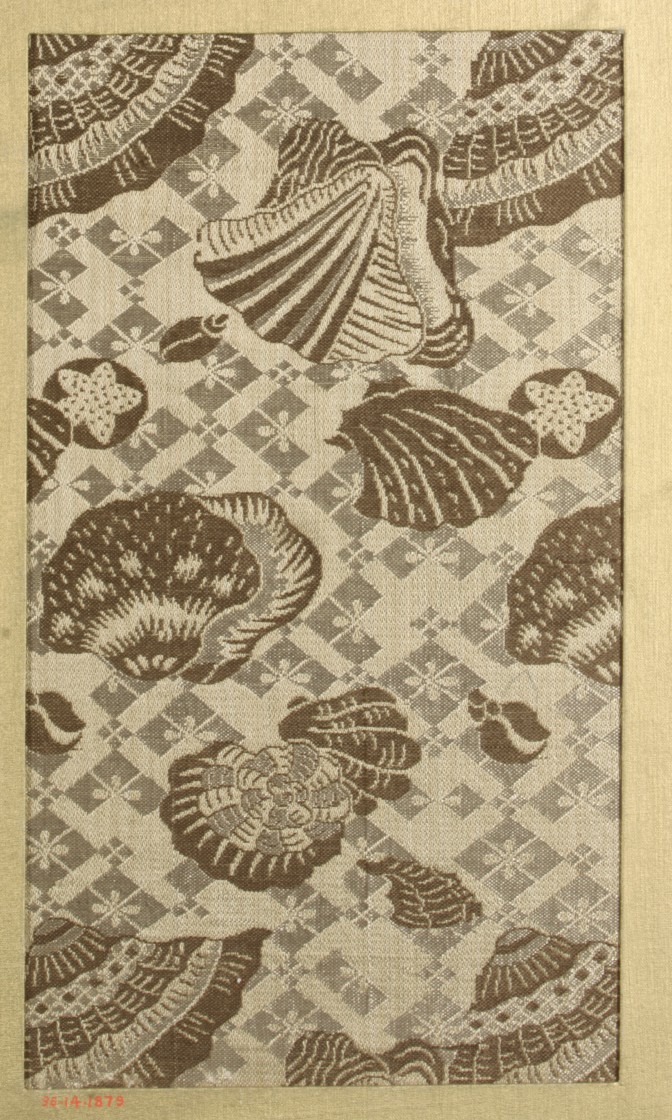
The Art of Woven Stillness: A Couture Analysis of Katherine Fashion Lab’s Silk Masterpiece
Introduction: The Subject of Silence
In the rarefied realm of haute couture, where fabric becomes philosophy and silhouette speaks of culture, Katherine Fashion Lab presents a standalone piece of singular resonance. This garment, originating from the intricate textile traditions of Japan and crafted from the purest silk, transcends the mere category of clothing to become a study in controlled elegance. As the Lead Curator, I approach this piece not as an accessory to a collection, but as an independent artifact—a dialogue between material heritage and modern minimalism. The subject here is not a dress, a coat, or a kimono in the conventional sense; it is a sculptural form that drapes the human body with the precision of a calligrapher’s brushstroke, yet breathes with the organic softness of a living membrane.
Materiality: The Soul of Silk
Silk, as a material, carries a dual legacy in Japanese couture. On one hand, it is the fabric of imperial courts and ceremonial robes—rigid, structured, and laden with symbolic weight. On the other, it is the medium of the everyday, of the light summer yukata that whispers against the skin. Katherine Fashion Lab’s choice of silk for this piece is a deliberate act of nuance. The fabric used is not the glossy, reflective charmeuse that catches light like a mirror; rather, it is a matte, hand-dyed silk crepe de chine, sourced from a Kyoto atelier known for its resist-dyeing techniques. This silk has a subtle, granular texture that absorbs rather than reflects light, lending the garment an almost painterly depth. When touched, it yields with a slight resistance, as if the fibers remember the tension of the loom. This materiality is the foundation of the piece’s narrative: it is a fabric that does not shout but murmurs, inviting the wearer and observer into a quiet, intimate conversation.
Construction: The Geometry of Draping
The piece’s construction is a masterclass in negative space, a concept central to Japanese aesthetics (known as ma). It is not a fitted garment in the Western sense of tailored darts and seams. Instead, it is an assemblage of precise, angular panels that fold and fall around the body with the logic of origami. The shoulders are left deliberately unconstructed, allowing the silk to cascade into a fluid, asymmetric cowl at the back, while the front is anchored by a single, hidden seam that runs from the collarbone to the hem. This seam is not decorative; it is structural, creating a subtle tension that transforms the fabric from a flat plane into a three-dimensional volume. The sleeves, if they can be called that, are wide, rectangular extensions that echo the sode of a traditional kimono, but they are cut shorter and left open at the underarm, allowing the arm to move freely within a pocket of air. The hem is raw—unfinished, unhemmed—a deliberate choice that speaks to the Japanese concept of wabi-sabi, the beauty of imperfection. This raw edge frays slightly, not as a sign of wear, but as a textural accent that softens the garment’s geometric severity.
Silhouette and Movement: The Body as Vessel
When worn, the piece does not cling to the body; it hovers. The silhouette is an inverted trapezoid, wide at the shoulders and narrowing to a gentle taper at the knees, creating a shape that is both monumental and weightless. This is not a garment that moves with the wearer; rather, the wearer moves within it. The silk’s natural drape ensures that every gesture—a turn of the head, a raised arm—causes the fabric to shift in slow, deliberate waves. The color is a single, unbroken tone: indigo, but not the saturated blue of traditional Japanese dyeing. This indigo is muted, almost grey, with a faint undertone of violet that reveals itself only under direct light. It is the color of a twilight sky, of ink diluted in water. This chromatic restraint allows the focus to remain on the interplay of light and shadow across the silk’s surface, a kinetic painting that changes with every movement.
Cultural Context: Japan as a Source, Not a Stereotype
This piece is not a costume. It does not borrow motifs—no cranes, no cherry blossoms, no obi knots. Instead, it internalizes the principles of Japanese design—asymmetry, simplicity, and respect for the material—and translates them into a global couture language. The origin is Japan, but the result is a standalone study that could belong to any culture that values restraint. The garment’s lack of fastenings (no buttons, zippers, or ties) is a direct reference to the kosode, the precursor to the modern kimono, which relied solely on the obi sash. Here, the wearer must simply step into the piece and allow gravity and the fabric’s own weight to hold it in place. This demands a certain surrender, a trust in the material’s intelligence. The piece is not designed to be worn quickly; it requires a ritual of dressing, a moment of pause that aligns the wearer with the garment’s contemplative spirit.
Artistic Intent: The Standalone Study as a Statement
As a standalone study, this piece rejects the narrative of a collection. There is no story of a season, no trend, no mood board. The intent is purely phenomenological: to explore what silk can do when freed from the constraints of function, when it is allowed to be both garment and sculpture. Katherine Fashion Lab has positioned this piece as a manifesto of material honesty. The seams are visible, the dyeing uneven, the edges raw. There is no lining to hide the construction; the inside of the garment is as finished as the outside, a nod to the Japanese concept of ura-omote (the unity of front and back). This transparency is not a flaw but a feature, a declaration that couture need not be perfect to be profound.
Conclusion: A Quiet Revolution
In an industry often defined by excess—excessive embellishment, excessive volume, excessive speed—this piece stands as a quiet revolution. It is a study in reduction, a meditation on the power of a single material, a single color, a single shape. For the discerning collector, it is not an investment in fashion but in philosophy. For the wearer, it is a second skin that demands nothing and offers everything: the sensation of being both enveloped and free. Katherine Fashion Lab has achieved what few houses dare: they have created a garment that is at once utterly Japanese and utterly universal, a piece that speaks not of where it came from, but of what it is. And what it is, is a masterpiece of silent, enduring beauty.