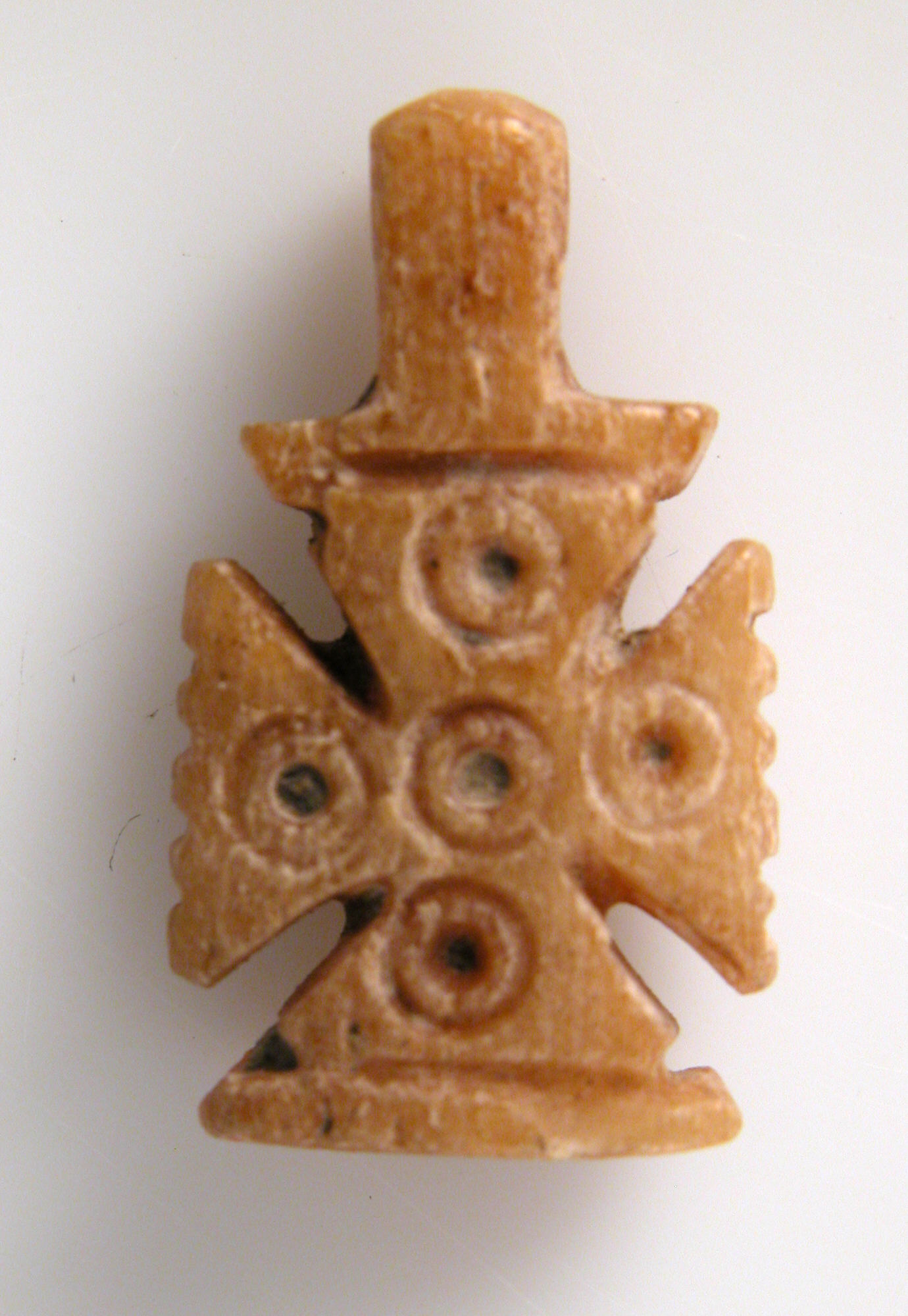
Heritage Analysis: The Bone Pendant Cross of Ancient Civilization
Introduction: The Object as a Nexus of Power and Identity
The pendant cross, rendered in bone from an ancient civilization, represents one of humanity’s earliest and most potent expressions of symbolic power, historical adornment, and spiritual meaning. For Katherine Fashion Lab, this object is not merely an artifact of antiquity but a strategic wellspring for a 2026 high-end luxury strategy. As Lead Heritage Curator, I analyze this pendant cross through the dual lenses of cultural anthropology and luxury brand positioning. The bone medium—organic, fragile, yet enduring—offers a tactile narrative of mortality and transcendence, while the cross form, predating its Christian appropriation, signifies universal axes of life, death, and cosmic order. This research paper will deconstruct the pendant’s symbolic, historical, and spiritual dimensions, then synthesize actionable insights for a luxury strategy that resonates with contemporary connoisseurs seeking authenticity and depth.
Symbolic Power: The Cross as a Universal Axis Mundi
Pre-Christian Symbolism and the Elemental Cross
In ancient civilizations—from Mesopotamian talismans to Egyptian ankhs and Celtic solar crosses—the cross form embodied the axis mundi, the sacred center connecting heaven, earth, and the underworld. The bone pendant cross, carved from the skeletal remains of an animal or human, intensified this symbolism. Bone, as the structural remnant of life, inherently references mortality and the cyclical nature of existence. When shaped into a cross, it becomes a threshold object, mediating between the living and the dead, the terrestrial and the divine. For Katherine Fashion Lab, this symbolic power is a strategic asset. In a luxury market saturated with mass-produced motifs, the bone cross offers a narrative of primordial authenticity—a direct link to the earliest human quest for meaning. This is not a decorative trinket but a signifier of existential gravity, appealing to clients who value rarity, history, and intellectual depth over transient trends.
Power Dynamics in Ancient Adornment
Adornment in ancient societies was never merely aesthetic; it was a technology of power. The bone pendant cross, likely worn by shamans, chieftains, or initiates, conferred status, protection, and spiritual authority. Its materiality—bone—was chosen for its perceived life force. Unlike metal or stone, bone retained a connection to the living organism, making it a conduit for animistic energies. The wearer did not simply display the cross; they incorporated its power into their identity. For a 2026 luxury strategy, this principle of embodied power is critical. Katherine Fashion Lab can position the bone cross as a curated heirloom, limited in production and accompanied by provenance narratives. Each piece should be treated as a personal totem, sold with contextual storytelling—perhaps a digital archive of its archaeological inspiration or a certificate of authenticity linking it to a specific ancient motif. This transforms the pendant from a commodity into a portable legacy.
Historical Adornment: The Bone Cross as Material Memory
Materiality and the Archaeology of Wear
The choice of bone as a medium for the pendant cross is historically significant for its material memory. Bone is a repository of biological data—density, patina, micro-fractures—that records the object’s journey through time. In ancient civilizations, bone carving was a labor-intensive process requiring specialized knowledge of animal anatomy and tool use. The resulting cross, often polished through generations of handling, becomes a palimpsest of touch, absorbing the oils and intentions of its wearers. For Katherine Fashion Lab, this historical dimension offers a blueprint for material storytelling. In 2026, luxury consumers increasingly reject synthetic perfection in favor of tactile authenticity. A bone pendant cross, whether sourced from ethically harvested ancient bone or crafted from sustainable modern bone, can be presented as a sensory artifact. The brand should highlight the texture, weight, and organic irregularities of each piece, emphasizing that no two crosses are identical. This aligns with the broader luxury trend toward imperfect perfection and the valuation of craftsmanship over machine precision.
Adornment as Ritual and Social Currency
History records that the bone cross was not worn casually; it was reserved for ritual contexts—burials, initiations, seasonal ceremonies. Its visibility was a statement of sacred inclusion. The wearer belonged to a select group with access to esoteric knowledge. This exclusivity is a cornerstone of high-end luxury. Katherine Fashion Lab can strategically reference this by positioning the bone cross as a membership object—not in a literal sense, but through limited-edition releases, invitation-only previews, and collaborations with contemporary artists or anthropologists. The historical precedent of the cross as a marker of elite spiritual identity can be translated into a modern luxury code: owning the pendant signifies not just wealth, but cultural literacy and a commitment to heritage preservation. This elevates the brand beyond fashion into the realm of cultural custodianship.
Spiritual Meaning: The Bone Cross as a Bridge Between Worlds
Animism, Ancestor Veneration, and Transcendence
In ancient civilizations, the spiritual meaning of the bone cross was deeply animistic. Bone was believed to house the essence or spirit of the deceased animal or human, making the cross a vessel for ancestral communication. The cross form, with its vertical and horizontal axes, symbolized the intersection of the temporal and eternal. Wearing it was an act of spiritual alignment, grounding the individual in the cycles of nature while elevating their consciousness toward the cosmos. For a 2026 luxury strategy, this spiritual dimension offers a powerful counterpoint to the secular materialism of modern fashion. Katherine Fashion Lab can tap into the growing demand for meaningful luxury—products that serve as tools for introspection, mindfulness, or personal mythology. The bone cross can be marketed as a meditation aid or a symbol of resilience, referencing its ancient role as a protector against malevolent forces. The brand might develop a ritual unboxing experience that invites the buyer to engage with the object’s spiritual heritage, perhaps through a guided audio narrative or a booklet on ancient cross symbolism.
Sacred Geometry and the Cross as a Cosmic Compass
The cross’s geometry is inherently sacred, representing the four cardinal directions, the four elements, and the cycle of life, death, and rebirth. The bone medium adds a layer of earthly humility—it is a reminder of the physical body’s transience, balancing the cross’s transcendent aspirations. This duality—spiritual aspiration grounded in mortal material—is a potent narrative for luxury. In 2026, consumers are seeking objects that reconcile contradictions: tradition and innovation, nature and technology, the sacred and the secular. The bone pendant cross embodies this synthesis. Katherine Fashion Lab should emphasize the geometric purity of the cross form in its design language, perhaps offering variations that reference specific ancient cultures—a Celtic cross with intricate knotwork, an ankh-inspired loop, or a minimalist equal-armed Greek cross. Each variation can be tied to a spiritual theme (protection, fertility, wisdom), allowing clients to choose a pendant that resonates with their personal journey. This personalization strategy deepens emotional attachment and justifies premium pricing.
2026 High-End Luxury Strategy: Synthesizing Heritage and Modernity
Positioning the Bone Cross as a Heritage-Luxury Archetype
For Katherine Fashion Lab, the bone pendant cross is not a product but a strategic archetype. It represents the convergence of three luxury imperatives for 2026: authenticity, rarity, and transcendence. Authenticity derives from its ancient origins and organic material; rarity from its limited availability and the impossibility of mass reproduction; transcendence from its spiritual and symbolic depth. The brand should position this piece within a curated collection titled “Primordial Codes” or “Axis Mundi,” signaling its foundational role in human culture. Pricing should reflect its status as an investment-grade artifact, with a starting point of $5,000 to $15,000 for a single pendant, depending on the bone’s provenance and craftsmanship. This positions the cross against high-jewelry houses like Cartier or Boucheron, but with a distinct anthropological edge that appeals to the intellectually curious ultra-high-net-worth client.
Experiential Marketing and Collaborative Curation
The 2026 luxury market demands experiences, not just objects. Katherine Fashion Lab can leverage the bone cross’s heritage through immersive storytelling. Consider a partnership with a museum of archaeology or a cultural foundation to host exclusive exhibitions of ancient bone artifacts, with the pendant cross as the centerpiece. Clients could attend private lectures by anthropologists or participate in workshops on ancient carving techniques. The brand might also develop a digital twin of each pendant, using 3D scanning to create an interactive NFT that traces the cross’s symbolic lineage. This bridges the ancient and the digital, appealing to younger luxury buyers who value both heritage and technology. The narrative should consistently emphasize continuity: the bone cross is not a relic of a dead past but a living symbol that evolves with each wearer.
Ethical Sourcing and Sustainability as Luxury Imperatives
Bone as a medium raises ethical considerations that must be addressed transparently. For a 2026 luxury strategy, Katherine Fashion Lab should source bone from sustainable, ethical channels—for example, naturally shed antlers, archaeological replicas using certified materials, or bone from animals raised for food with full traceability. The brand can position this as regenerative luxury, where each pendant contributes to the preservation of ancient craftsmanship traditions or to wildlife conservation efforts. A portion of proceeds could fund archaeological research or support indigenous communities that maintain bone-carving practices. This aligns with the values of the conscious luxury consumer, who demands that beauty be paired with responsibility. The bone cross becomes a symbol not only of personal power but of planetary stewardship.
Conclusion: The Cross as a Strategic Compass for 2026
The bone pendant cross from an ancient civilization is far more than a historical curiosity; it is a strategic compass for Katherine Fashion Lab’s 2026 high-end luxury strategy. Its symbolic power offers a narrative of existential authenticity; its historical adornment provides a blueprint for material storytelling and exclusivity; its spiritual meaning addresses the modern hunger for transcendence. By synthesizing these dimensions into a cohesive brand experience, Katherine Fashion Lab can position the bone cross as a defining object of the next