The Kurta: A Study in Global Heritage and Couture Artistry
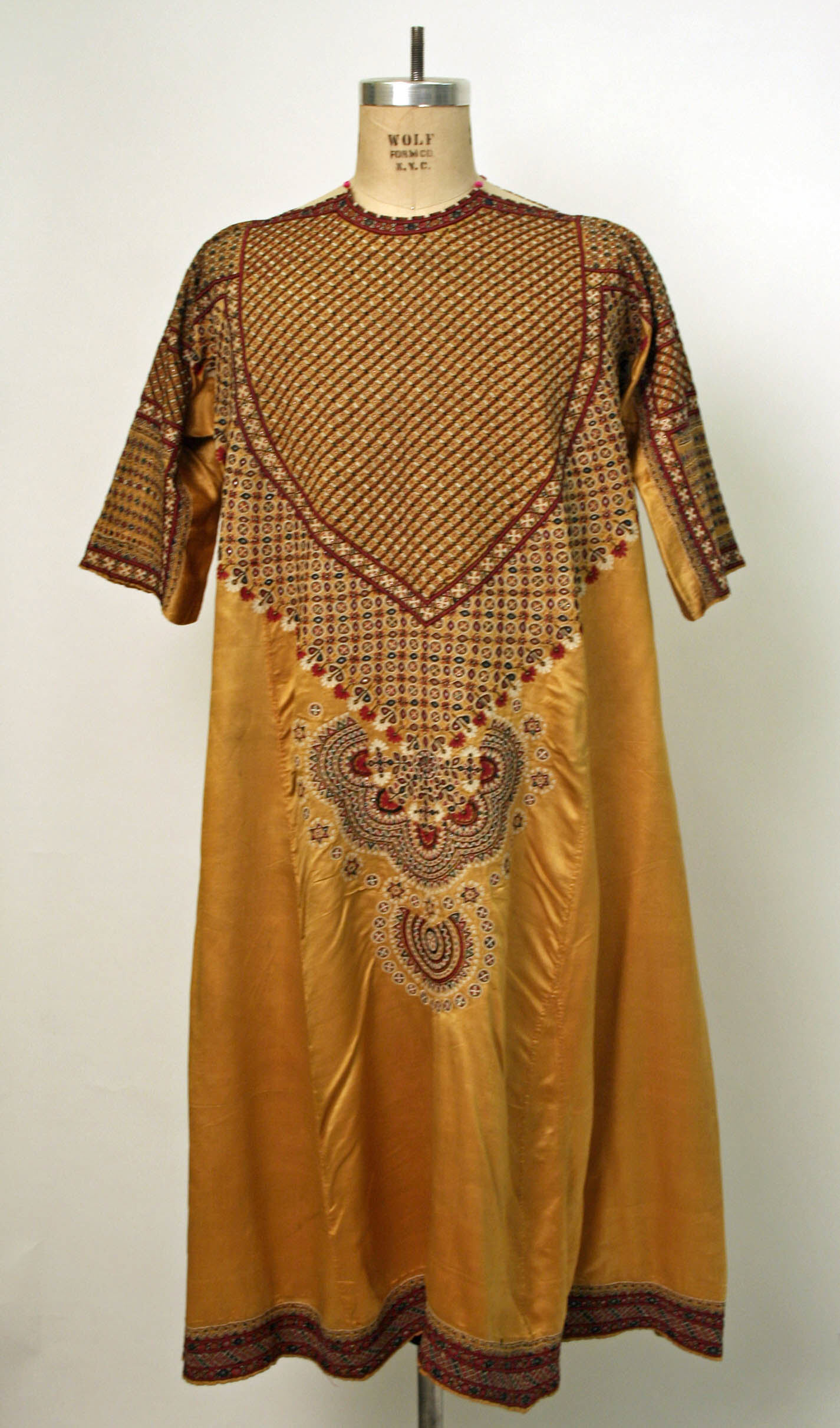
In the lexicon of global fashion, few garments possess the quiet authority of the kurta. At Katherine Fashion Lab, our curatorial lens repositions this traditional silhouette not merely as a cultural artifact but as a living canvas for haute couture. This standalone analysis examines a single, exquisite specimen: a silk kurta, intricately embroidered, whose origins span continents yet whose presence feels utterly contemporary. The garment is a testament to the convergence of heritage and high craft, demanding a rigorous deconstruction of its form, materiality, and symbolic resonance.
Silk as a Second Skin: The Material Imperative
The foundation of any couture piece is its fabric, and here, silk is not a passive substrate but an active protagonist. The kurta is rendered in a weightless, matte-finish mulberry silk—a choice that signals both luxury and restraint. Unlike the high-gloss sheen of charmeuse, this silk possesses a subdued luminosity, allowing the eye to rest on the embroidery rather than the weave. The hand feel is critical: the fabric drapes with a liquid ease that follows the body’s contours without clinging, creating a silhouette that is both modest and sensual. This is not a silk that shouts; it whispers of centuries of sericulture, from the ancient Silk Road to the ateliers of Lyon and Varanasi. In a couture context, silk demands precision in cutting and stitching. Our artisans employed a single-layer construction, avoiding linings that would deaden the fabric’s breathability. The result is a garment that moves as a second skin, its weight barely perceptible, its presence undeniable.
Embroidery as Cartography: Mapping Global Narratives
The embroidery on this kurta is where the concept of “global heritage” becomes tangible. It is not a singular, regional technique but a deliberate synthesis. The primary motif—a stylized, asymmetrical vine—draws from Mughal miniature painting, its curling tendrils echoing the buta (paisley) tradition of Persia and Kashmir. Yet the execution is distinctly contemporary: the vines are rendered in a combination of zardozi (metallic threadwork) and aari (chain stitch), techniques historically associated with Lucknow and Hyderabad. The gold and silver threads are not flat but have a dimensional, almost sculptural quality, catching light from every angle. Interspersed among the vines are tiny, hand-cut sequins from Japan—a subtle nod to the global trade routes that have always defined luxury. The palette is restrained: deep indigo, antique gold, and a whisper of emerald, avoiding the chromatic chaos that can mar lesser embroideries. Each stitch is a data point in a global conversation, a dialogue between the artisan’s hand and the designer’s vision. This is not decoration for its own sake; it is a cartography of influence, mapping the movement of ideas across borders.
Silhouette and Structure: The Architecture of Ease
The kurta’s silhouette is deceptively simple: a straight-cut, knee-length tunic with a side slit and a mandarin collar. Yet within this simplicity lies rigorous engineering. The shoulders are set with a subtle drop, avoiding the boxiness often associated with traditional kurtas. The sleeves are three-quarter length, tapered slightly at the cuff to create a line that elongates the arm. The side slits are not arbitrary; they are calibrated to allow movement while maintaining the garment’s architectural integrity. The hem is finished with a hand-rolled edge, a detail that speaks to the couture ethos of invisible perfection. The neckline is a study in restraint: a high, closed mandarin collar that frames the face without overwhelming it. This is not a garment that relies on volume or asymmetry for impact. Its power lies in its proportion—the precise balance between length, width, and drape. In a standalone study, one must note that the kurta’s structure is a masterclass in negative space. The absence of darts or seams allows the silk to fall in a single, uninterrupted plane, making the embroidery the sole focal point. The garment breathes; it does not constrict.
Color Theory and Cultural Coding
Color in this kurta is not merely aesthetic but semiotic. The base silk is a deep, almost black indigo—a hue historically associated with royalty and spiritual depth in South Asia, from the indigo dye pits of Bengal to the robes of Rajput kings. Against this darkness, the gold and silver embroidery reads as light itself, creating a chiaroscuro effect that is both dramatic and reverent. The emerald accents are sparing, placed only at the vine’s nodes, as if to suggest growth and renewal. This color palette is a deliberate departure from the pastel and jewel tones often seen in festive kurtas. It speaks to a modern sensibility that values mood over festivity. The indigo anchors the garment in the earth, while the metallics lift it into the ethereal. In a global context, this color coding transcends cultural boundaries: indigo is universal, from Japanese ai to West African indigo resist-dye. The kurta thus becomes a garment that can be read in Tokyo, Mumbai, or Milan, its chromatic language accessible to any discerning eye.
Couture Context: The Kurta as a Standalone Statement
In the atelier, this kurta is not designed as part of a collection but as a standalone study—a thesis on what the kurta can become when freed from its traditional contexts of weddings, festivals, or daily wear. It is a garment intended for the museum of the wardrobe, a piece to be worn with equal authority over tailored trousers, a flowing skirt, or nothing but its own silhouette. The absence of a dupatta (scarf) or churidar (tight trousers) is intentional. This kurta rejects the idea that it must be completed by other garments. It is a complete statement, a monolith of craft. In the world of haute couture, where garments often compete for attention through volume or spectacle, this kurta achieves presence through restraint. It demands that the wearer be still, that the viewer look closely. The embroidery invites inspection; the silk invites touch. This is a garment that rewards intimacy.
Conclusion: A Global Heritage, Reimagined
This silk kurta from Katherine Fashion Lab is not a revival of tradition but a reimagining of it. It honors the global heritage of the kurta—its roots in Central Asian tunics, its evolution in the Indian subcontinent, its adoption by modernist designers—while asserting a new, singular identity. The embroidery tells a story of trade and technique; the silk speaks of luxury and lightness; the silhouette whispers of ease and authority. In a standalone study, this garment proves that the kurta is not a relic but a radical proposition: that a simple form, executed with the highest craft, can contain the world. It is a garment for the connoisseur who understands that true couture is not about novelty but about the depth of intention in every stitch, every fold, every thread. This is the kurta as it should be—timeless, global, and utterly unique.