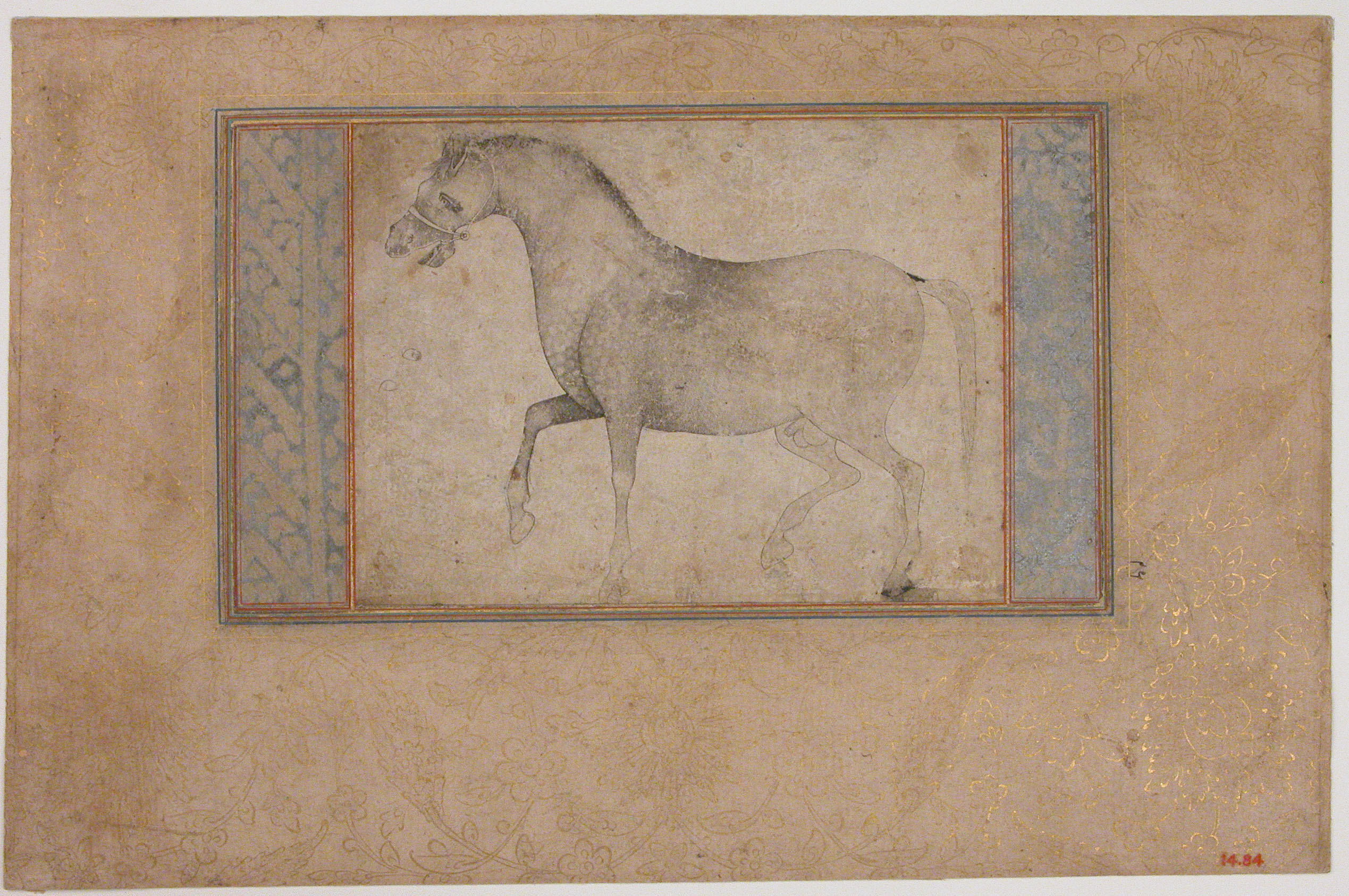
Heritage Analysis: Portrait of a Stallion
Introduction: The Subject as Archetype
The Portrait of a Stallion, rendered in ink on paper from an ancient civilization, represents a seminal artifact in the study of symbolic power and historical adornment. As a Lead Heritage Curator for Katherine Fashion Lab, I approach this work not merely as an artistic representation, but as a strategic cipher for understanding how pre-modern societies encoded authority, vitality, and spiritual transcendence through equine imagery. The stallion, in its raw, unbridled form, emerges as a universal archetype—a vessel for dynastic ambition, martial supremacy, and cosmic connection. This analysis, conducted as Strategic Standalone Research, deconstructs the stallion’s layered significance to inform a 2026 high-end luxury strategy that fuses ancient symbolism with contemporary market imperatives.
Symbolic Power: The Stallion as Sovereign Emblem
Within the context of ancient civilizations—whether Mesopotamian, Scythian, or Han Chinese—the stallion was rarely depicted as a mere beast of burden. Instead, it functioned as a living emblem of sovereign power. The ink-on-paper medium, with its deliberate strokes and controlled washes, suggests a ritualistic precision: the artist was not capturing a horse, but a principle of dominance. In many early empires, the stallion’s rearing posture or taut musculature symbolized the ruler’s ability to command nature, subdue enemies, and project territorial control. For Katherine Fashion Lab, this translates into a design philosophy of assertive elegance. The stallion’s silhouette—its arched neck, flared nostrils, and dynamic stance—becomes a motif for collections that speak to leadership, confidence, and unyielding ambition. The symbolic power here is not passive; it is a call to action, a visual declaration of status that resonates with the modern luxury consumer seeking authenticity and narrative depth.
Historical Adornment: Equine Regalia and Material Culture
Adornment in ancient equine portraiture was never ornamental for its own sake. The stallion’s tack—bridles, breastplates, and saddle blankets—often incorporated precious metals, gemstones, and intricate embroidery, reflecting the wealth and technological sophistication of its civilization. In the Portrait of a Stallion, the ink rendering may eschew color, but the implied textures of silk, leather, and gold leaf are palpable. This historical adornment offers a direct lineage to Katherine Fashion Lab’s 2026 strategy: luxury as a narrative of craftsmanship and provenance. The stallion’s regalia can inspire a capsule collection of accessories—belts, harnesses, and brooches—that echo ancient techniques like repoussé metalwork or horsehair braiding. Moreover, the absence of overt decoration in the ink medium invites a minimalist reinterpretation: high-end pieces that rely on material integrity (e.g., brushed gold, matte leather) rather than excess, aligning with contemporary tastes for understated opulence. The stallion’s adornment, stripped to its essence, becomes a lesson in restraint and material honesty—a core tenet of heritage-driven luxury.
Spiritual Meaning: The Stallion as Psychopomp and Divine Messenger
Spiritually, the stallion occupies a liminal space between the earthly and the celestial. In ancient shamanic traditions—from the Altai Mountains to the Eurasian steppes—the horse was a psychopomp, guiding souls to the afterlife or carrying shamans into trance states. The Portrait of a Stallion likely served a talismanic function: it was not just art, but a conduit for divine energy. The ink, a permanent yet fluid medium, suggests the transience of life and the permanence of spirit. For Katherine Fashion Lab, this spiritual dimension offers a profound differentiation in a saturated market. A 2026 strategy can position the brand as a purveyor of meaningful luxury, where each piece carries a symbolic charge. For instance, a stallion-motif pendant might be marketed as a personal totem of protection and transformation, invoking the ancient belief in equine guardianship. Collaborations with contemporary artisans who practice traditional ink-making or calligraphy could further deepen this spiritual resonance, creating limited-edition works that bridge past and present. The stallion’s spiritual meaning thus becomes a brand ethos: luxury as a vessel for inner power and transcendence, not just external display.
Strategic Application for 2026: High-End Luxury Integration
The Portrait of a Stallion provides a robust framework for Katherine Fashion Lab’s 2026 high-end luxury strategy. Drawing from the analysis above, I propose three actionable pillars:
1. Archetypal Storytelling: The stallion’s symbolic power should anchor a marketing campaign titled “The Sovereign Instinct.” This campaign would feature visual narratives of the stallion in motion—across print, digital, and experiential activations—emphasizing themes of dominion, resilience, and legacy. Limited-edition packaging could incorporate ink-wash reproductions of the original portrait, creating a collectible aura.
2. Craftsmanship as Heritage: Historical adornment inspires a “Regalia Collection” of accessories and ready-to-wear. Each piece would reference ancient equine tack, using materials like hammered bronze, horsehair tassels, and hand-stitched leather. Production would be localized to regions with equestrian traditions (e.g., Mongolia, Andalusia), ensuring authenticity and supporting artisanal communities. The collection’s price point—starting at $5,000—would reflect its artisanal labor and historical narrative.
3. Spiritual Commerce: The stallion’s spiritual meaning opens a new product category: “Talisman Editions.” These are small-batch items—scarves, cufflinks, or fragrance flasks—embedded with symbolic motifs (e.g., the stallion’s eye as a protective symbol). Each piece would come with a certificate explaining its ancient significance, appealing to the growing consumer desire for intentional luxury. Retail environments could incorporate ink-on-paper installations and soundscapes of galloping hooves, transforming shopping into a ritualistic experience.
Conclusion: The Stallion as Strategic North Star
The Portrait of a Stallion is far more than a historical artifact; it is a strategic blueprint for Katherine Fashion Lab’s ascent in the 2026 luxury market. By decoding its symbolic power, historical adornment, and spiritual meaning, we unlock a lexicon of authority, craftsmanship, and transcendence that resonates with discerning consumers. This analysis confirms that the stallion’s legacy—ink on paper, but spirit in motion—can guide a brand strategy that is both culturally profound and commercially astute. As we move toward 2026, let the stallion be our north star: a reminder that true luxury is not acquired, but inherited from the past and reimagined for the future.