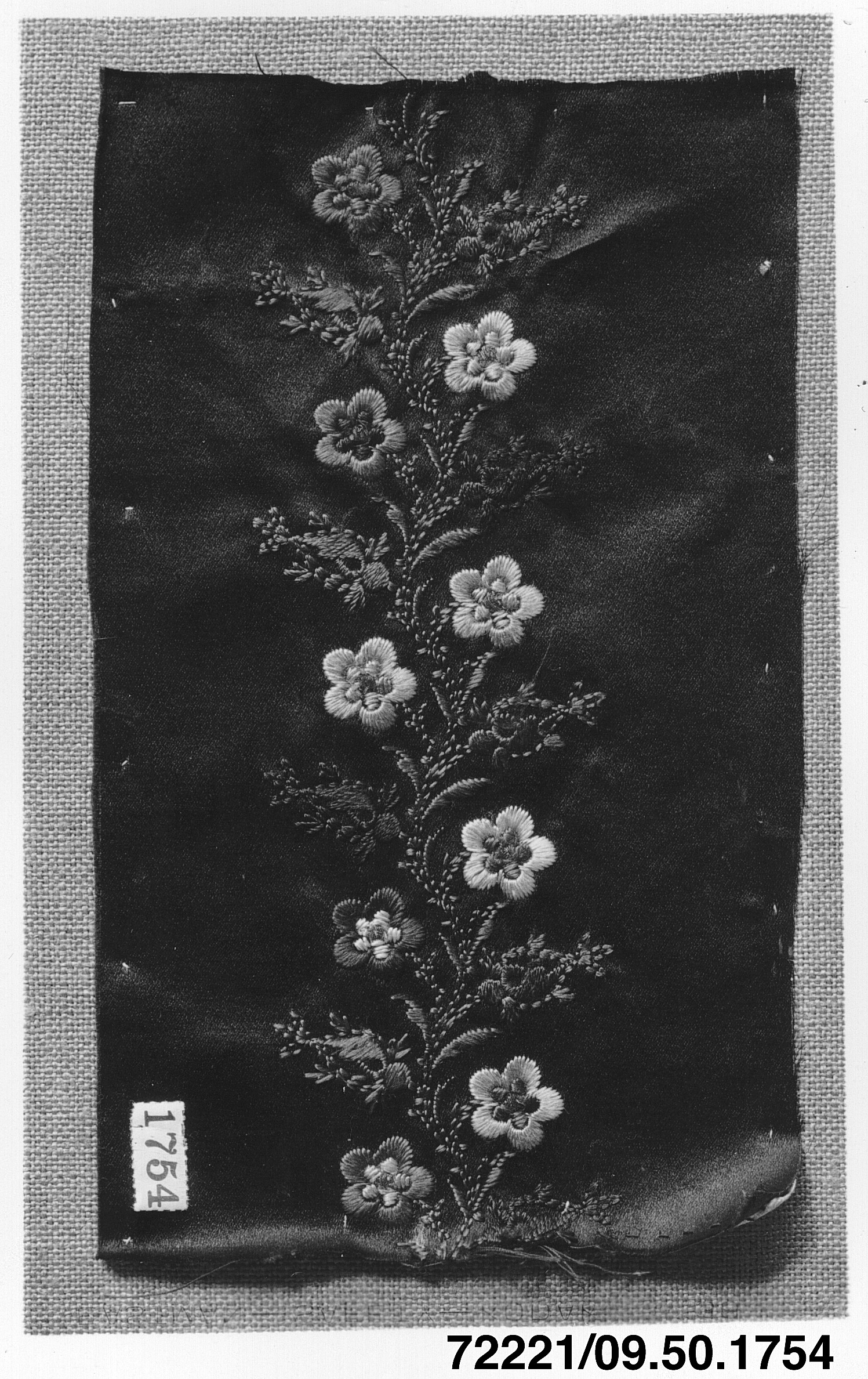
Fragment: The Poetics of Incompleteness in Global Heritage Couture
In the rarefied realm of haute couture, where garments are often conceived as totalizing statements of perfection, Katherine Fashion Lab’s latest standalone study, “Fragment,” offers a radical redefinition of luxury. This piece is not a dress, a gown, or a jacket in the conventional sense. It is a deliberate, philosophical exploration of the incomplete—a study in the tension between what is present and what is absent. Executed in the demanding technique of silk on silk, the work draws from a deep well of global heritage, transforming a simple concept into a complex narrative of time, memory, and material transcendence.
Deconstructing the Fragment: A Conceptual Framework
The term “fragment” in this context is not an admission of failure or an unfinished design. Rather, it is a deliberate aesthetic and intellectual choice. Katherine Fashion Lab positions the fragment as a metaphor for the way heritage itself is transmitted: not as a seamless, uninterrupted whole, but as shards, traces, and echoes. The study challenges the Western couture tradition’s obsession with the complete, the symmetrical, and the polished. Instead, it embraces the Japanese aesthetic of wabi-sabi, the Islamic tradition of geometric abstraction, and the European Romantic fascination with ruins. Each of these influences is woven into the silk, not as a decorative motif, but as a structural principle.
The garment—if it can be called that—exists as a series of interconnected panels, each one a self-contained universe of embroidery, pleating, or hand-painted dye. The edges are raw, deliberately frayed, or left with unfinished hems. This is not carelessness; it is a statement. The fragment becomes a palimpsest of global narratives, where the viewer is invited to complete the story in their own mind. The work asks: What is more luxurious—a perfect, sealed surface, or an open, breathing boundary that invites engagement?
Materiality: Silk on Silk as a Dialogue of Depth
The choice of silk on silk is both a technical feat and a conceptual necessity. Silk, as a material, carries its own heritage—from the ancient Silk Road to the opulent courts of China, India, and Byzantium. In “Fragment,” Katherine Fashion Lab uses multiple weights and weaves of silk: a base of raw, matte silk noil for structure, layered with lustrous charmeuse for movement, and accented with transparent organza for ethereality. The result is a tactile hierarchy that mirrors the layering of cultural memory.
The technique of hand-stitched appliqué is employed to attach smaller silk fragments onto a larger ground. These fragments are not random; they are carefully curated pieces of silk that have been hand-dyed using natural indigo, madder root, and cochineal—references to global dye traditions from Japan, India, and the Americas. The stitching itself is visible, a deliberate nod to the Japanese boro tradition of mending and patching, where repair becomes a form of aesthetic expression. Here, the seams are not hidden; they are celebrated as structural poetry.
Further, the hand-painted sections on the silk depict abstracted motifs: a fragment of a Mughal floral pattern, a broken calligraphic stroke from Ottoman tughra, a single petal from a Chinese peony. These are not literal reproductions but emotional impressions, rendered in water-thinned pigments that bleed into the silk fibers, creating a sense of impermanence. The silk becomes a living archive, where each brushstroke is a trace of a global conversation.
Global Heritage: Weaving the Invisible Thread
The genius of “Fragment” lies in its refusal to be pinned to a single geographic origin. Instead, it operates in a transcultural space. The garment’s silhouette is a deconstructed kimono-inspired wrap, but the draping recalls the Grecian chiton and the Mughal angarkha. The asymmetry is a direct reference to the African kente cloth tradition, where intentional irregularities are considered marks of spiritual power. The color palette—deep indigo, aged ivory, rust, and a single streak of vermilion—echoes the paintings of the Italian Renaissance as much as the textiles of the Andes.
This is not cultural appropriation; it is cultural resonance. Katherine Fashion Lab treats each heritage element as a “fragment” of a larger human story. The piece does not claim to represent any one tradition fully; rather, it juxtaposes fragments to create a new, hybrid language. The effect is humbling: the viewer realizes that no single culture owns beauty, and that luxury can be found in the broken, the borrowed, and the reimagined.
Context: The Standalone Study as a Radical Act
In an industry driven by seasonal collections and commercial cycles, the decision to present “Fragment” as a standalone study is itself a statement. This is not a prototype for a future line, nor a showpiece for a runway. It is a singular object of contemplation, akin to a painting or a sculpture. The study format allows Katherine Fashion Lab to delve deeply into a single idea without the pressure of marketability. It is a luxury of time, thought, and material—a counterpoint to fast fashion’s relentless pace.
The context of the study also invites a different kind of engagement. Without the narrative of a collection, the viewer must confront the garment on its own terms. The fragment becomes a meditation on impermanence. The frayed edges suggest decay, yet the meticulous handwork speaks of preservation. The silk, a material that can last centuries if cared for, is deliberately presented in a state of vulnerability. This paradox is at the heart of the work: luxury is not about permanence, but about the depth of the encounter.
Conclusion: The Fragment as a Mirror of the Modern Self
Ultimately, “Fragment” by Katherine Fashion Lab is more than a couture analysis—it is a philosophical mirror. In an age of globalization, where identities are increasingly hybrid and fragmented, this garment speaks to the human condition. We are all composed of fragments: memories, cultures, languages, and experiences that do not always fit neatly together. The piece does not attempt to resolve this fragmentation; it celebrates it as a source of beauty and depth.
The silk-on-silk construction becomes a metaphor for the layers of identity we carry. The raw edges are not flaws; they are openings for connection. The global heritage references are not ornaments; they are threads of shared humanity. In this standalone study, Katherine Fashion Lab has created a work that is at once fragile and powerful, ancient and utterly contemporary. It is a reminder that in the world of true couture, the most profound luxury is not perfection—it is meaning.