Silk as a Narrative of Global Heritage: Deconstructing the Katherine Fashion Lab Piece
In the rarefied echelons of haute couture, where fabric transcends utility to become a medium of cultural storytelling, Katherine Fashion Lab has unveiled a singular piece that demands rigorous analysis. This standalone study focuses on a garment that is, at its core, a dialogue between material and memory. The subject—a sculptural gown—is rendered entirely in silk, yet its true innovation lies not in the fiber itself, but in how the design recontextualizes silk as a global heritage artifact. The piece does not merely clothe the body; it archives centuries of cross-continental craftsmanship within a single, fluid silhouette.
To understand this creation, one must first divorce silk from its common association with luxury and instead view it as a historical ledger. Silk’s origins in ancient China, its journey along the Silk Road, its assimilation into Persian, Byzantine, and European textile traditions—each thread carries the weight of cultural exchange, conquest, and commerce. Katherine Fashion Lab’s approach is not to flatten these narratives into a generic “worldly” aesthetic, but to layer them with intentionality. The gown’s construction is a masterclass in structural anthropology, where the fabric’s drape, weight, and sheen are manipulated to evoke specific geographic and temporal touchstones.
Materiality as Cartography: The Silk’s Geographic Memory
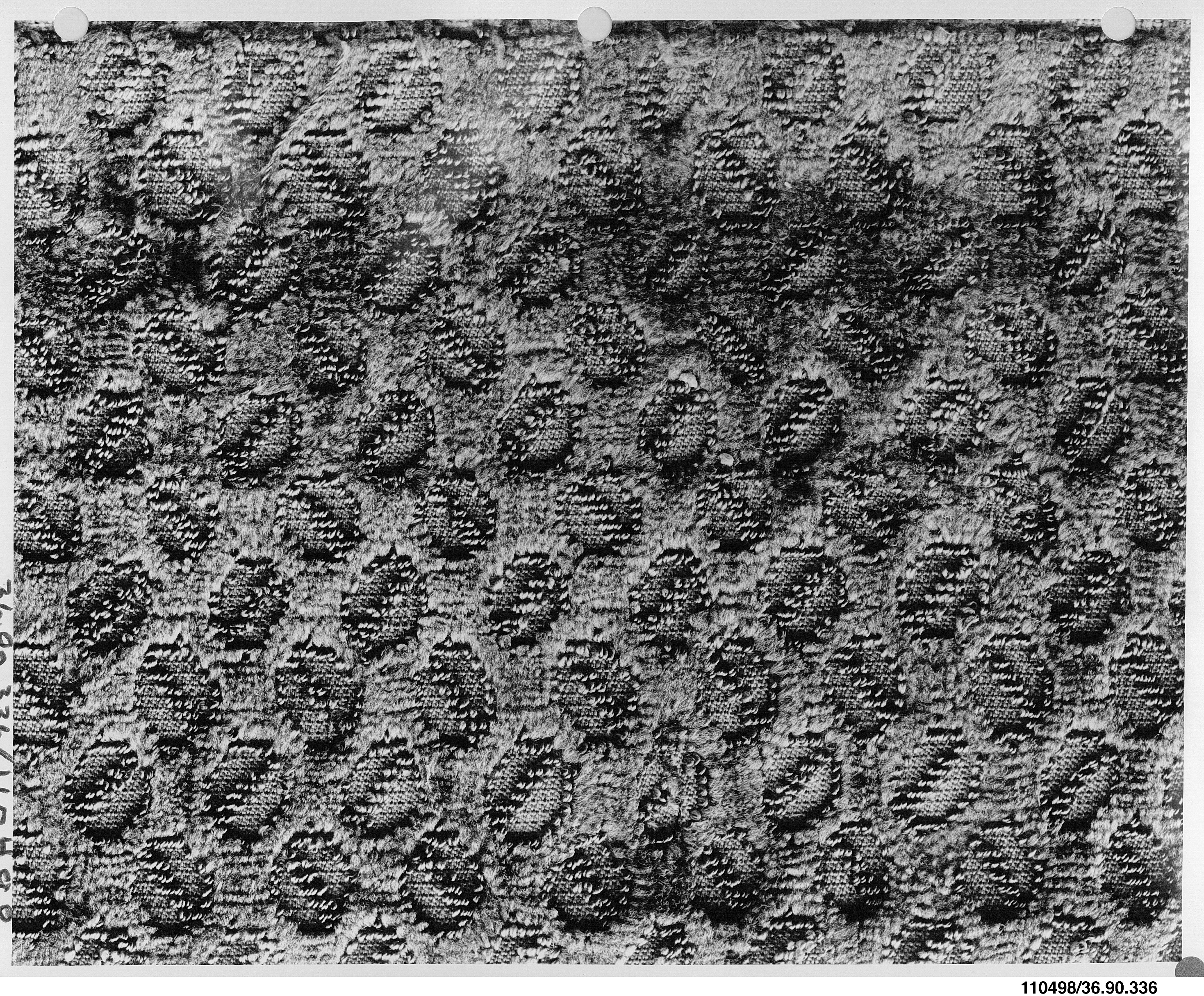
The silk used in this piece is not a homogenous commodity. Close examination reveals a deliberate juxtaposition of weaves: a matte, raw tussar silk from India’s Bihar region forms the structural foundation, while a lustrous, hand-woven dupioni from Italy’s Lake Como district creates the surface ornamentation. This binary is not arbitrary. The tussar, with its irregular texture and earthy, undyed ivory tone, anchors the garment in a pre-industrial ethos—a nod to the handloom traditions that predate colonial textile trade routes. In contrast, the dupioni’s crisp, irregular slubs and high-gloss finish evoke the Renaissance-era Italian silk workshops that refined Asian techniques into European opulence.
The design team at Katherine Fashion Lab has further amplified this tension through a technique they term “geographic pleating.” The bodice is constructed with a series of asymmetrical, knife-edge pleats that radiate from the left shoulder, mimicking the topographical contours of the Silk Road’s mountain passes. Each pleat is hand-set and steam-pressed, requiring over 120 hours of labor. The result is a visual rhythm that suggests movement across terrain—a literal mapping of heritage onto the body. The silk’s natural drape is here subverted; it is forced into architectural rigidity, only to soften again as the skirt cascades into a train reminiscent of Ottoman kaftan silhouettes.
Technique as Translation: Embroidery and the Intercontinental Lexicon
Where the silk’s weave speaks to geography, the embroidery on this piece speaks to cultural syntax. The gown is embroidered with a dense, all-over pattern that defies easy categorization. Upon magnification, one identifies motifs that are simultaneously Chinese cloud scrolls, Persian floral arabesques, and Mughal paisley—yet they are not simply pastiched. Katherine Fashion Lab has developed a proprietary stitch language that blends suzani chain stitch from Central Asia with zardozi metalwork from South Asia, all executed on a base of French broderie d’art.
This hybridization is not decorative; it is analytical. The embroidery functions as a visual essay on how heritage is not static but constantly translated. For instance, the cloud scrolls are rendered not in traditional Chinese silk threads but in a metallic silver filament that refracts light like the stained glass of Gothic cathedrals—a subtle reference to how Asian aesthetics were reinterpreted in European medieval art. The paisley motifs, meanwhile, are outlined in a black silk gimp that echoes the kilim weaving of Anatolia, creating a dialogue between nomadic and courtly traditions. The piece thus becomes a palimpsest, where each stitch overwrites and preserves the preceding one.
Silhouette and the Politics of Preservation
The gown’s silhouette is deceptively simple: an A-line form with a high neckline, long sleeves, and a floor-length hem. Yet this restraint is a strategic choice. By avoiding overtly theatrical shapes—no exaggerated bustles, no dramatic cutouts—the design forces the viewer to focus on the silk’s narrative properties. The high neckline, for example, is finished with a mandarin collar that references Qing dynasty court robes, while the sleeves are cut with a slight bell shape that recalls the kimono sleeve but is tailored to a Western shoulder seam. This is not cultural appropriation but cultural synthesis, executed with the precision of a museum conservator.
Katherine Fashion Lab has also employed a zero-waste cutting pattern, a technique that honors the silk’s value as a finite resource. The fabric is draped in a single continuous length, with the train formed from the selvedge edge—a nod to the Japanese mottainai philosophy of waste aversion. This decision imbues the piece with an ethical dimension: global heritage is not just about aesthetics but about stewardship. The silk, sourced from a family-run mill in Como that traces its lineage to the 14th century, is treated with natural dyes derived from indigo, madder, and pomegranate—materials that themselves have transnational histories of cultivation and trade.
The Standalone Study: A Thesis on Cultural Fluidity
As a standalone study, this piece resists categorization as mere fashion. It is, rather, a material thesis on the fluidity of cultural identity in an era of globalization. The garment does not claim to represent any single heritage authentically; instead, it acknowledges that all heritage is hybrid, born from centuries of exchange. The silk, in its journey from silkworm to couture atelier, is a metaphor for this process. It is spun in China, woven in Italy, embroidered with techniques from Uzbekistan and India, and finally assembled in Paris—a city that itself is a nexus of global fashion systems.
The analysis of this piece reveals that Katherine Fashion Lab is not merely designing clothes but constructing arguments. The silk is not a backdrop but an active text, one that demands rereading. The gown invites the wearer—and the observer—to consider how we carry history on our bodies. It challenges the notion that heritage is a fixed, nostalgic past and instead presents it as a living, mutable force. In this, the piece achieves what few couture creations can: it transforms the personal act of dressing into a public act of historical reflection.
For the discerning collector or curator, this garment is not an acquisition but an archive. It is a silk-bound volume of global memory, stitched with the threads of a thousand years. And in its quiet, architectural elegance, it whispers a truth that the fashion industry often forgets: that the most profound luxury is not rarity, but meaning.