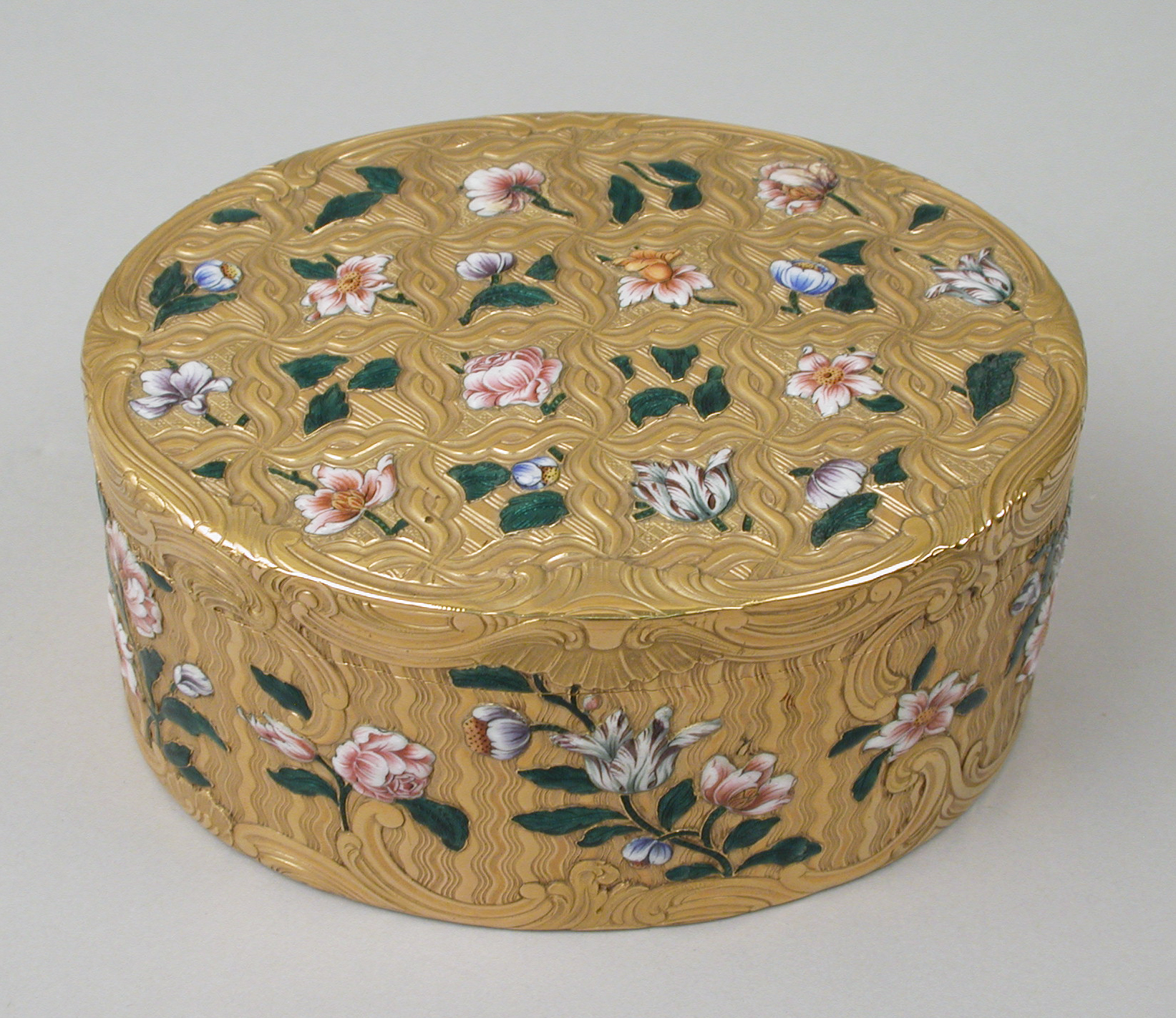
The Snuffbox as Couture: A Study in Global Heritage, Gold, and Enamel
In the rarefied echelons of fashion history, few artifacts bridge the gap between personal adornment and cultural diplomacy as elegantly as the snuffbox. At Katherine Fashion Lab, we approach this object not merely as a functional relic of a bygone era, but as a masterclass in miniature couture—a standalone study in how material, craftsmanship, and heritage converge to create a wearable, portable statement of status and identity. This analysis dissects the snuffbox through the lens of high fashion, examining its gold and enamel composition as a testament to global heritage and the enduring power of artisanal luxury.
The Snuffbox as a Couture Artifact: Scale and Significance
The snuffbox, typically no larger than a palm, challenges conventional notions of couture. Where haute couture garments demand yards of fabric and hours of draping, the snuffbox compresses luxury into a confined, intimate space. Yet, its impact is disproportionately grand. In the 18th and 19th centuries, these boxes were not mere containers; they were diplomatic gifts, tokens of affection, and markers of social ascent. The materials—gold and enamel—were chosen for their permanence and brilliance, much like the finest silks and gemstones in a ball gown. At Katherine Fashion Lab, we recognize that the snuffbox’s scale elevates its couture status: every millimeter must be perfect, every surface a canvas for narrative. This is the antithesis of mass production; it is the pinnacle of bespoke artistry, where the artisan’s hand is as visible as the designer’s vision.
Gold, in this context, is not merely a metal but a symbol of enduring value and global exchange. Its malleability allows for intricate chasing and repoussé work, techniques that echo the sculptural folds of a couture gown. The snuffbox’s gold base often features elaborate borders, scrollwork, or emblematic motifs that speak to the owner’s lineage or aspirations. For instance, a box from the French court might display fleur-de-lis, while a Russian example could incorporate double-headed eagles. This heraldic language is couture’s equivalent of a monogram or a house signature—a mark of exclusivity that cannot be replicated.
Enamel: The Palette of a Miniature Masterpiece
Enamel, the second material in this duet, transforms the snuffbox from a precious object into a painted narrative. Enamel work—whether cloisonné, champlevé, or painted enamel—requires a level of precision that rivals the finest embroidery. The colors are fired at high temperatures, rendering them permanent and luminous. In couture terms, enamel is the equivalent of hand-painted silk or intricate beadwork: it adds depth, texture, and a spectrum of hues that gold alone cannot achieve.
Consider a snuffbox with a painted enamel scene depicting a pastoral landscape or a mythological tableau. The artist must layer translucent colors, each firing fixing a new dimension of light. This process mirrors the layering of tulle and organza in a couture dress, where transparency and opacity interplay to create volume and movement. The enamel’s glossiness also serves a functional purpose: it protects the imagery while inviting touch, much like the tactile pleasure of a silk charmeuse lining. At Katherine Fashion Lab, we view enamel as the couture fabric of the snuffbox—a medium that defies time and trend, demanding mastery that is passed down through generations.
Global Heritage: A Tapestry of Influences
The snuffbox’s origin as a “global heritage” object is central to its couture analysis. Snuff-taking itself originated in the Americas, with tobacco leaves ground into powder, and was popularized in Europe through colonial trade routes. The boxes that housed this substance became vessels for cross-cultural exchange. For example, Chinese artisans produced enameled snuffboxes for the European market, blending traditional famille rose palettes with Western shapes. Indian craftsmen incorporated kundan settings and gemstone inlays, while European ateliers in Paris, Geneva, and London developed their own distinctive styles. This fusion is couture’s lifeblood: the ability to absorb and reinterpret global motifs into a cohesive, luxurious whole.
In a standalone study, the snuffbox reveals how heritage is not static but adaptive. A box from the Fabergé workshop, for instance, might combine Russian enamel techniques with French rococo curves, reflecting the cosmopolitan tastes of the imperial court. Similarly, a Swiss snuffbox could feature guilloché engine-turned patterns beneath translucent enamel, a technique that later influenced Art Deco jewelry. At Katherine Fashion Lab, we argue that this global heritage is the snuffbox’s greatest couture asset: it tells a story of migration, trade, and artistic dialogue that no single culture can claim exclusively. The wearer of such a box carries not just an accessory, but a microcosm of world history.
Standalone Study: Deconstructing the Couture Process
To appreciate the snuffbox as a standalone couture study, one must deconstruct its creation. The process begins with design, where the artisan sketches the box’s silhouette—often oval, rectangular, or shaped like a shell or flower. This is akin to a couturier’s toile, a preliminary mockup that establishes proportion and flow. Next comes metalworking: the gold is hammered, cast, or die-stamped to form the base. The enamel application follows, requiring multiple firings in a kiln at temperatures exceeding 700°C. Each layer must cool slowly to prevent cracking, a risk that parallels the tension of sewing delicate fabrics. Finally, assembly incorporates the hinge, clasp, and interior lining—often of tortoiseshell or velvet—ensuring the box opens and closes with a satisfying click.
This process is couture in miniature. The time investment—weeks or months for a single box—mirrors the hundreds of hours required for a bespoke gown. The cost, too, is prohibitive, reserved for elite patrons who understand that true luxury is invisible to the masses. At Katherine Fashion Lab, we emphasize that the snuffbox’s standalone study is a reminder that couture is not defined by scale but by intention. Whether a dress or a box, the object must embody the highest standards of craft, the richest materials, and a narrative that transcends its immediate function.
Conclusion: The Snuffbox’s Enduring Couture Legacy
In the context of Katherine Fashion Lab’s mission to explore fashion’s intersections with art and history, the snuffbox stands as a testament to the timeless allure of miniature luxury. Its gold and enamel composition is not merely decorative but deeply symbolic of global heritage—a portable museum of techniques and tastes that continue to inspire contemporary designers. As we study this object in isolation, we are reminded that couture is not confined to the runway. It exists in the intimate, the precious, and the meticulously crafted. The snuffbox, with its whispered secrets of diplomacy and desire, remains a masterclass in how to compress the world’s beauty into a single, golden moment of elegance.