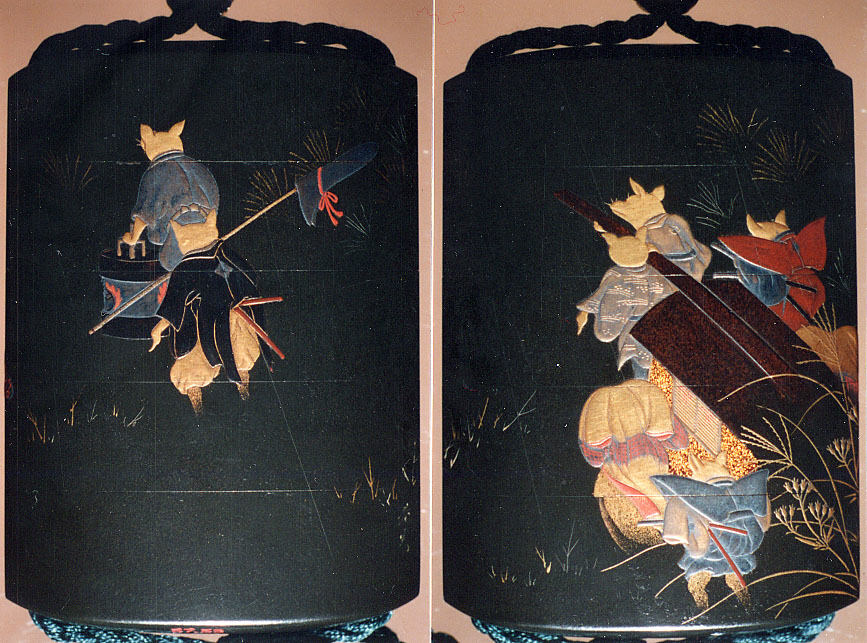
Heritage Analysis: Case (Inrō) with Fox Wedding Procession
Katherine Fashion Lab presents a strategic heritage analysis of the Japanese Case (Inrō) with Fox Wedding Procession, a masterwork of Edo-period craftsmanship. This object—comprising a lacquered wood inrō decorated with colored lacquer and gold maki-e, an ivory netsuke of a fox reclining on a large leaf, a gold bead ojime, and a dark green silk cord—embodies a confluence of symbolic power, historical adornment, and spiritual meaning. For a high-end luxury brand targeting 2026, this artifact offers a profound blueprint for integrating narrative depth, material mastery, and cultural resonance into contemporary design strategy.
Symbolic Power and Spiritual Meaning
The Fox Wedding: A Narrative of Transformation and Trickery
The central motif—the kitsune no yomeiri (fox wedding procession)—is rich with symbolic complexity. In Japanese folklore, foxes (kitsune) are shape-shifting spirits (yōkai) associated with Inari, the Shinto deity of rice, commerce, and prosperity. A fox wedding is believed to occur on sunny days with sudden rain, a phenomenon called kitsune no yomeiri ame. The procession, often depicted with lanterns and bridal regalia, signifies transformation, trickery, and the liminal space between the human and spirit worlds. For the wearer of this inrō, the motif was not merely decorative but a talisman of good fortune, cleverness, and adaptability—qualities essential for navigating the social hierarchies of Edo-era Japan.
Spiritual Protection and Prosperity
The fox’s role as a messenger of Inari imbues the object with spiritual protection and prosperity. Inari shrines, often marked by fox statues, were frequented by merchants and artisans seeking commercial success. By carrying this inrō, the owner invoked the fox’s liminal power—able to see beyond the veil of reality—and thus gained insight into opportunities and threats. The gold maki-e technique, which uses gold dust to create luminous patterns, further amplifies this spiritual dimension. Gold in Japanese lacquerware is not mere decoration; it is a material of eternal light, symbolizing the divine and the imperishable. The combination of fox imagery and gold lacquer transforms the inrō into a portable shrine of worldly and otherworldly ambition.
Historical Adornment: The Inrō as Status and Identity
Functional Elegance in Edo Society
The inrō (a tiered case for carrying seals, medicines, or tobacco) was an essential accessory for men of the samurai and merchant classes during the Edo period (1603–1868). Suspended from the obi (sash) by a silk cord, secured by a netsuke (toggle) and ojime (bead), the inrō was both practical and a marker of social status, taste, and cultural literacy. The choice of maki-e lacquer—a time-intensive process requiring dozens of layers and months of curing—indicated wealth and patronage of skilled artisans. The fox wedding procession motif, with its layered narrative, demonstrated the owner’s erudition and appreciation for folkloric allegory.
Material Hierarchy and Craftsmanship
The materials themselves encode status: the ivory netsuke, carved as a fox reclining on a leaf, is not only functional (preventing the cord from slipping through the obi) but also a miniature sculpture. Ivory, sourced from elephants or walruses, was a luxury import, and its carving required exceptional skill. The gold bead ojime and dark green silk cord—a color associated with nature and vitality—complete a harmonious palette. In Edo society, such an ensemble signaled that the wearer belonged to a sophisticated circle that valued understated opulence, narrative depth, and meticulous craftsmanship. This object was not merely worn; it was a conversation piece, a statement of identity, and a vessel of personal mythology.
Strategic Implications for 2026 High-End Luxury
Narrative-Driven Design as a Luxury Imperative
For Katherine Fashion Lab’s 2026 strategy, the inrō with fox wedding procession offers a compelling case for narrative-driven design. In an era where luxury consumers increasingly seek authenticity and emotional resonance, objects that tell stories—particularly those rooted in folklore, spirituality, and transformation—command premium value. The fox wedding motif, with its themes of cleverness, prosperity, and liminality, can be adapted into contemporary accessories, textiles, or jewelry. For instance, a 2026 capsule collection might feature gold maki-e-inspired prints on silk scarves, or fox-shaped clasps on handbags, evoking the protective and transformative spirit of the original artifact.
Material Mastery and Artisanal Collaboration
The inrō’s craftsmanship underscores the importance of material mastery and artisanal collaboration. High-end luxury in 2026 must move beyond mass production to embrace techniques that require time, skill, and cultural specificity. Katherine Fashion Lab could partner with contemporary Japanese lacquer artists to create limited-edition pieces using maki-e or other traditional methods. This not only ensures exclusivity but also supports cultural preservation—a value increasingly prized by discerning consumers. The ivory netsuke, while ethically problematic today, can be reimagined using sustainable alternatives like tagua nut or carved resin, maintaining the sculptural quality without ecological harm.
Spiritual and Symbolic Resonance in Modern Markets
The spiritual dimension of the inrō—its role as a talisman for prosperity and protection—resonates with the 2026 consumer’s desire for objects that offer meaning beyond aesthetics. Brands that embed symbolic power into their designs create deeper customer loyalty. For example, a “Fox Wedding” collection could include amulet-like pendants or obi-inspired belts, each accompanied by a card explaining the folklore and the protective properties attributed to the fox. This transforms the purchase into a ritual, aligning with trends in mindful consumption and spiritual wellness.
Strategic Positioning: Heritage as Competitive Advantage
Finally, this analysis positions Katherine Fashion Lab to leverage heritage as a competitive advantage. By showcasing deep research into objects like the inrō, the brand demonstrates cultural authority and intellectual rigor—qualities that differentiate it from trend-driven competitors. In 2026, luxury is not just about product; it is about curated storytelling, ethical craftsmanship, and timeless symbolism. The inrō with fox wedding procession is a masterclass in how to integrate all three. As Katherine Fashion Lab moves forward, this artifact serves as a touchstone for collections that honor tradition while innovating for the future—a strategy that ensures relevance, resonance, and revenue in the high-end luxury market.