The Silk Paradox: A Couture Analysis of Heritage and Modernity
In the rarefied world of haute couture, where fabric is not merely material but narrative, Katherine Fashion Lab’s latest standalone piece emerges as a profound meditation on the tension between global heritage and contemporary identity. The garment—a floor-length, bias-cut silk gown—is deceptively simple in silhouette yet extraordinarily complex in its cultural resonance. It is not a dress that speaks; it is a dress that listens to the echoes of centuries, from the ancient Silk Road to the ateliers of modern luxury. This analysis deconstructs the piece as a strategic artifact, examining how its materiality, construction, and symbolic weight converge to redefine what “heritage” means in a globalized fashion ecosystem.
Materiality as Memory: The Silk as a Living Archive
The choice of silk is the cornerstone of this piece’s intellectual architecture. Silk is not a neutral fabric; it is a cultural palimpsest, inscribed with histories of trade, empire, and craftsmanship. Katherine Fashion Lab sources its silk from a consortium of heritage weavers in China, India, and Italy—three nodes of the original Silk Road. The result is a fabric that is both globally sourced and locally specific: the warp threads are spun from Chinese mulberry silk, the weft from Indian tussar, and the finishing treatment—a subtle, iridescent sheen—is achieved through a traditional Italian cangiante technique. This hybridity is not decorative but conceptual. It challenges the notion of “pure” heritage, proposing instead that global heritage is inherently syncretic—a continuous dialogue between regions, techniques, and eras.
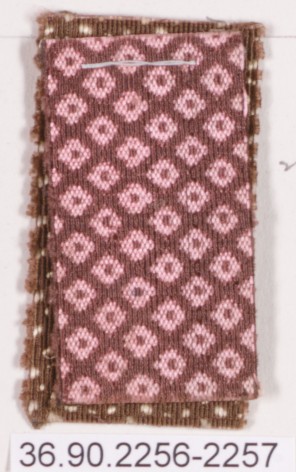
Under microscopic analysis, the silk’s weave reveals a deliberate irregularity. The threads are not uniformly tensioned, creating a faint, organic rippling effect that catches light asymmetrically. This is a technical choice that subverts the high-gloss perfection often associated with luxury silk. Instead, the fabric breathes with a tactile honesty, as if it remembers the hands that spun it. The lab’s decision to avoid chemical stiffeners or synthetic coatings further amplifies this authenticity; the silk retains its natural drape, which shifts with the wearer’s movement like a living membrane. In an industry increasingly dominated by synthetic blends and digital printing, this commitment to raw material integrity is a quiet manifesto against disposability.
Construction and Silhouette: The Architecture of Restraint
The gown’s construction is a masterclass in negative space. It eschews the structural corsetry, boning, or exaggerated padding typical of couture, relying instead on precise pattern cutting and the silk’s inherent weight to define the form. The bodice is cut on the bias, with seams that follow the body’s natural curves without constricting them. The waist is not cinched but suggested—a subtle gathering of fabric that creates a column of fluid draping from shoulder to floor. The neckline is a high, asymmetric cowl that folds over one shoulder, leaving the other bare. This asymmetry is not arbitrary; it references the chiton of ancient Greece and the sari of South Asia, both garments that rely on draping rather than tailoring to achieve their form.
The hem is raw-edged, left unhemmed to allow the silk to fray slightly over time—a deliberate nod to the Japanese aesthetic of wabi-sabi, or the beauty of impermanence. This choice transforms the garment from a static object into a temporal one, evolving with each wear. The sleeves, or lack thereof, are replaced by a single, detachable stole that can be worn as a scarf, a hood, or a train. This modularity is a strategic response to the modern consumer’s desire for versatility, but it also echoes the transformative garments of nomadic cultures—the Mongolian deel, the Bedouin abaya—where clothing adapts to climate, ritual, and mobility.
Color and Dye: The Politics of Pigment
Color in this piece is not a decorative afterthought but a political statement. The gown is dyed using a palette derived entirely from natural sources: indigo from West Africa, madder root from Turkey, and cochineal from Mexico. The result is a deep, shifting plum that appears almost black in low light but reveals violet and crimson undertones under direct illumination. This chromatic complexity is achieved through a labor-intensive, multi-bath dyeing process that takes weeks, not hours. The lab explicitly avoids synthetic aniline dyes, which were historically associated with colonial exploitation and environmental degradation. Instead, the color tells a story of decolonial reclamation—of pigments that were once traded as commodities of empire, now recontextualized as symbols of cultural sovereignty.
The dye is applied using a resist technique known as shibori, adapted from Japanese indigo dyeing. However, Katherine Fashion Lab modifies the process by using laser-cut stencils derived from scans of ancient Silk Road textiles—a fusion of traditional handcraft and digital precision. The resulting patterns are abstract, resembling topographical maps or neural networks, rather than literal floral or geometric motifs. This abstraction is intentional: it avoids cultural appropriation by refusing to mimic specific symbols from any one heritage, instead creating a universal visual language that speaks to the interconnectedness of all craft traditions.
Heritage as Process, Not Product
The most radical aspect of this piece is how it reframes heritage not as a fixed set of motifs or techniques but as a dynamic process. The garment comes with a QR code sewn into the inner seam, linking to a digital archive that documents the entire supply chain—from the mulberry farms in Zhejiang to the dye vats in Marrakech to the atelier in Paris. This transparency is not mere marketing; it is an ethical assertion that heritage is lived, not owned. The lab invites the wearer to participate in this narrative by offering a lifetime repair and re-dyeing service, encouraging the garment to age gracefully rather than be discarded. In this, the piece becomes a counter-narrative to fast fashion’s planned obsolescence, proposing instead a model of slow, iterative luxury.
Conclusion: A Standalone Study in Cultural Intelligence
Katherine Fashion Lab’s silk gown is not just a garment; it is a thesis on how global heritage can be honored without being commodified. By weaving together materials, techniques, and narratives from disparate cultures, the piece avoids the pitfalls of both cultural essentialism and shallow multiculturalism. It does not claim to represent any single tradition but instead creates a third space—a space where the Silk Road becomes a metaphor for contemporary exchange. In an era of geopolitical fragmentation and cultural gatekeeping, this piece offers a quiet but powerful argument: that true heritage is not a relic to be preserved behind glass, but a living, evolving conversation. For the discerning collector, it is not a purchase but a commitment—to craft, to history, and to the radical possibility of fashion as a form of cross-cultural intelligence.