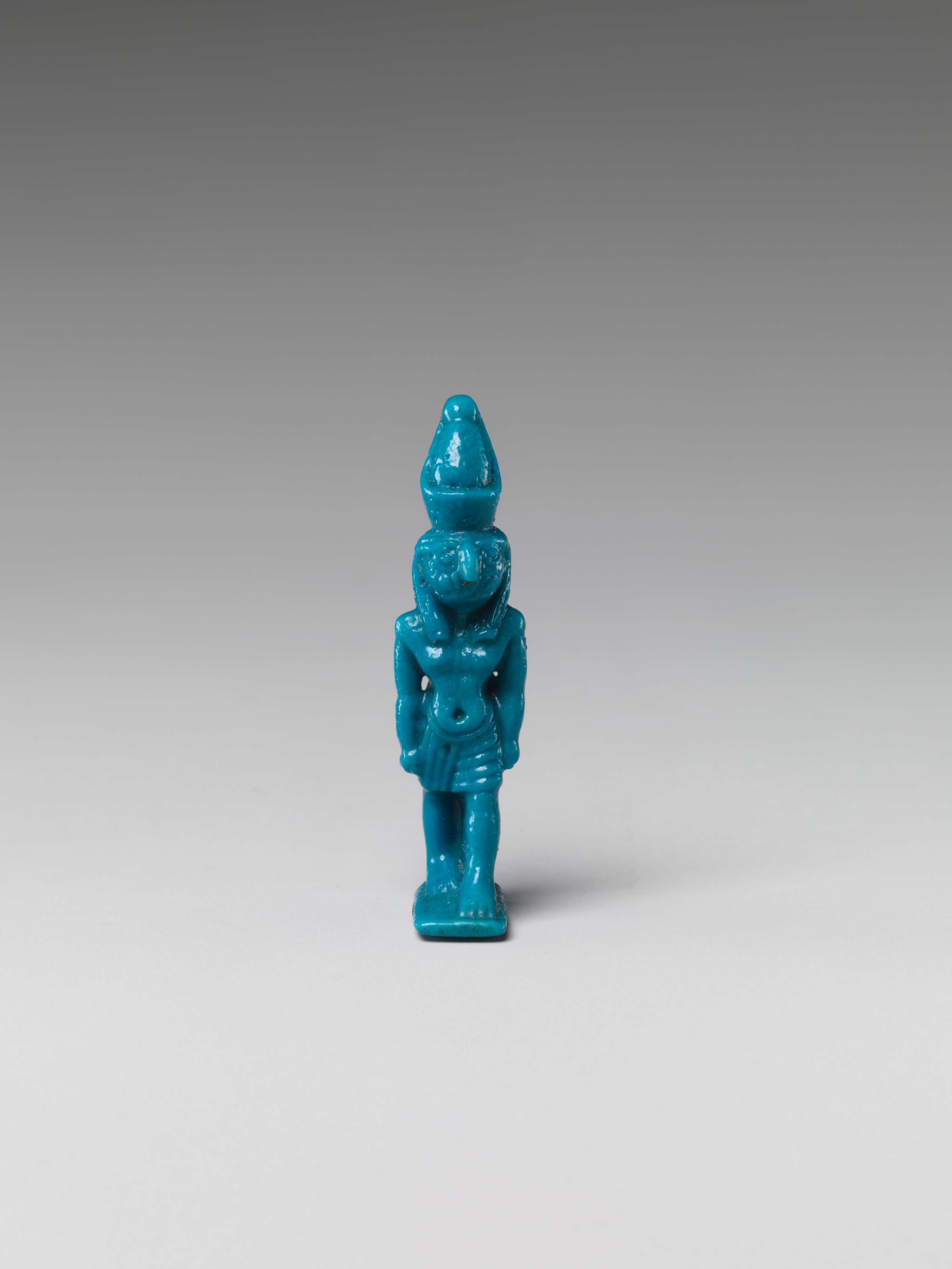
Introduction: The Horus Amulet as a Cultural Artifact of Sovereign Power
As Lead Heritage Curator for Katherine Fashion Lab, I present this strategic standalone research on the Horus amulet, a seminal artifact from ancient Egyptian civilization. Crafted in faience—a glazed non-clay ceramic material synonymous with royal and religious significance—this amulet embodies the intersection of symbolic power, historical adornment, and spiritual meaning. For a high-end luxury brand targeting the 2026 market, understanding the Horus amulet’s layered heritage offers a blueprint for integrating authenticity, prestige, and transcendence into contemporary design. This analysis deconstructs the amulet’s iconographic and material dimensions, then translates these insights into a actionable luxury strategy that elevates Katherine Fashion Lab’s position as a curator of meaningful opulence.
Symbolic Power: The Eye of Horus as an Emblem of Protection and Royal Authority
Mythological Foundations and Iconographic Semiotics
The Horus amulet, most frequently rendered as the Eye of Horus (Wadjet), derives its symbolic potency from the myth of Osiris, Isis, and Horus. In ancient Egyptian cosmology, Horus—the falcon-headed god of the sky—lost his left eye in a battle with Set, the god of chaos, only to have it restored by Thoth, the god of wisdom. This restoration endowed the eye with healing, protection, and resurrection properties. The amulet thus served as a talisman against evil, a guarantor of safe passage into the afterlife, and a marker of divine kingship. For Katherine Fashion Lab, this symbolism translates into a design language of resilience, vigilance, and spiritual guardianship—qualities that resonate deeply with luxury consumers seeking not just adornment, but talismanic objects that confer agency and security in an uncertain world.
Hierarchies of Power and Social Signaling
In ancient Egypt, the Horus amulet was not universally accessible. Its use was restricted to the elite—pharaohs, priests, and high-ranking officials—who wore it as a pectoral, bracelet, or headdress component. The amulet’s placement on the body was deliberate: near the heart or on the forehead, aligning the wearer with Horus’s celestial gaze. This hierarchical exclusivity is a critical lesson for luxury branding. The 2026 high-end consumer craves stratified access—a product that signals membership in an enlightened, discerning class. Katherine Fashion Lab can leverage this by positioning Horus-inspired pieces as limited-edition, numbered artifacts, each with a provenance card detailing its mythological lineage, thereby transforming a necklace or brooch into a wearable credential of cultural literacy.
Historical Adornment: Faience as a Medium of Eternal Luster
Material Alchemy and Craftsmanship
Faience, the medium of choice for the Horus amulet, is a testament to ancient Egyptian innovation. Composed of crushed quartz, alkaline salts, and metallic oxides, faience was fired to produce a vitreous, brilliant glaze—typically turquoise, blue, or green—that mimicked precious stones like lapis lazuli and turquoise. This material was not merely decorative; it was imbued with solar and regenerative symbolism, as its sheen reflected the life-giving rays of Ra. The production process required extraordinary skill: the faience paste was molded, dried, and fired at precise temperatures, a technique that remained a guarded secret among artisans. For Katherine Fashion Lab, faience represents a heritage of artisanal mastery and material rarity. In 2026, luxury is defined by the return to handcrafted, labor-intensive processes. Collaborating with contemporary ceramicists to recreate faience-like glazes—or using actual faience sourced from ethical, heritage-informed studios—would position the brand as a steward of ancient techniques, appealing to the neo-artisanal consumer who values authenticity over mass production.
Adornment as Ritual and Identity
The Horus amulet was not worn casually; it was integrated into funerary rites, temple ceremonies, and daily life as a constant companion. For the living, it protected against illness and misfortune; for the dead, it ensured rebirth in the Field of Reeds. This dual function—adornment as both personal armor and eternal companion—offers a profound framework for luxury product design. Katherine Fashion Lab can conceptualize a 2026 collection where each piece is designed to be “activated” by the wearer’s intention—perhaps through a ritual of purchase (e.g., a private consultation with a brand historian) or through modular design that allows the amulet to be worn in multiple contexts (day, evening, meditation). The amulet becomes a portable sanctuary, aligning with the growing consumer demand for wellness-integrated luxury.
Spiritual Meaning: Transcendence and the Luxury of Belief
Cosmic Alignment and the Afterlife Economy
The spiritual meaning of the Horus amulet is rooted in the Egyptian concept of Ma’at—cosmic order, balance, and truth. Wearing the amulet was an act of aligning oneself with divine harmony, a practice that transcended mere aesthetics. In the afterlife, the amulet’s protective power was believed to be adjudicated by the gods during the Weighing of the Heart ceremony. This spiritual economy—where adornment directly influences one’s fate—is remarkably relevant to contemporary luxury. The 2026 consumer is increasingly metaphysical-minded, seeking products that offer a sense of purpose, protection, and transcendence. Katherine Fashion Lab can tap into this by embedding symbolic narratives into its marketing: each Horus-inspired piece could be accompanied by a digital or physical “blessing” (e.g., a guided meditation, a historical text, or a QR code linking to an immersive AR experience of the Egyptian underworld). The amulet becomes a bridge between the material and the spiritual, a luxury object that serves as a tool for self-actualization.
Ritualized Consumption and Brand Devotion
Ancient Egyptians did not purchase amulets from a market; they commissioned them from temple workshops, where priests consecrated the objects through prayers and offerings. This ritualized production and consumption created a cult of the object. For Katherine Fashion Lab, this suggests a strategy of brand-as-temple. In 2026, high-end luxury brands will differentiate themselves through immersive, ritualistic experiences. Consider a private “initiation” at a flagship store, where clients are guided through the symbolism of the Horus amulet, then allowed to select their piece from a vault-like presentation. This elevates the transaction from consumption to initiation into a lineage, fostering deep brand loyalty and a sense of shared meaning among clientele.
2026 High-End Luxury Strategy: Translating Heritage into Market Dominance
Product Architecture and Material Innovation
To operationalize these insights, Katherine Fashion Lab should develop a Heritage Talismans Collection centered on the Horus amulet. The product architecture should include:
- Core Amulet Pieces: Necklaces, bracelets, and brooches in faience-inspired glazes (turquoise, royal blue, emerald green) set in 18-karat gold or platinum, with micro-engraved hieroglyphic inscriptions.
- Modular System: Interchangeable amulets that can be attached to leather cords, chains, or fabric bands, allowing the wearer to customize the talisman’s placement (e.g., over the heart, on the wrist, or as a hair ornament).
- Limited Editions: Annual releases of 100 pieces, each with a unique serial number and a leather-bound “Book of Horus” containing the amulet’s mythological narrative, material provenance, and care ritual.
Brand Positioning and Narrative Marketing
The 2026 luxury market will be defined by cultural authority and narrative depth. Katherine Fashion Lab should position itself as a heritage curator, not merely a fashion house. Marketing campaigns should feature:
- Archaeological Collaborations: Partnerships with Egyptologists and museums (e.g., the British Museum, the Egyptian Museum in Cairo) to authenticate design details and provide scholarly endorsements.
- Immersive Digital Content: A virtual reality experience where clients “travel” to ancient Thebes, witness the creation of a faience amulet, and receive a personalized Horus blessing from a digital avatar of a priest.
- Exclusive Events: Private viewings at heritage sites (e.g., the Temple of Horus at Edfu), where clients can wear their amulets during a sunset ceremony, connecting the product to its original ritual context.
Pricing and Scarcity Strategy
To reinforce exclusivity, the Horus amulet collection should be priced at the ultra-high-net-worth tier ($10,000–$50,000 per piece), with a strict one-per-customer limit for the first year. This scarcity mirrors the amulet’s original restricted access and creates a secondary market of collectible value. Additionally, Katherine Fashion Lab can offer a bespoke service where clients commission a custom amulet with their own hieroglyphic inscription, further personalizing the talisman’s protective power.
Conclusion: The Amulet as a Blueprint for Enduring Luxury
The Horus amulet, in its faience incarnation, is more than an ancient artifact—it is a masterclass in the fusion of symbolism, craftsmanship, and spiritual meaning. For Katherine Fashion Lab, this heritage analysis provides a clear strategic path for 2026: to create luxury objects that are not merely beautiful, but meaningful, protective, and transcendent. By honoring the amulet’s origins as a tool of royal authority, a medium of artisanal alchemy, and a conduit for cosmic alignment, the brand can offer its clients something rare in contemporary luxury: a piece of eternity. The Horus amulet reminds us that true luxury is not about possession, but about connection—to history, to the divine, and to oneself. Katherine Fashion Lab is poised to become the vessel for that connection, one talisman at a time.