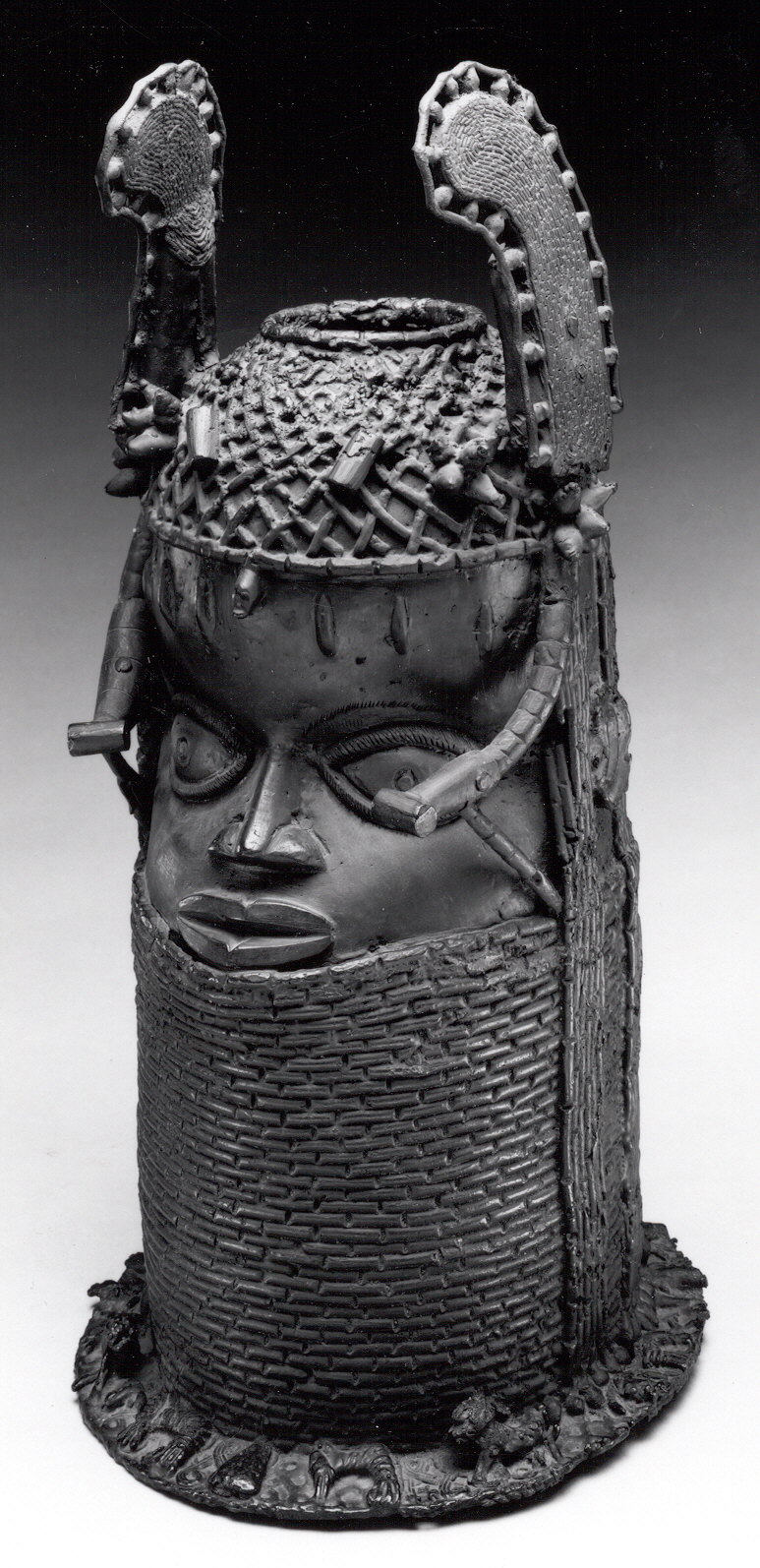
Heritage Analysis: The Ùhúnmwèlaò of the Edo Peoples
Introduction: The Object as Sovereign Narrative
The Ùhúnmwèlaò, or commemorative brass head of an ọ́bà (king), from the Edo peoples of the historic Kingdom of Benin (present-day Nigeria), is far more than a sculptural artifact. It is a condensed archive of sovereign authority, spiritual protection, and dynastic continuity. Cast in brass through the lost-wax technique, these heads were placed on ancestral altars within the royal palace, serving as focal points for ritual offerings and as enduring symbols of the ọ́bà’s divine right to rule. For Katherine Fashion Lab, this object presents a profound strategic opportunity: to translate the layered symbolism of pre-colonial African kingship into a 2026 high-end luxury narrative that values spiritual depth, material mastery, and cultural stewardship over mere aesthetic appropriation.
Symbolic Power: The Crown as Cosmic Axis
The most immediately striking feature of the Ùhúnmwèlaò is its elaborate crown, known as the “ada” or beaded headdress, which rises in tiered, conical forms. In Edo cosmology, the ọ́bà was understood as the intermediary between the earthly realm and the spiritual world, a living god whose authority was divinely sanctioned. The crown’s verticality is not accidental; it symbolizes the axis mundi, the cosmic pillar connecting heaven, earth, and the underworld. The coral beads that adorn the crown—historically reserved exclusively for the ọ́bà and high-ranking chiefs—carry immense symbolic weight. Coral, sourced from the Mediterranean and traded across the Sahara, was believed to possess life-giving properties, representing the blood of the king and the vitality of the kingdom. Each bead is a microcosm of power, a unit of sacred currency that binds the ruler to his ancestors and his people.
For a 2026 luxury strategy, this symbolism of verticality and exclusive materials can be reinterpreted as a brand philosophy of “ascendant heritage.” Katherine Fashion Lab can position its collections as embodying a similar axis—a bridge between tradition and innovation, craftsmanship and commerce. The use of rare, ethically sourced materials (such as regenerated coral or hand-carved precious stones) in limited-edition accessories can echo the exclusivity of the ọ́bà’s adornment, creating a tangible link to the idea of divine selection. The crown’s tiered structure can inspire architectural silhouettes in eveningwear or structural handbags, where each tier represents a layer of brand history, cultural knowledge, and artisanal skill.
Historical Adornment: The Language of Brass and Beads
The medium of brass itself is a statement of power. In the Edo kingdom, brass was a royal metal, associated with the sun, permanence, and the unyielding authority of the throne. The lost-wax casting process, performed by specialized guilds under royal patronage, ensured that each head was a unique, unrepeatable object—a direct analogue to the singular nature of the ọ́bà’s rule. The idealized, serene facial features of the Ùhúnmwèlaò—with large, almond-shaped eyes, a straight nose, and full lips—are not portraits in the Western sense but rather typological representations of “divine calm.” The closed or slightly open mouth suggests controlled speech, the wisdom of measured words, while the prominent ears signify the king’s duty to hear the petitions of his people.
The adornment extends to the neck and chest, where multiple strands of coral and agate beads cascade, forming a protective collar. This collar is both a physical and spiritual armor, shielding the ọ́bà from malevolent forces. The act of adorning the king was a ritual in itself, performed by trusted attendants who understood the spiritual potency of each element. For Katherine Fashion Lab, this historical practice offers a template for “ritualized dressing.” A 2026 collection could introduce a “Ceremonial Adornment” capsule, where garments and accessories are designed to be layered in a specific sequence, each piece imbued with a symbolic function (protection, communication, authority). The brand could collaborate with Edo brass casters to create limited-run metallic hardware—belt buckles, clasp closures, or jewelry—that carry the same lost-wax patina and weight, transforming a commercial product into a heirloom object.
Spiritual Meaning: The Altar as Brand Sanctuary
The Ùhúnmwèlaò was not created for display in a museum. Its original context was the “ẹkẹ” (ancestral altar) within the ọ́bà’s palace, where it was placed alongside other commemorative heads, ivory tusks, and ritual bells. These altars were living spaces, maintained by priests who made daily offerings of food, palm oil, and animal blood to sustain the spiritual presence of the departed king. The head itself was believed to house the “uhunmwun” (spirit) of the ọ́bà, making it a direct conduit to the ancestral realm. The act of pouring libations over the head was a literal and symbolic act of feeding the dynasty, ensuring the continued prosperity of the kingdom.
This spiritual framework challenges the modern luxury industry’s often superficial engagement with “wellness” or “mindfulness.” For Katherine Fashion Lab, the Ùhúnmwèlaò suggests a deeper, more committed approach: the creation of “brand sanctuaries” within flagship stores or exclusive pop-up spaces. These sanctuaries would not be mere retail environments but curated spaces designed for quiet reflection, cultural education, and ritualized product interaction. A customer purchasing a high-jewelry piece inspired by the ọ́bà’s coral crown might be invited to a private ceremony where a cultural historian explains the symbolism of the piece, followed by a moment of silent appreciation—a modern libation of attention and respect. This transforms the transaction into a spiritual exchange, aligning the brand with authenticity and reverence.
2026 High-End Luxury Strategy: From Appropriation to Stewardship
In the context of 2026, where discerning luxury consumers demand provenance, ethical sourcing, and cultural sensitivity, Katherine Fashion Lab must move beyond the tired trope of “African inspiration.” The strategy must be one of “stewardship and co-creation.” This means establishing formal partnerships with Edo cultural institutions, such as the Benin Royal Museum or the National Commission for Museums and Monuments in Nigeria, to ensure that any commercial use of the Ùhúnmwèlaò’s motifs is done with permission, profit-sharing, and educational benefit to the originating community.
The 2026 collection can be structured around three pillars:
1. The Sovereignty Line: High-jewelry and leather goods that directly reference the crown’s tiered structure and coral beadwork. Each piece would be numbered, registered, and accompanied by a certificate co-signed by a Edo cultural authority, detailing the symbolic meaning and the artisanal process. Price points would reflect the exclusivity of the materials and the cultural royalty paid to the Edo people.
2. The Ritual Adornment Capsule: Ready-to-wear and accessories designed for layering, with each layer representing a different aspect of the ọ́bà’s spiritual armor. The brand would offer a “styling ritual” guide, either digital or printed, explaining the protective and communicative functions of each piece. This creates a narrative of intentional dressing, appealing to the consumer’s desire for meaning.
3. The Sanctuary Experience: A limited series of immersive events in key luxury capitals (Paris, Dubai, Tokyo) where the Ùhúnmwèlaò is displayed in a respectful, altar-like setting. Attendees would be guided through the history and symbolism by Edo cultural ambassadors, with the opportunity to commission bespoke pieces. A portion of proceeds from these events would fund conservation efforts for Edo brass casting and oral history preservation.
In conclusion, the Ùhúnmwèlaò is not a motif to be extracted but a philosophy to be embodied. Its legacy of divine authority, material exclusivity, and spiritual protection offers Katherine Fashion Lab a blueprint for a luxury brand that is not merely selling products but curating cultural continuity. In 2026, the most valuable currency is not gold or coral, but respect—and the brand that treats heritage as a living, breathing partner will command the highest loyalty.