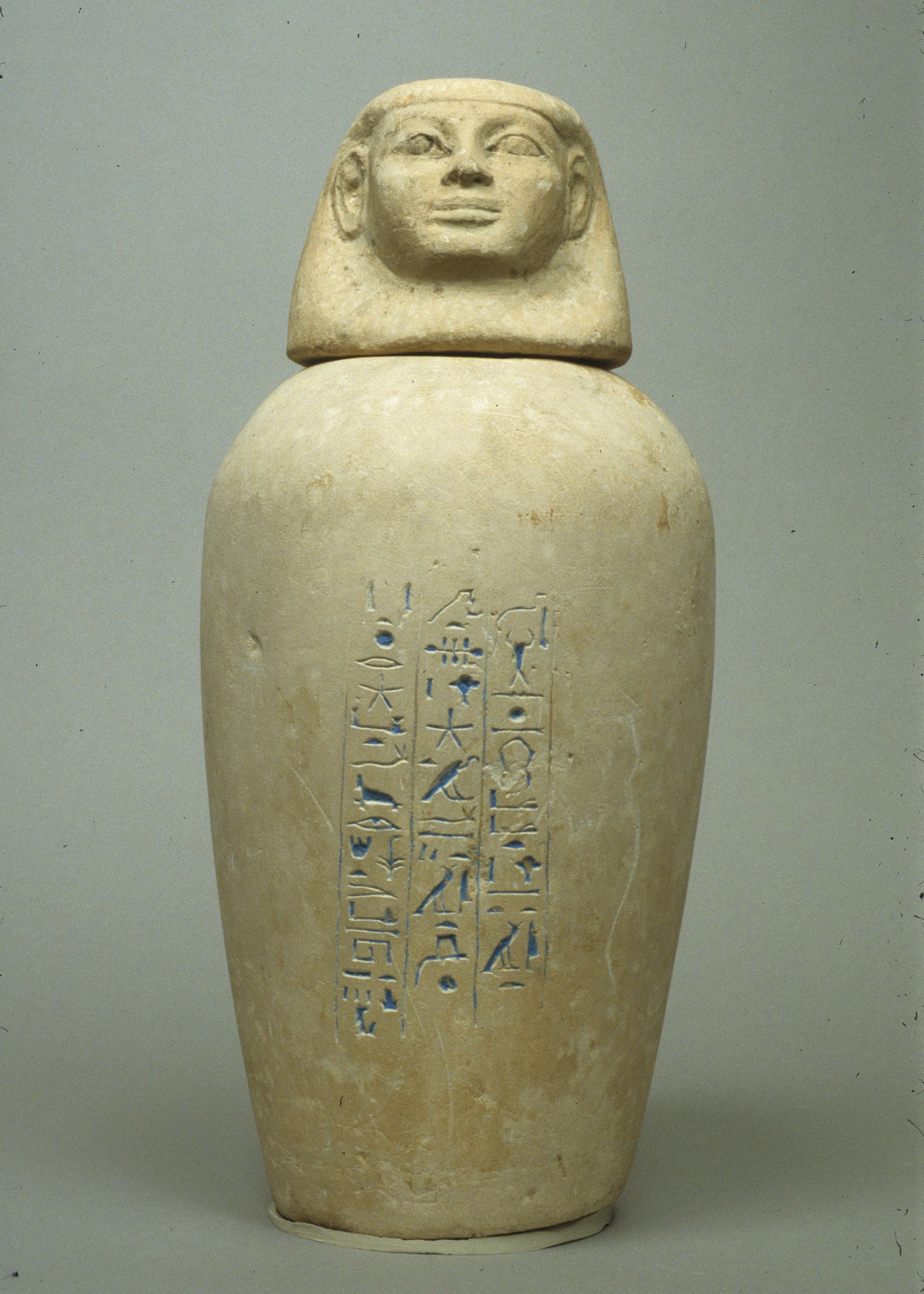
Heritage Analysis: The Canopic Jar of Manhata
Introduction to the Artifact
The Canopic Jar of Manhata, originating from an ancient civilization, represents a profound intersection of spiritual belief, ritualistic practice, and material artistry. Crafted from limestone and embellished with blue paste, this artifact embodies the ancient world's reverence for the afterlife, the soul's journey, and the preservation of the physical form. As a strategic standalone research subject for Katherine Fashion Lab, this jar offers a unique lens through which to examine symbolic power, historical adornment, and spiritual meaning, ultimately informing a high-end luxury strategy for 2026. The jar’s material composition—limestone as a durable yet humble stone, paired with the vibrant, celestial blue paste—signals a deliberate choice to merge permanence with transcendence, a duality that resonates deeply with luxury branding today.
Symbolic Power: The Jar as a Vessel of Authority
The Canopic Jar of Manhata was not merely a functional container for viscera but a potent symbol of divine protection and royal authority. In ancient funerary practices, canopic jars were entrusted with safeguarding the organs of the deceased, each associated with a protective deity. The jar’s lid, often carved in the likeness of a human head or a deity, served as a conduit between the mortal and the immortal. For Manhata, likely a figure of status, the jar’s limestone body—quarried with immense labor—signified earthly permanence, while the blue paste, reminiscent of lapis lazuli, evoked the heavens and the cosmic order. This symbolic duality positions the jar as a power totem: it commands reverence, asserts the owner’s place in the social hierarchy, and ensures their legacy beyond death.
From a strategic perspective, this symbolic power offers a compelling narrative for luxury brands. In 2026, consumers will seek objects that transcend mere utility, craving artifacts that embody authority and legacy. Katherine Fashion Lab can leverage this by designing collections that echo the jar’s protective and authoritative essence—perhaps through amulet-like accessories or garments with architectural silhouettes that evoke the jar’s solid, unyielding form. The blue paste, a rare and costly material in antiquity, can be reinterpreted as a signature color or material finish, signaling exclusivity and celestial aspiration.
Historical Adornment: The Aesthetics of Ritual
The Canopic Jar of Manhata is a masterclass in historical adornment, where every surface detail served both aesthetic and ritualistic purposes. The limestone was meticulously carved, its surface smoothed to a tactile finish, while the blue paste was applied in geometric patterns or hieroglyphic inscriptions. These adornments were not decorative in the modern sense; they were ritualistic markers—each line, curve, and color held sacred meaning. The blue paste, often derived from crushed minerals, was a symbol of life, rebirth, and the Nile’s fertility, connecting the deceased to the cyclical renewal of nature. The jar’s form—a stout, rounded body with a narrow neck—mirrored the human torso, emphasizing the vessel’s role as a surrogate body for the soul’s journey.
For Katherine Fashion Lab, this historical adornment strategy offers a blueprint for narrative-driven design. In 2026, high-end luxury will pivot toward meaningful embellishment, where every stitch, bead, or cut tells a story. The jar’s use of blue paste can inspire a signature technique—such as hand-applied enamel or lapis lazuli inlays—that becomes a brand hallmark. The geometric patterns can translate into jacquard weaves or laser-cut motifs, imbuing garments with a sense of ancient precision. Moreover, the jar’s ritualistic context suggests that adornment must serve a deeper purpose: luxury items should not just beautify but protect, empower, or transform the wearer. This aligns with the growing demand for experiential luxury, where consumers invest in pieces that offer emotional or spiritual value.
Spiritual Meaning: The Vessel of Transcendence
At its core, the Canopic Jar of Manhata is a spiritual technology—a tool designed to facilitate the soul’s passage through the underworld. The limestone body, porous yet dense, was believed to absorb and hold the essence of the deceased, while the blue paste acted as a protective seal, warding off malevolent forces. The jar’s placement within the tomb, often alongside other canopic jars, created a sacred geometry that mirrored the cosmos. For Manhata, this jar was not a passive container but an active participant in the afterlife, ensuring the soul’s immortality and transcendence. The spiritual meaning here is one of transformation: the jar transforms the physical remains into a conduit for the eternal.
This spiritual dimension is increasingly relevant to luxury consumers in 2026, who are moving beyond material acquisition toward self-actualization and transcendent experiences. Katherine Fashion Lab can position its 2026 collections as vessels for personal transformation—garments and accessories that serve as modern talismans. For example, a line of structured handbags or jewelry boxes could be designed with internal compartments that evoke the jar’s protective interior, housing small, meaningful objects (e.g., gemstones, personal notes). The blue paste can be reimagined as a signature hue across the brand’s visual identity, from packaging to store interiors, creating a sensory connection to ancient spirituality. By framing luxury as a ritual practice, the brand can cultivate deep loyalty among consumers who seek meaning in their purchases.
2026 High-End Luxury Strategy: Integrating Heritage and Innovation
To harness the Canopic Jar of Manhata’s heritage for a 2026 high-end luxury strategy, Katherine Fashion Lab must synthesize its symbolic power, historical adornment, and spiritual meaning into a cohesive brand narrative. The following strategic pillars are recommended:
1. The “Vessel” Collection: Launch a limited-edition line inspired by the jar’s form and function. Garments should feature structured, sculptural silhouettes (e.g., tailored jackets with rounded shoulders, cinched waists) that echo the jar’s torso-like shape. Accessories—such as leather bags with blue paste-inspired enamel clasps—can serve as modern “canopic jars,” designed to carry personal treasures. Each piece should include a hidden inscription or symbolic motif, referencing the jar’s hieroglyphic language, to create exclusivity and storytelling.
2. Material Innovation: Invest in developing a proprietary material that mimics the limestone’s matte, porous texture and the blue paste’s luminous depth. For example, a limestone-infused textile or a ceramic-like resin could be used in jewelry and hardware. This material should be marketed as sustainably sourced and artisan-crafted, aligning with the 2026 luxury consumer’s demand for ethical luxury.
3. Ritual-Based Marketing: Create an immersive brand experience that positions the purchase as a ritual. For instance, each “Vessel” piece could be presented in a custom box resembling a miniature tomb, with a guidebook explaining the jar’s spiritual significance. Pop-up events could feature ancient Egyptian-inspired ceremonies, such as “anointing” the garment with blue-hued oils. This approach taps into the experiential luxury trend, where the act of acquisition becomes a transformative moment.
4. Blue as a Brand Color: Elevate the blue paste’s shade—a deep, celestial blue—to a signature brand color. Use it across all touchpoints: packaging, digital assets, and store design. This not only honors the artifact but creates immediate visual recognition, akin to Tiffany & Co.’s robin’s egg blue. In 2026, color will be a powerful tool for emotional branding, and this hue’s association with transcendence and protection will resonate deeply.
5. Collaborations with Contemporary Artisans: Partner with modern artists and craftspeople who specialize in stone carving, enamel work, or ritualistic design. These collaborations can produce limited-edition pieces that bridge ancient techniques with contemporary aesthetics, reinforcing the brand’s commitment to heritage preservation and innovation.
In conclusion, the Canopic Jar of Manhata is far more than a relic; it is a strategic artifact whose symbolic power, historical adornment, and spiritual meaning offer a rich foundation for Katherine Fashion Lab’s 2026 luxury strategy. By treating this jar as a blueprint for transcendence, the brand can create not just products, but legacy objects that empower consumers to connect with something eternal. In a market saturated with ephemeral trends, this heritage-driven approach will position Katherine Fashion Lab as a leader in meaningful luxury, where the past informs a more profound future.