Heritage Analysis: Textile Fragment with Checks, Phoenixes, and Flowers
Introduction: The Artifact as Strategic Asset
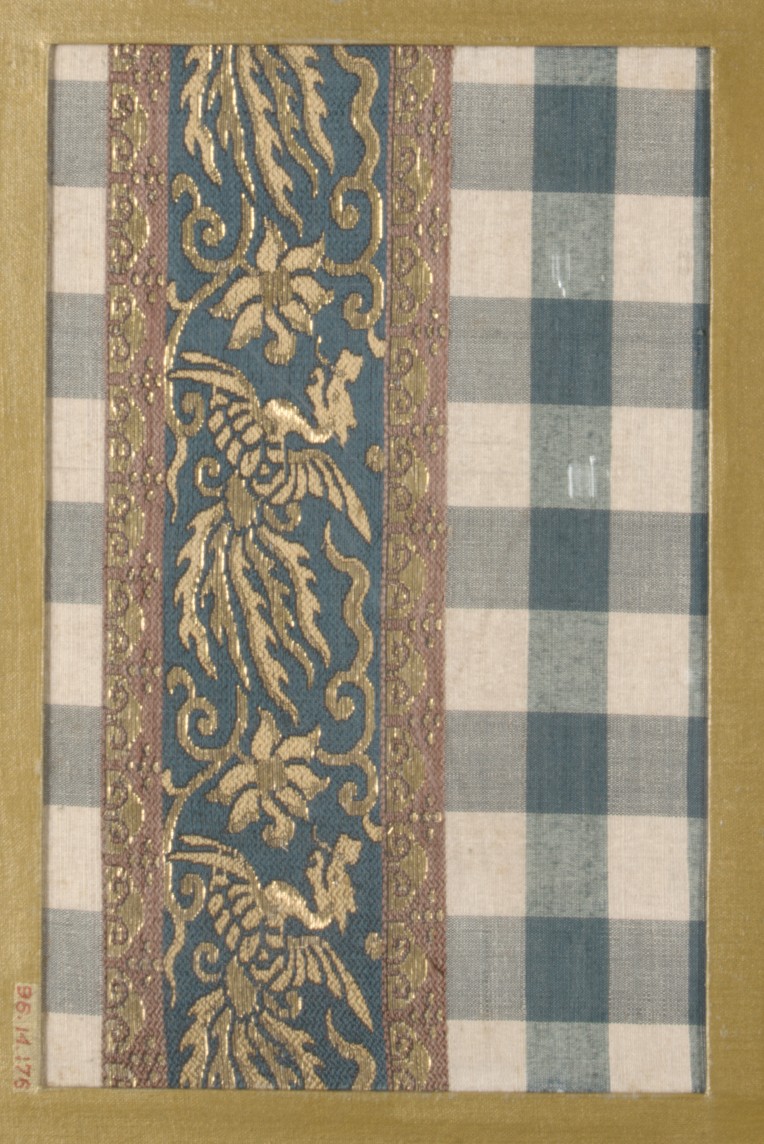
This textile fragment, originating from Japan and rendered in lustrous silk, presents a sophisticated interplay of geometric checks and a band of phoenixes interwoven with floral motifs. For Katherine Fashion Lab, this artifact is not merely a decorative relic but a repository of symbolic power, historical adornment, and spiritual meaning. As a strategic standalone research piece, it offers a blueprint for a 2026 high-end luxury strategy that leverages cultural authenticity, narrative depth, and exclusivity. This analysis decodes the fragment’s layered significance and translates it into actionable insights for brand positioning, product development, and consumer engagement in the competitive luxury landscape.
Symbolic Power: The Phoenix and the Check
The phoenix, or hō-ō in Japanese tradition, is a transcendent symbol of rebirth, virtue, and imperial authority. Unlike its Western counterpart, the Japanese phoenix is often depicted as a peaceful, benevolent creature associated with the empress and the cosmic order. Its presence on this textile fragment signals a deliberate invocation of auspicious energy and moral integrity. The band of phoenixes, paired with flowers—likely peonies or chrysanthemums—amplifies this symbolism. Peonies represent wealth and honor, while chrysanthemums signify longevity and the imperial throne. The checks, or ichimatsu pattern, provide a geometric counterpoint. Historically, checks were woven into garments worn by samurai and merchants, symbolizing harmony, balance, and the intersection of earthly and spiritual realms. Together, the checks and phoenixes create a visual dialogue: the mundane and the divine, the structured and the transcendent.
From a luxury brand perspective, this symbolic power can be harnessed to communicate exclusivity and meaning. High-end consumers in 2026 seek not just craftsmanship but stories that resonate with personal transformation and status. Katherine Fashion Lab can position this motif as a signature emblem of renewal—a nod to the brand’s ability to reinterpret heritage for modern wardrobes. The phoenix, in particular, aligns with luxury’s enduring fascination with rarity and mythology, offering a narrative that transcends seasonal trends.
Historical Adornment: Context and Craft
This textile fragment likely dates from the Edo period (1603–1868) or early Meiji era, a time when silk weaving reached extraordinary technical and artistic heights. The checks were achieved through kasuri (ikat) or ori (weave) techniques, requiring meticulous hand-tensioning of threads. The phoenixes and flowers were probably added via yuzen dyeing or embroidery, methods that demanded weeks of labor by master artisans. Such fragments adorned kosode (precursors to the kimono) worn by elite women and courtiers. The banded composition—a horizontal strip of phoenixes set against a checkered field—suggests a obi or sleeve hem, positioning the wearer within a hierarchy of taste and social standing. Historical adornment was not mere decoration; it was a language of status, seasonality, and spiritual protection.
For Katherine Fashion Lab, this historical context offers a heritage-driven production model. In 2026, luxury consumers increasingly value transparency and artisanal provenance. The brand can collaborate with surviving Kyoto weaving ateliers to recreate this fragment’s techniques—limited runs of hand-dyed silk, each piece certified by a master weaver. This approach honors the artifact’s lineage while ensuring scarcity, a cornerstone of high-end luxury. The checks can be scaled into contemporary silhouettes—tailored blazers, evening gowns, or accessories—while the phoenix band remains a discreet, signature detail. By embedding historical accuracy into modern design, Katherine Fashion Lab differentiates itself from mass-market reinterpretations.
Spiritual Meaning: Protection and Transcendence
In Japanese animist and Buddhist traditions, textiles were imbued with spiritual agency. The phoenix was believed to ward off evil and guide souls toward enlightenment, while floral motifs like the peony and chrysanthemum offered protection against malevolent spirits. The check pattern, with its grid-like structure, was thought to trap negative energy and prevent its spread. This fragment, therefore, functioned as a talisman as much as a garment. The wearer was enveloped in a field of auspicious symbols, aligning their earthly existence with cosmic harmony. The spiritual meaning is not abstract; it is tactile, woven into the very fiber of the silk.
For a 2026 luxury strategy, spiritual resonance can be leveraged through experiential branding. Katherine Fashion Lab can launch a capsule collection titled "The Phoenix Path," where each garment includes a hidden phoenix motif—perhaps embroidered inside the lining or along a seam—as a personal blessing. Accompanying the purchase could be a booklet explaining the spiritual significance, written by a curator or scholar. This transforms the transaction into a ritual, appealing to consumers who seek mindfulness and authenticity. Additionally, the brand can host private viewings at temples or heritage sites, where clients feel the weight of history and spirituality. Such initiatives foster deep emotional connections, driving loyalty and word-of-mouth among discerning buyers.
2026 High-End Luxury Strategy: Synthesis and Innovation
Synthesizing these insights, Katherine Fashion Lab can develop a three-pillar strategy for 2026: Artisanal Scarcity, Narrative Prestige, and Symbolic Resonance. Artisanal scarcity involves limited-edition runs of silk textiles using Edo-period techniques, with each piece authenticated via blockchain to trace its origin from Kyoto looms to the client. Narrative prestige requires a content ecosystem—short films, essays, and curator talks—that unpack the phoenix’s symbolism and the checks’ historical role, positioning the brand as a custodian of Japanese heritage. Symbolic resonance means designing garments that incorporate the fragment’s motifs in unexpected ways: a checkered trench coat with a phoenix-embroidered belt, or a silk scarf where the phoenix band wraps around the neck like a protective amulet.
Pricing should reflect this depth—starting at $5,000 for ready-to-wear pieces and reaching $50,000 for bespoke, handwoven creations. The target clientele includes cultural connoisseurs, art collectors, and global tastemakers who value rarity and story over logos. Collaborations with Japanese museums or contemporary artists specializing in textile art can further elevate credibility. By 2026, Katherine Fashion Lab can own the intersection of heritage and innovation, offering a luxury experience that is both intellectually satisfying and spiritually uplifting.
Conclusion: From Fragment to Future
This textile fragment of checks, phoenixes, and flowers is a microcosm of Japanese aesthetic and spiritual philosophy. For Katherine Fashion Lab, it is a strategic asset that transcends decoration to become a statement of values: balance, transformation, and protection. By decoding its symbolic power, honoring its historical adornment, and activating its spiritual meaning, the brand can craft a 2026 luxury strategy that is both timeless and forward-looking. In an era of ephemeral trends, this fragment reminds us that true luxury endures—not just in material, but in meaning.