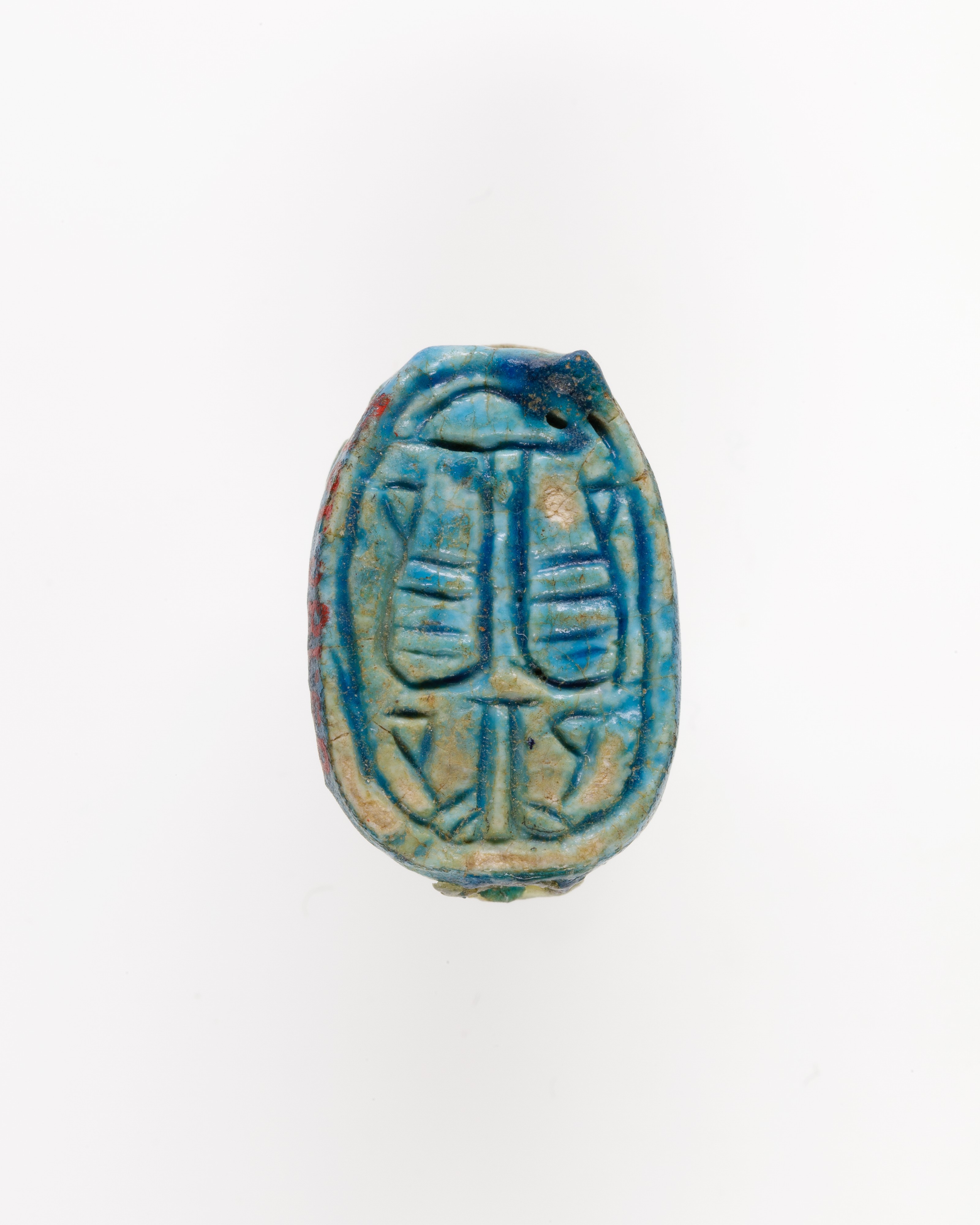
Executive Heritage Analysis: The Scarab with Papyrus Decoration
This strategic heritage analysis, commissioned by Katherine Fashion Lab, examines the Scarab with Papyrus Plant Decoration as a singular artifact of profound symbolic power and historical adornment value. Crafted from blue glazed steatite in the ancient civilization of Egypt (circa 1550–1070 BCE), this object transcends its material form to embody a nexus of spiritual meaning, royal authority, and cyclical rebirth. For a 2026 high-end luxury strategy, this artifact offers a potent lexicon of motifs—resilience, regeneration, and sacred geometry—that can be translated into exclusive, narrative-driven collections. The analysis is framed as standalone research, intended to inform brand positioning, product storytelling, and material innovation within the luxury sector.
Symbolic Power: The Scarab as Cosmic Regenerator
The Dung Beetle as Divine Archetype
The scarab beetle (Scarabaeus sacer) held a singular position in ancient Egyptian cosmology as the physical manifestation of Khepri, the god of the rising sun. The beetle’s behavior of rolling a ball of dung across the earth was analogized to the sun god’s daily journey across the sky, pushing the solar disk from darkness into dawn. In the context of this blue glazed steatite scarab, the beetle’s form is not merely decorative but ritualistic: it represents spontaneous generation, transformation, and eternal renewal. For Katherine Fashion Lab, this symbolic power can be leveraged as a brand metaphor for continuous reinvention—a core tenet of high-end luxury in an era of shifting consumer values.
Papyrus as the Symbol of Lower Egypt and Fertility
The papyrus plant decoration carved into the scarab’s base or reverse side is equally significant. Papyrus was the heraldic emblem of Lower Egypt and symbolized fertility, growth, and the life-giving Nile floodwaters. When combined with the scarab, the iconography creates a duality: the scarab represents solar rebirth, while the papyrus represents terrestrial abundance. This juxtaposition speaks to a holistic worldview where spiritual and material realms are intertwined. In a luxury context, this pairing can inform a product narrative that balances ethereal aspiration with grounded craftsmanship—a tension that appeals to discerning clients seeking meaning beyond aesthetics.
Historical Adornment: Steatite as a Medium for Status
Materiality and Color Symbolism
Steatite, a soft talc-schist stone, was a favored medium for amulets and seals due to its ease of carving and ability to hold a vitreous glaze. The blue glaze applied to this scarab is not arbitrary; it imitates lapis lazuli, a stone associated with the heavens, royalty, and the divine. Blue was the color of creation, water, and the primordial sky. By using blue glazed steatite, the artisan created an affordable yet symbolically rich substitute for precious stone, democratizing access to protective power while maintaining aesthetic prestige. For a 2026 luxury strategy, this material choice offers a lesson in accessible opulence: using innovative, sustainable materials that convey the same visual and symbolic weight as rare gemstones.
Adornment as Amulet and Seal
Historically, such scarabs were worn as pendants, mounted in rings, or used as official seals. They served a dual function: personal adornment and ritual protection. The scarab’s underside, often inscribed with names, prayers, or motifs like the papyrus, transformed the object into a talisman that could be pressed into clay to authenticate documents. This fusion of jewelry and functional tool is a powerful reference for contemporary luxury: objects that are both beautiful and purposeful, serving as status markers and personal anchors in a fast-paced world. Katherine Fashion Lab can draw on this concept to design pieces that are not merely accessories but instruments of identity and legacy.
Spiritual Meaning: The Afterlife and the Heart Scarab
The Scarab as Psychopomp
In funerary contexts, the scarab was placed over the heart of the deceased to ensure a favorable judgment in the Weighing of the Heart Ceremony. Known as the "heart scarab," it was inscribed with Chapter 30B of the Book of the Dead, which commanded the heart not to testify against its owner. The blue glazed steatite scarab with papyrus decoration likely served a similar purpose: to guarantee spiritual integrity and eternal life. The papyrus, as a symbol of green growth, reinforced the promise of resurrection. For a luxury brand, this spiritual dimension offers a profound narrative: a piece that represents protection, truth, and transcendence—qualities that resonate with clients seeking authenticity and meaning in their acquisitions.
Integration into 2026 Luxury Strategy
The spiritual meaning of this artifact can be strategically deployed in limited-edition collections and bespoke client experiences. For example, Katherine Fashion Lab could develop a "Soul’s Seal" capsule featuring scarab motifs with personalized inscriptions, echoing the ancient practice of customizing amulets for individual protection. This approach elevates the product from commodity to sacred object, fostering deep emotional attachment and long-term brand loyalty. Additionally, the green-blue palette of the papyrus and glazed steatite can be translated into signature colorways for packaging and interior design, creating a cohesive sensory identity that evokes Nile tranquility and divine renewal.
2026 High-End Luxury Strategy: Translating Ancient Heritage into Modern Exclusivity
Strategic Pillars: Regeneration, Authenticity, and Craftsmanship
Based on this heritage analysis, three strategic pillars emerge for Katherine Fashion Lab’s 2026 luxury positioning:
- Regeneration as Brand Ethos: The scarab’s solar symbolism aligns with sustainability and circular economy principles. Collections can emphasize renewable materials, upcycled precious metals, and carbon-neutral production, with the scarab motif serving as a visual pledge of brand commitment to environmental rebirth.
- Authenticity through Provenance: Each piece in a scarab-inspired line should be accompanied by a digital heritage token (e.g., blockchain certificate) detailing the artifact’s historical context, material sourcing, and artisan story. This satisfies the luxury consumer’s demand for transparency and exclusivity.
- Craftsmanship as Ritual: The hand-carving of steatite and application of glaze should be paralleled by artisanal techniques in modern production, such as hand-enameling or micro-mosaic. Limited runs of 100 pieces per design would mirror the rarity of ancient amulets, commanding premium pricing.
Product and Experience Design
Concrete applications include a Scarab Papyrus Collection featuring rings, pendants, and cufflinks with blue enamel over textured gold, referencing the steatite’s glazed surface. The papyrus motif can be subtly engraved or set with green tourmaline accents. Beyond products, Katherine Fashion Lab should host curatorial salons in flagship stores, where clients can view the original artifact (via partnership with a museum) and participate in a "sealing ceremony" where their purchase is inscribed with a personal symbol—a direct echo of the scarab’s historical function. This creates an immersive brand experience that justifies ultra-high price points and fosters community among collectors.
Market Positioning and Pricing Strategy
Position the collection at the ultra-luxury tier (€5,000–€50,000 per piece), targeting high-net-worth individuals who value cultural capital. Collaborate with Egyptologists and contemporary artists to co-create limited drops, ensuring the narrative remains academically rigorous and artistically fresh. The papyrus and scarab iconography should be trademarked as a brand signature, allowing Katherine Fashion Lab to own a visual language of rebirth and abundance that competitors cannot replicate.
In conclusion, the Scarab with Papyrus Plant Decoration is not merely a historical curiosity but a strategic blueprint for a luxury brand seeking to differentiate through depth. By honoring its symbolic power, historical adornment, and spiritual meaning, Katherine Fashion Lab can craft a 2026 strategy that is both commercially viable and culturally resonant—turning ancient wisdom into modern desire.