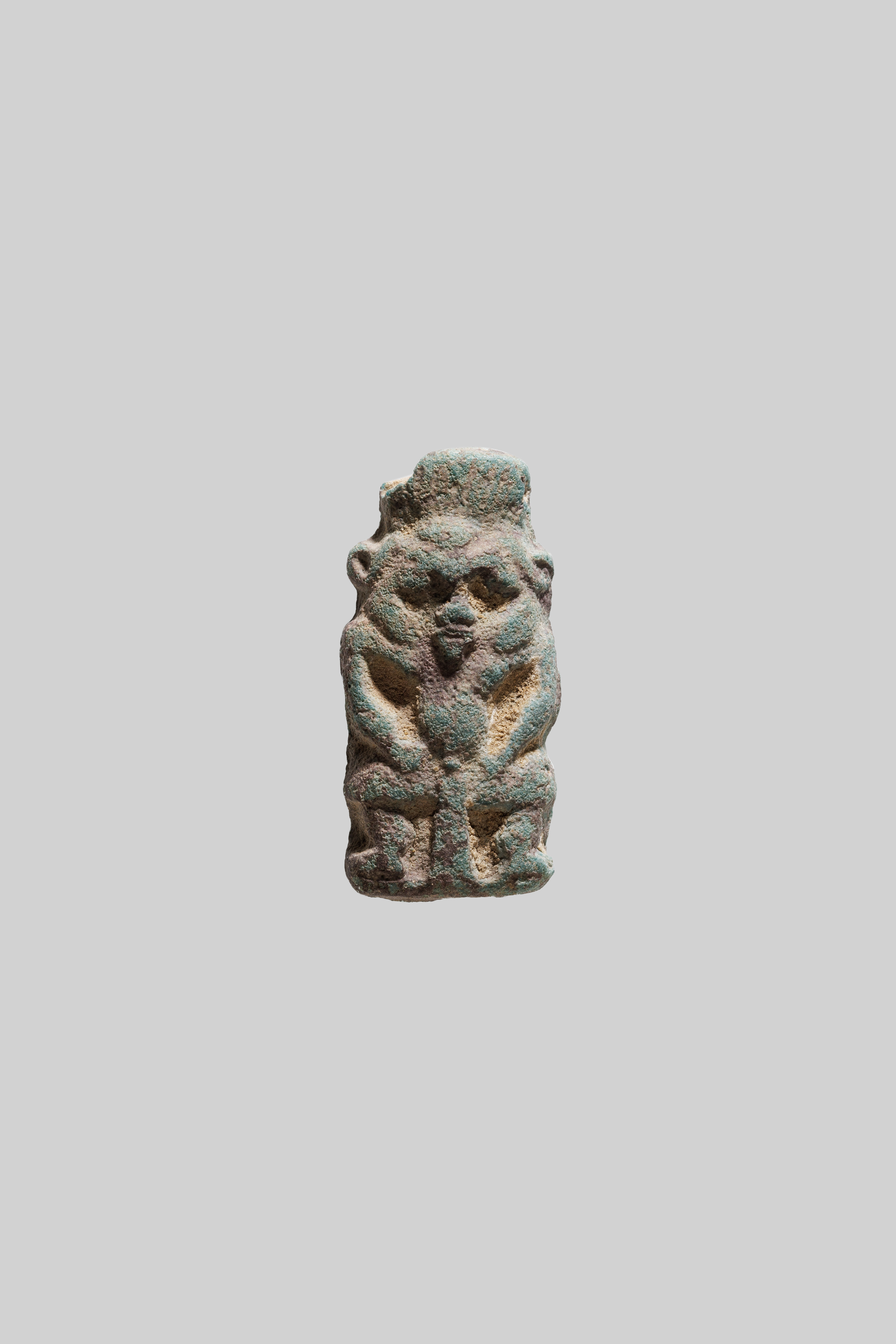
Heritage Analysis: The Bes Amulet in Faience
In the lexicon of ancient protective symbols, few figures possess the enduring resonance of the Bes amulet. Originating from the cultural crossroads of Ancient Egypt and the broader Near East, the deity Bes stands apart from the pantheon of idealized, anthropomorphic gods. He is a dwarf-like figure, often depicted with a leonine mane, protruding tongue, and bowed legs—a form that is at once grotesque and endearing. For Katherine Fashion Lab, a deep dive into the Bes amulet offers a strategic blueprint for integrating raw, apotropaic power into a 2026 luxury narrative. This analysis explores the amulet’s symbolic potency, its role in historical adornment, its spiritual dimensions, and a curated strategy for high-end application.
Symbolic Power: The Apotropaic Guardian
The primary function of the Bes amulet was apotropaic—a term derived from the Greek *apotropaios*, meaning “to turn away evil.” Unlike the distant, state-sponsored gods of the Egyptian pantheon, Bes was a household deity. He was the protector of the domestic sphere, particularly women, children, and sleep. His fierce, almost comic appearance was intentional: it was designed to frighten away malevolent spirits, snakes, and scorpions. The protruding tongue, a symbol of defiance and aggressive protection, was a direct visual threat to chaos.
From a strategic heritage perspective, the Bes amulet represents a form of democratized protection. It was not reserved for pharaohs or the elite; it was worn by the commoner and the noble alike. This universal appeal is a powerful asset for a luxury brand. In a 2026 market saturated with minimalist and abstract symbols, the Bes amulet offers a return to raw, recognizable power. It is a symbol that does not whisper; it roars. For Katherine Fashion Lab, this translates into a design language that values bold, protective forms over delicate, passive aesthetics. The amulet’s symbolic power lies in its ability to be both a shield and a statement, a duality that resonates with the modern consumer’s desire for jewelry that is both meaningful and assertive.
Historical Adornment: The Faience Medium
The Bes amulet was most commonly crafted from faience, a non-clay ceramic material that predates glass. Faience is a composite of crushed quartz or sand, mixed with alkaline salts and a coloring agent—typically copper, which yielded its characteristic brilliant blue-green hue. This material was not merely decorative; it was deeply symbolic. The color blue-green, known as *menkhet* in ancient Egyptian, represented rebirth, fertility, and the life-giving waters of the Nile.
Historically, the amulet was worn as a pendant, sewn onto clothing, or placed within linen wrappings of mummies. Its placement was strategic: over the throat, the chest, or the genital region, areas considered vulnerable to spiritual and physical attack. The faience medium offered a unique tactile and visual experience. It was lightweight, cool to the touch, and possessed a vitreous sheen that caught light in a way that suggested otherworldliness. This was not a material of opulence in the gold-and-lapis sense; it was a material of sacred utility.
For a 2026 luxury strategy, the historical use of faience presents a compelling counter-narrative to the dominance of precious metals and gemstones. A high-end reinterpretation of the Bes amulet in faience—or a modern composite with similar luminescence—signals a brand that values material intelligence over raw material cost. It suggests a connoisseurship of ancient craft, where the value lies in the historical and symbolic weight of the material itself. Katherine Fashion Lab could position faience as a “heritage composite,” a material that bridges the ancient and the avant-garde.
Spiritual Meaning: The Protector of Thresholds
The spiritual dimension of the Bes amulet extends beyond simple superstition. Bes was a liminal deity, a guardian of thresholds—doorways, birth canals, and the passage between sleep and waking. He was invoked during childbirth, a time of extreme vulnerability for mother and child. Amulets of Bes were often placed in the birthing room or worn by the mother to ensure a safe delivery. This connection to life’s most critical transitions imbues the amulet with a profound spiritual gravity.
Moreover, Bes was associated with music, dance, and merriment. He was a god who used joy as a weapon against despair. This dual aspect—fierce protector and joyful companion—is a nuanced spiritual archetype. It suggests that protection is not solely about warding off negative forces, but also about cultivating positive energy. In a contemporary context, this aligns with the wellness and mindfulness movements. The Bes amulet becomes a talisman for mental and emotional resilience, a reminder to face life’s chaos with both strength and a sense of humor.
For Katherine Fashion Lab, this spiritual meaning offers a rich narrative layer. A 2026 collection featuring the Bes motif can be framed not merely as jewelry, but as wearable ritual objects. Each piece could be presented with a “protection ritual” or a curated narrative that connects the wearer to the ancient practice of safeguarding one’s home, body, and spirit. This elevates the product from accessory to artifact, creating a deeper emotional bond with the consumer.
2026 High-End Luxury Strategy: The Bes Revival
To translate the Bes amulet into a 2026 high-end luxury strategy, Katherine Fashion Lab must balance historical authenticity with contemporary desirability. The following strategic pillars are recommended:
1. Material Innovation with Heritage Roots. While traditional faience is fragile, a luxury iteration could use a stabilized ceramic composite or a high-fire porcelain glazed with ancient copper pigments. This honors the original medium while ensuring durability. Alternatively, a limited edition could feature faience inlaid with 24-karat gold, merging the sacred utility of the past with the opulence of the present.
2. Design Language: Exaggerated Proportions. The Bes figure is inherently bold. For high-end appeal, the design should be scaled up. A pendant of 5–7 cm in length, with a highly polished surface and fine detailing of the mane and tongue, would command attention. The silhouette should be unmistakable, even from a distance. This is not a subtle talisman; it is a statement piece.
3. Narrative-Driven Marketing. The 2026 luxury consumer is driven by story and authenticity. Each Bes piece should be accompanied by a “heritage card” detailing its symbolic meaning, the history of the deity, and the specific protection it offers. Marketing campaigns could feature themes of “Thresholds” and “Guardians,” positioning the jewelry as a companion for life’s pivotal moments—career changes, relocations, new beginnings.
4. Strategic Rarity and Customization. To maintain exclusivity, the Bes collection should be limited in production. A bespoke service could allow clients to choose specific glaze colors (e.g., Nile blue, desert sand, or obsidian black) and have a personal inscription on the reverse. This transforms the amulet into a personalized heirloom, increasing its perceived value and emotional resonance.
5. Cross-Cultural Appeal. The Bes archetype—a fierce, protective spirit—is not exclusive to Egypt. Similar figures appear in Mesopotamian, Minoan, and even Roman contexts. Katherine Fashion Lab can position the Bes amulet as a universal protector, appealing to a global clientele who seek symbols of strength and safety in an uncertain world.
In conclusion, the Bes amulet in faience is not merely an ancient artifact; it is a strategic asset for a heritage-forward luxury brand. Its symbolic power, historical materiality, and profound spiritual meaning offer a rich foundation for a 2026 collection that is both academically rigorous and commercially compelling. By embracing the raw, protective energy of Bes, Katherine Fashion Lab can create a line that stands apart in a market of derivative symbols—a true guardian of heritage and style.