Heritage Analysis: The Kris as a Strategic Asset for Katherine Fashion Lab
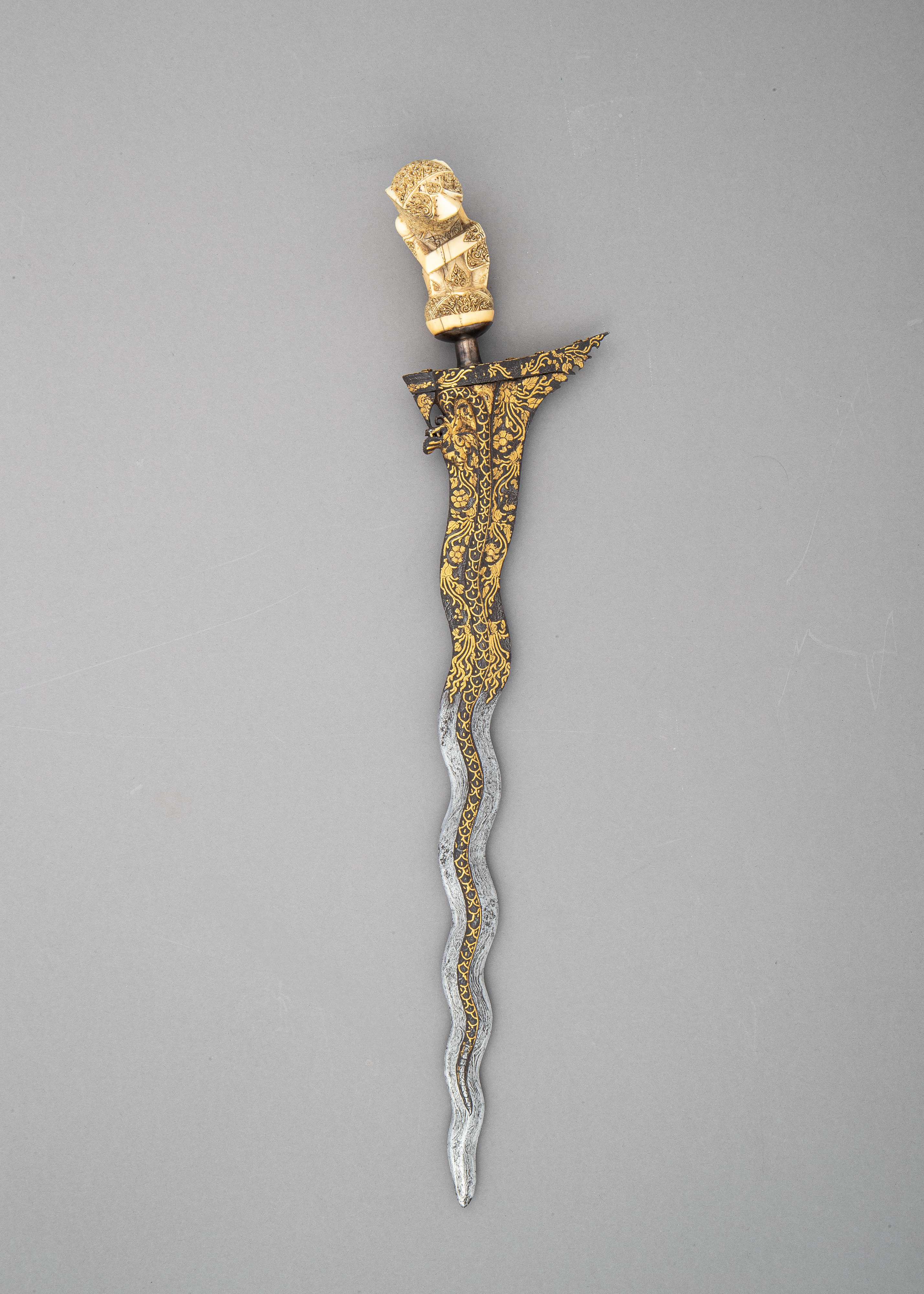
The kris, a distinctive asymmetrical dagger originating from the Malayan archipelago, represents one of the most symbolically dense artifacts in Southeast Asian material culture. For Katherine Fashion Lab, this weapon offers a profound opportunity to integrate ancestral power, historical adornment, and spiritual resonance into a 2026 high-end luxury strategy. Crafted from iron, ivory, and gold, the kris is not merely a blade but a repository of cosmic energy, social status, and artistic mastery. This analysis explores its symbolic power, historical adornment practices, spiritual meaning, and strategic implications for luxury positioning.
Symbolic Power: The Kris as a Conduit of Authority and Protection
The kris has long been regarded as a symbol of sovereignty, martial prowess, and divine right in Malayan culture. Historically, it was not a weapon of common use but a regalia of royalty and nobility. The blade’s wavy form, often with an odd number of curves (luk), is believed to represent the mythical serpent naga, a guardian of sacred waters and a symbol of cosmic balance. Each curve carries specific meaning: seven curves denote supreme authority, while five curves signify spiritual protection. For a luxury brand, this layered symbolism translates into a narrative of exclusivity and moral authority. In a 2026 strategy, Katherine Fashion Lab can leverage this to position collections as armor for the modern elite—objects that confer not just aesthetic distinction but a sense of inherited power and protective grace.
Furthermore, the kris is imbued with spiritual agency. It is believed to possess a semangat (life force) that can be inherited or transferred. This animistic quality elevates the kris beyond functional weaponry into a talismanic object. For high-end consumers seeking authenticity and deeper meaning, this offers a compelling value proposition: acquiring a piece that is not merely designed but consecrated through heritage. Katherine Fashion Lab can adopt this concept by creating limited-edition pieces that are "blessed" through traditional rituals or crafted by master pandai besi (bladesmiths) whose lineage spans generations.
Historical Adornment: The Kris as a Masterpiece of Material Synergy
The kris is a study in material hierarchy and artistic fusion. The blade, forged from iron and meteorite nickel, is patterned through pamor—a technique of layering and folding metals to create intricate, flowing patterns. This process, akin to Japanese Damascus steel, results in a unique visual signature for each blade. The hilt (hulu) is often carved from ivory or rare woods, shaped into anthropomorphic or avian forms that reflect the owner’s status. The sheath (warangka) is frequently adorned with gold leaf, filigree, or repoussé work, transforming a functional scabbard into a canvas for opulence.
Historically, the kris was worn as a daily accessory by men of rank, tucked into the waist sash. The angle of wear and the choice of hilt communicated social standing, marital status, and even political allegiance. For Katherine Fashion Lab, this historical practice of adornment as identity declaration is directly translatable to modern luxury accessories. A 2026 collection could reinterpret the kris as a wearable art piece—a brooch, a pendant, or a cuff that retains the dagger’s silhouette but is rendered in precious metals and gemstones. The ivory can be ethically sourced or replaced with sustainable alternatives like Tagua nut, while gold remains a constant for its timeless association with power.
Spiritual Meaning: The Kris as a Bridge Between Worlds
Beyond its physical form, the kris is a spiritual technology. In Malayan cosmology, it serves as a medium for connecting the human realm with the spirit world. The forging process itself is a ritual: the pandai besi must observe taboos, recite incantations, and align his work with auspicious astrological timings. The finished kris is believed to possess tuah (mystical potency) that can bring fortune, ward off malevolent forces, or even curse enemies. This belief system is not merely folklore but a living tradition in parts of Indonesia, Malaysia, and the Philippines.
For a luxury brand, this spiritual dimension offers a differentiation strategy in an increasingly commoditized market. Katherine Fashion Lab can position its kris-inspired pieces as modern talismans—objects that carry intentional energy. This can be communicated through storytelling: each piece could be accompanied by a "spiritual provenance" card detailing the symbolic meaning of its curves, the origin of its materials, and the blessing ceremony it underwent. In 2026, where consumers increasingly seek emotional and spiritual fulfillment from luxury goods, this narrative adds an intangible value that transcends material cost.
2026 High-End Luxury Strategy: From Artifact to Icon
To operationalize the kris heritage into a 2026 strategy, Katherine Fashion Lab must adopt a curatorial approach that respects tradition while innovating for contemporary aesthetics. The following strategic pillars are recommended:
1. Limited-Edition Masterwork Series: Collaborate with living pandai besi from Java or Bali to create a series of 10-20 kris-inspired art objects. These should be presented as investment-grade collectibles, each with a certificate of authenticity, a documentary video of the forging ritual, and a hand-carved ivory or sustainable alternative hilt. Price points should reflect the labor and ritual involved—starting at $50,000 USD.
2. Ready-to-Wear Adornment Line: Develop a capsule collection of wearable kris motifs in gold, enamel, and ethically sourced ivory. Designs should abstract the kris form into sleek, minimalist brooches, earrings, and belt buckles. This line targets the aspirational luxury segment, priced between $3,000 and $15,000. The marketing narrative should emphasize "the power of the curve" and "protection through elegance."
3. Experiential Retail and Ritual: In flagship stores, create a Kris Atelier where customers can commission personalized pieces. The process should include a consultation with a cultural historian, selection of symbolic curve numbers, and a virtual blessing ceremony led by a traditional healer. This transforms a purchase into a rite of passage, fostering deep brand loyalty.
4. Digital Storytelling and NFT Integration: Launch a digital archive of kris heritage, including 3D scans of historical blades from museum collections. Accompany each physical piece with an NFT that unlocks exclusive content: a documentary on the pandai besi, a virtual tour of the forging site, or a meditation audio aligned with the kris's spiritual energy. This bridges the physical and digital luxury realms, appealing to tech-savvy collectors.
5. Sustainability and Ethical Sourcing: Given the use of ivory, Katherine Fashion Lab must commit to traceable, ethical alternatives. Partner with conservation organizations to source fossilized mammoth ivory or reclaimed antique ivory. For gold, use certified fair-mined or recycled sources. This aligns with the 2026 luxury consumer’s demand for responsible opulence.
Conclusion
The kris is far more than a historical weapon; it is a multidimensional heritage asset that embodies power, artistry, and spirituality. For Katherine Fashion Lab, it offers a rare opportunity to create a luxury narrative that is both deeply rooted and forward-looking. By honoring the kris’s symbolic codes, material mastery, and spiritual resonance, the brand can craft offerings that resonate with discerning clients seeking meaning, exclusivity, and transformation. In 2026, where luxury is increasingly defined by authenticity and emotional depth, the kris stands as a strategic beacon—a blade that cuts through the noise to reveal the enduring power of heritage.