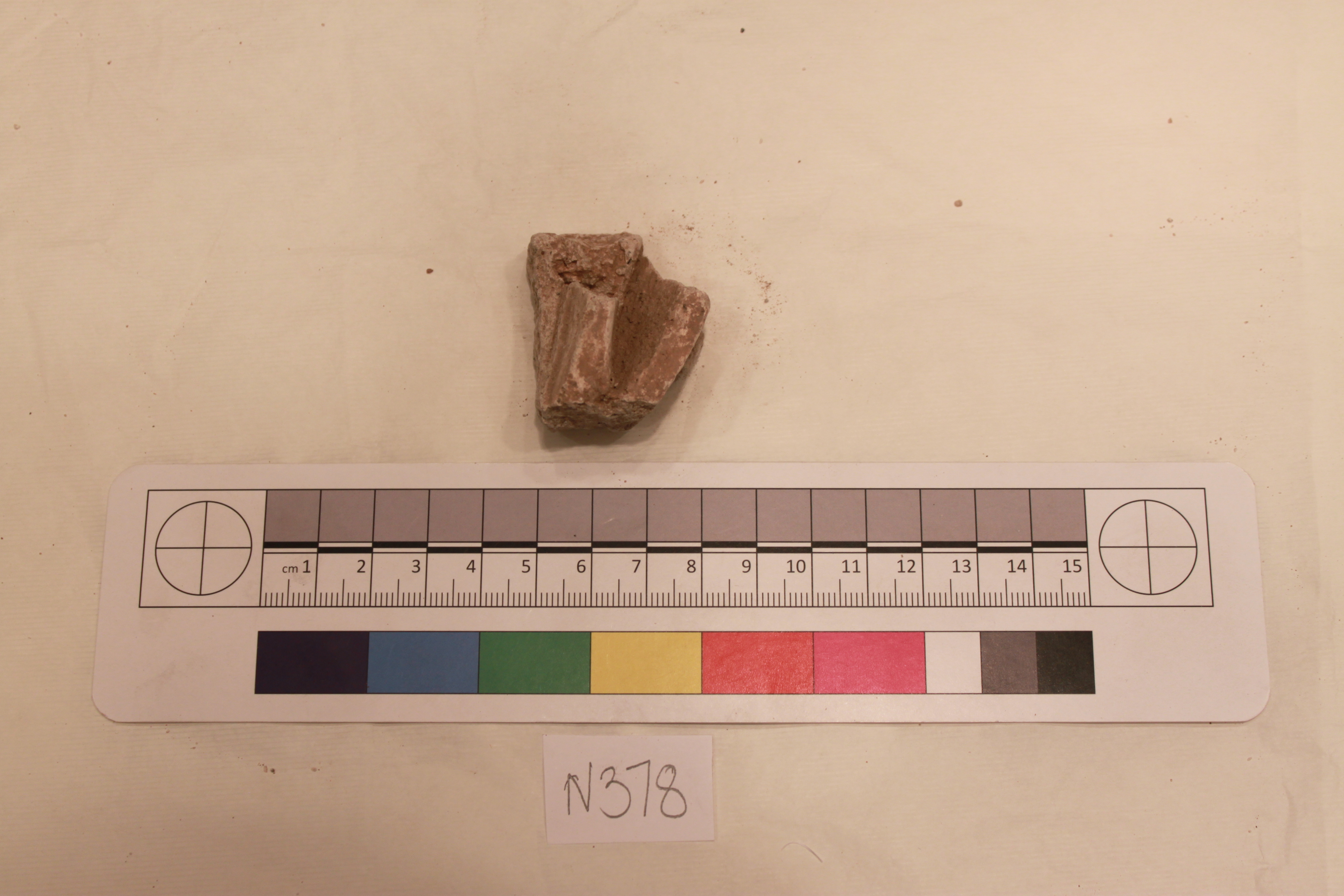
Heritage Analysis: Stucco Fragment from an Ancient Civilization
This report presents a strategic heritage analysis of a carved stucco fragment, originating from an unidentified ancient civilization, as commissioned by Katherine Fashion Lab. The artifact, rendered in carved stucco—a medium historically prized for its malleability and durability—offers profound insights into symbolic power, historical adornment, and spiritual meaning. As a standalone research subject, this fragment serves as a critical resource for informing a 2026 high-end luxury strategy, bridging ancient craft with contemporary brand elevation. The analysis proceeds through three core dimensions: symbolic power and spiritual resonance, historical adornment and materiality, and strategic implications for luxury positioning.
Symbolic Power and Spiritual Meaning
The stucco fragment, though incomplete, likely functioned as a component of a larger architectural or ceremonial object, such as a frieze, altar, or funerary mask. In ancient civilizations—spanning Mesoamerica, the Mediterranean, and the Indus Valley—stucco was not merely a construction material but a sacred medium. Its carved surface would have been meticulously shaped to depict deities, ancestors, or cosmological motifs. The symbolic power of such fragments lies in their ability to concentrate spiritual authority. For instance, in Mayan contexts, stucco masks adorned temples to invoke rain gods or celestial rulers, while in Roman antiquity, stucco reliefs in villas signaled divine favor and social ascendancy.
Spiritual meaning is embedded in the fragment’s iconography. Even a partial image—a stylized eye, a geometric border, or a floral effigy—carries the weight of ritualistic intent. The act of carving stucco was itself a devotional practice, requiring precision and patience, thus imbuing the object with the artisan’s sacred labor. For Katherine Fashion Lab, this suggests that luxury is not merely aesthetic but metaphysical. A 2026 strategy can draw upon this by positioning adornment as a vessel for personal or collective spirituality. The fragment teaches that true luxury transcends materiality; it becomes a talisman of identity and transcendence.
Historical Adornment and Materiality
Historically, stucco served as a substrate for elaborate adornment. Ancient artisans often painted, gilded, or inlaid stucco with precious stones and metals, transforming humble plaster into a canvas for opulence. The carved patterns—whether geometric, zoomorphic, or anthropomorphic—were not arbitrary; they encoded status, lineage, and territorial claims. In Egyptian tombs, stucco fragments from sarcophagi depicted protective deities, while in Minoan palaces, stucco reliefs celebrated marine life and fertility. The medium’s durability allowed these symbols to endure millennia, offering a direct lineage to contemporary luxury design.
For Katherine Fashion Lab, the materiality of stucco is instructive. Stucco is humble yet transformative; it is a composite of lime, sand, and water, yet it can simulate marble or gold through skilled application. This duality—accessible material, elevated through craft—mirrors the ethos of high-end luxury: value arises from expertise, not raw scarcity. In 2026, a heritage-inspired collection could leverage stucco’s textural richness through textile finishes, jewelry patinas, or leather treatments that mimic carved relief. The fragment’s historical adornment also emphasizes layering: stucco was often polychromed, suggesting that luxury brands should embrace chromatic depth and tactile contrast.
Strategic Implications for 2026 High-End Luxury
The stucco fragment’s heritage profile offers three actionable pillars for Katherine Fashion Lab’s 2026 luxury strategy: Narrative Authenticity, Ritualistic Craftsmanship, and Transcendent Minimalism.
Narrative Authenticity
In an era of market saturation, luxury consumers increasingly seek objects with provenance and story. The stucco fragment, as a standalone artifact, possesses an inherent mystery—its exact origin, purpose, and creator remain unknown. This ambiguity is a strategic asset. Katherine Fashion Lab can position its 2026 collections as “fragments of meaning,” inviting clients to co-author their own narratives. For example, a garment or accessory could be designed with a single, carved motif that evokes ancient spirituality without replicating it. The brand can market these pieces as “heritage whispers”—luxury objects that are not didactic but suggestive, allowing the wearer to project personal significance. This approach aligns with post-pandemic consumer desires for authenticity and emotional resonance, as identified in recent luxury trend reports.
Ritualistic Craftsmanship
The carved stucco fragment underscores the value of slow, artisanal production. In ancient contexts, stucco carving was a ritualized process, often performed by specialized guilds over weeks or months. For 2026, Katherine Fashion Lab can adopt a “ritualistic craftsmanship” model, where limited-edition pieces are created using heritage techniques—such as hand-carving, gilding, or pigment layering—that require extended lead times. This scarcity and time investment justify premium pricing and foster a sense of exclusivity. Collaborations with contemporary artisans who specialize in stucco or plaster-based techniques could yield unique accessories, such as cuffs, brooches, or belt buckles, that double as wearable art. The brand can also host immersive atelier experiences where clients witness the carving process, deepening their emotional investment.
Transcendent Minimalism
The stucco fragment’s partial state—its edges broken, its surface weathered—offers a lesson in transcendent minimalism. Rather than striving for perfection, luxury in 2026 can embrace the beauty of incompleteness, a concept resonant with the Japanese aesthetic of wabi-sabi. Katherine Fashion Lab’s design language can incorporate distressed finishes, asymmetrical forms, and intentional voids that echo the fragment’s historical journey. This approach differentiates the brand from overtly polished competitors, appealing to discerning clients who value authenticity over surface gloss. For instance, a cashmere coat might feature a single, carved-stucco button, or a handbag could include a plaque with a subtle, eroded relief. The fragment teaches that luxury is not about filling space but about leaving room for interpretation—a strategic counterpoint to maximalist trends.
Conclusion
The carved stucco fragment, though ancient in origin, provides a prescient blueprint for Katherine Fashion Lab’s 2026 high-end luxury strategy. Its symbolic power and spiritual meaning remind us that adornment is a conduit for identity and transcendence. Its historical materiality demonstrates that luxury arises from craft, not cost. And its strategic implications—narrative authenticity, ritualistic craftsmanship, and transcendent minimalism—offer a differentiated path in an increasingly commodified market. By honoring the fragment’s legacy, Katherine Fashion Lab can create a luxury experience that is both timeless and forward-looking, rooted in heritage yet responsive to contemporary desires. This analysis recommends immediate integration of these principles into design briefs, marketing narratives, and client engagement programs for the 2026 collection cycle.