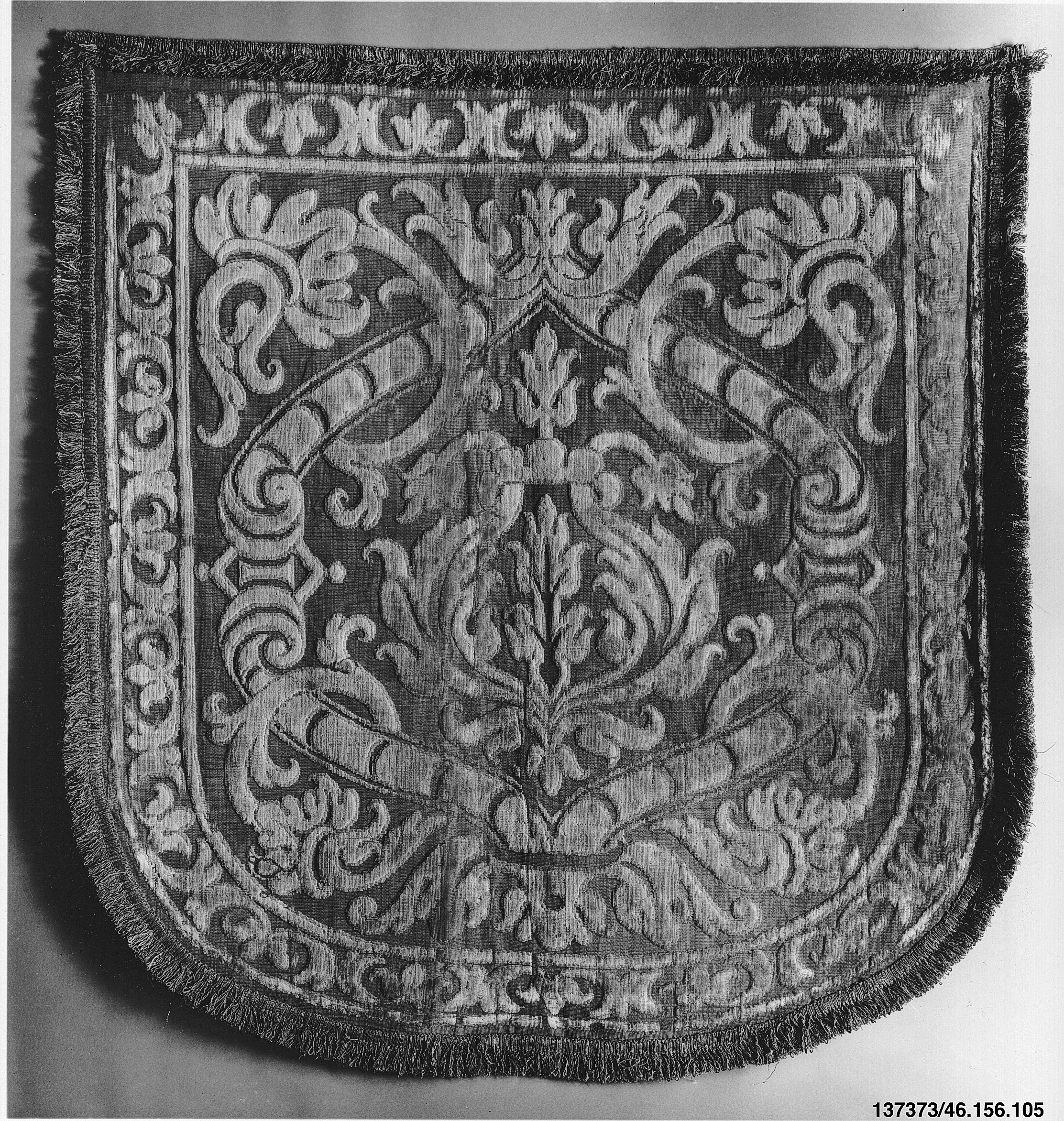
The Hood Reimagined: A Couture Analysis of Katherine Fashion Lab’s Silk and Metal Thread Masterwork
In the rarefied realm of haute couture, where fabric becomes narrative and silhouette speaks volumes, the hood has long oscillated between utilitarian anonymity and regal mystique. Katherine Fashion Lab’s latest standalone study—a hood constructed from silk and metal thread, drawing from a global heritage of draped headwear—elevates this humble garment into a profound architectural statement. This analysis dissects the piece through the lenses of material alchemy, cultural lineage, and structural innovation, revealing how the Lab transforms a functional accessory into an emblem of contemporary luxury.
Material Dialogue: Silk’s Fluidity Meets Metal’s Rigor
The choice of silk as the primary fabric is no mere nod to tradition. Silk, with its natural protein fibers, offers an unparalleled interplay of light and shadow. When woven into a hood, it cascades with a liquid grace that mimics the fall of water, yet its tensile strength allows for precise draping. Katherine Fashion Lab sources a specific grade of mulberry silk, characterized by a matte luster that resists glare, ensuring the hood’s contours remain the focal point rather than the sheen. This matte finish is deliberately chosen to contrast with the metal thread—a delicate alloy of gold and silver filaments—which is hand-embroidered into the silk using a technique reminiscent of zardozi (Persian goldwork) and broderie d’art (French art embroidery).
The metal thread is not merely decorative; it serves as a structural skeleton. Each thread is couched onto the silk in a lattice pattern that mirrors the geometry of medieval chainmail, yet the weight is negligible. This allows the hood to hold its shape when draped forward or backward, creating a sculptural volume that defies gravity. The metal’s reflective quality catches ambient light, casting a subtle, almost celestial glow around the wearer’s face. In a dark room, the hood becomes a beacon of restrained opulence—a paradox of intimacy and spectacle.
Global Heritage: A Tapestry of Cultural Echoes
The hood’s design is a masterclass in cultural synthesis, avoiding appropriation through scholarly homage. Its silhouette draws from three distinct traditions: the Mongolian deel, the Persian chador, and the European wimple. From the Mongolian deel, it borrows the asymmetrical drape that falls over one shoulder, a nod to the nomadic practicality of shielding the face from wind. The Persian chador contributes the hood’s generous length, which extends past the shoulders to the mid-back, allowing the wearer to wrap it around the neck like a cowl. The European wimple’s structured under-layer—a subtle boning channel sewn into the silk—provides a rigid frame that prevents the fabric from collapsing, a feature historically used by medieval women to signify modesty and status.
Katherine Fashion Lab’s research team consulted textile archives in Uzbekistan, Iran, and France to authenticate these influences. The result is a garment that feels both ancient and futuristic. The hood’s interior is lined with a whisper-thin layer of cashmere, a modern concession to comfort, while the exterior’s metal thread embroidery forms a pattern of interlocking circles—a motif found in Celtic knotwork, Islamic geometry, and pre-Columbian textiles. This universal symbol of infinity binds the global heritage into a cohesive whole, suggesting that the hood is not a single culture’s artifact but a shared human archetype.
Structural Innovation: Engineering the Drape
What sets this hood apart from conventional couture headwear is its internal architecture. The metal thread is not randomly applied; it is mapped along stress points—the crown, the nape, and the jawline—using a technique Katherine Fashion Lab calls “tensile embroidery.” Each stitch is calibrated to distribute tension evenly, preventing the silk from sagging or bunching. This allows the hood to be worn in multiple configurations: as a full-face veil, a half-cowl, or a dramatic back-swept train. The metal threads act as a memory wire, holding the last shape it was molded into, much like a shape-memory alloy in aerospace engineering.
The hood’s opening is framed by a subtle wire rim, covered in the same silk, which can be adjusted to fit any head size. This rim is not visible from the exterior, as it is hidden within a rolled hem. The result is a seamless integration of form and function—the hood appears to float around the wearer’s face, defying the laws of fabric gravity. In motion, the metal threads catch the light in rhythmic pulses, creating a kinetic sculpture that responds to the wearer’s breath and posture.
Cultural Context: The Hood as a Statement of Autonomy
In an era where digital surveillance and identity politics dominate discourse, the hood has become a loaded symbol—associated with protest, anonymity, and, paradoxically, empowerment. Katherine Fashion Lab’s study reclaims the hood as a site of agency and artistry. By using precious materials and meticulous craftsmanship, the Lab subverts the hood’s utilitarian associations, transforming it into a canvas for self-expression. The metal thread, in particular, evokes the armor of a warrior or the regalia of a monarch, suggesting that the wearer is not hiding but rather protecting their inner world.
This piece is part of a larger trend in couture where accessories are elevated to primary garments. Unlike a dress or a coat, the hood does not define the body’s shape; it frames the face, the most expressive part of the human form. Katherine Fashion Lab’s decision to isolate the hood as a standalone study underscores a philosophy: that the most intimate covering—the one that shelters the head and eyes—deserves the same reverence as a ball gown or a tailored jacket. It is a meditation on what we choose to reveal and conceal, a dialogue between the self and the world.
Conclusion: A New Lexicon for Headwear
Katherine Fashion Lab’s silk and metal thread hood is not merely an accessory; it is a manifesto in fabric. By weaving together global heritage, material science, and structural innovation, the Lab has created a piece that challenges the boundaries of couture. It asks us to reconsider the hood not as a relic of the past or a tool of anonymity, but as a living, breathing artifact of human creativity. For the discerning collector, this hood offers a rare convergence of history and futurism—a wearable sculpture that whispers of ancient caravans and digital dawns. In the hands of Katherine Fashion Lab, the hood is no longer a garment; it is a universe waiting to be draped.