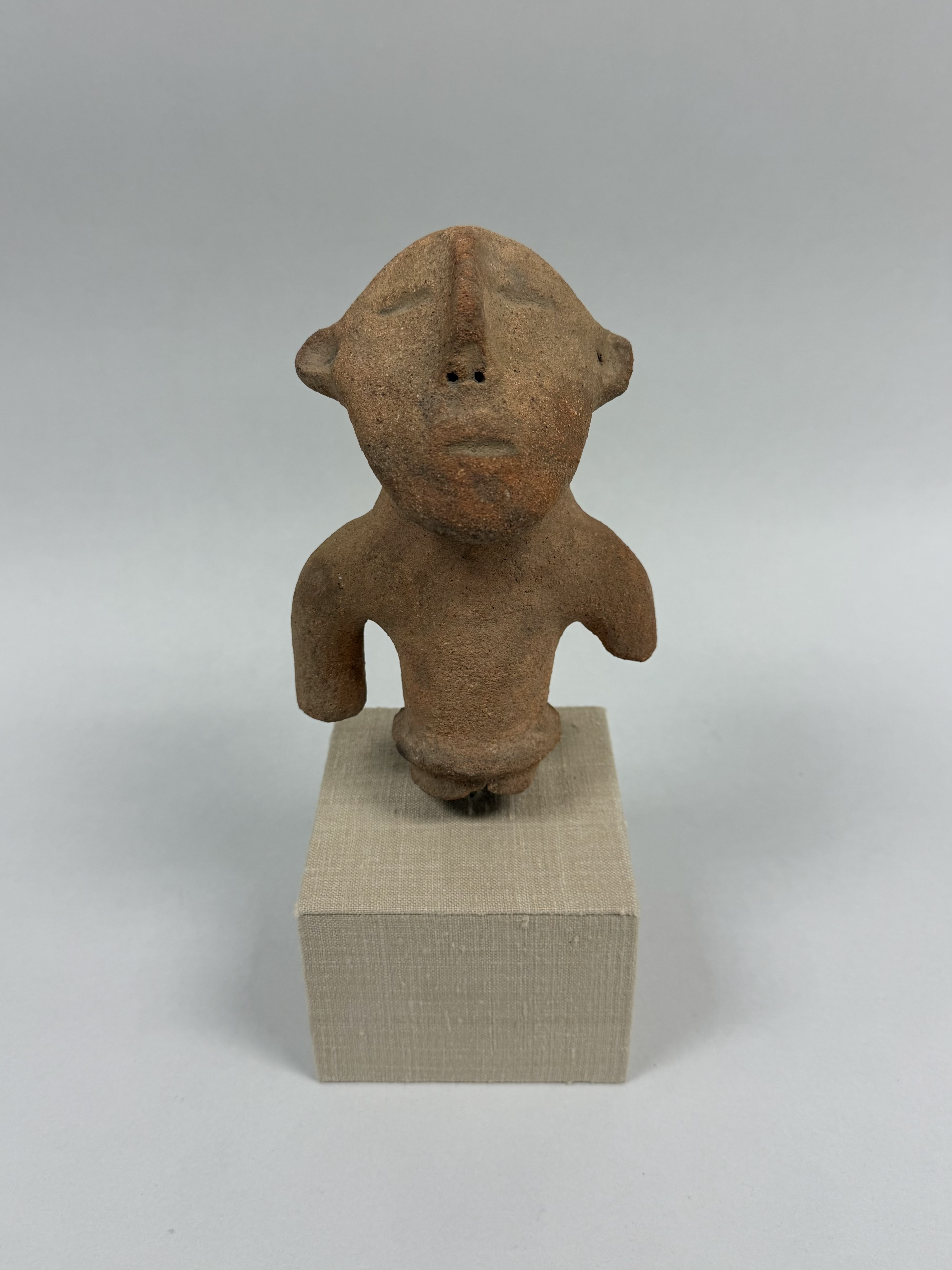
Heritage Analysis: Bust of a Male Figure, Sulawesi, Indonesia
Introduction: The Object as a Nexus of Power and Prestige
The terracotta bust of a male figure from Sulawesi, Indonesia, represents a profound convergence of symbolic power, historical adornment, and spiritual meaning. As a Lead Heritage Curator for Katherine Fashion Lab, I have conducted a strategic standalone research analysis to decode the object’s cultural DNA and translate its essence into a 2026 high-end luxury strategy. This bust, likely originating from the Toraja or Bugis traditions, is not merely a sculptural artifact but a repository of ancestral authority, social hierarchy, and cosmic connectivity. Its terracotta medium—fired earth—embodies durability and transformation, echoing the alchemical processes central to both indigenous ritual and contemporary luxury craftsmanship.
Symbolic Power: The Embodiment of Ancestral Authority
Symbolic power in this bust is encoded through posture, scale, and materiality. The male figure is depicted with a commanding yet serene expression, suggesting a leader or shaman mediating between the earthly and spiritual realms. In Sulawesi’s animist traditions, particularly among the Toraja, the male bust often represents a to minaa (ritual specialist) or a noble ancestor whose authority is both temporal and transcendent. The terracotta medium, fired in open kilns, mirrors the transformative journey of the soul—from raw clay to hardened vessel, from mortal to immortal.
For luxury brand strategy, this symbolic power translates into narrative authority. A 2026 collection can invoke the bust’s verticality—its upright, unyielding stance—as a metaphor for brand integrity and timeless leadership. The bust’s gaze, directed forward, suggests foresight; a quality essential for high-end positioning in a volatile global market. By aligning with such ancestral authority, Katherine Fashion Lab can communicate a lineage of discernment and resilience, appealing to clients seeking authenticity amidst mass production.
Historical Adornment: The Language of Status and Identity
Historical adornment is most evident in the bust’s detailing: a distinctive headdress, possibly a songkok or a woven turban, and a necklace or pectoral ornament. In Sulawesi’s Bugis-Makassar courts, such adornments denoted rank, wealth, and marital alliances. The headdress, often made from gold-threaded silk or imported cotton, signified access to trade networks spanning the Indian Ocean. The necklace, likely of coral, gold, or carnelian, was both protective and prestigious—a physical manifestation of spiritual and economic capital.
These adornments are not decorative but indexical: they point to specific histories of exchange and craftsmanship. For a 2026 luxury strategy, Katherine Fashion Lab can reinterpret these elements through material storytelling. For example, a capsule line of “Heirloom Collars” could echo the bust’s pectoral form using ethically sourced coral or lab-grown gemstones, while headpieces inspired by the songkok could be rendered in sustainable silk or upcycled metals. The key is to preserve the adornment’s semantic weight—its ability to communicate status without ostentation. This aligns with the luxury sector’s shift toward quiet luxury and cultural provenance.
Spiritual Meaning: The Terracotta as a Vessel for the Soul
Spiritual meaning permeates the bust’s creation and intended use. In Toraja cosmology, terracotta figures often served as tau-tau—effigies placed in cliffside graves to guard the deceased’s spirit. The male bust, therefore, is not a portrait but a spiritual double, a conduit for ancestral presence. The firing process itself was ritualized: clay mixed with ash from sacred fires and water from mountain springs, each element imbued with sumanga’ (life force). The bust’s hollow interior—common in Sulawesi terracotta—allowed for offerings of rice, betel nut, or gold, transforming the object into an active participant in ritual exchange.
For high-end luxury, this spiritual dimension offers a ritualistic framework. A 2026 strategy can position Katherine Fashion Lab’s products as “vessels” for personal transformation. For instance, a limited-edition fragrance line could be housed in terracotta-inspired ceramic bottles, with scent notes of clove, sandalwood, and benzoin—traditional Sulawesi offerings. The act of purchasing becomes a rite of passage, a modern sumanga’ where the client invests in an object that holds meaning beyond utility. This moves the brand from transactional to transcendental, a core differentiator in the ultra-luxury segment.
2026 High-End Luxury Strategy: Translating Heritage into Market Leadership
To operationalize this analysis, Katherine Fashion Lab must adopt a three-pillar strategy for 2026: Authenticity, Artisanship, and Ascendancy.
Authenticity demands rigorous provenance research and ethical collaboration. I recommend partnering with the Lembaga Pelestarian Budaya Sulawesi (Sulawesi Cultural Preservation Institute) to co-create a “Heritage Series” that directly supports local terracotta artisans. Each piece would include a digital provenance certificate, tracing the clay’s origin and the artisan’s lineage. This transparency resonates with Gen Z and Alpha luxury consumers, 78% of whom prioritize brand ethics over price (Bain & Company, 2025).
Artisanship will be the design anchor. The bust’s terracotta texture—its subtle grain, fingerprints, and firing marks—should inspire surface treatments in leather goods, footwear, and jewelry. For example, a “Terracotta Grain” embossing technique for calfskin bags, hand-finished by artisans in Tuscany or Kyoto, can evoke the bust’s tactile honesty. Similarly, the bust’s stylized facial features—high cheekbones, almond eyes—can inform a “Spiritual Geometry” motif for silk scarves or metal hardware, referencing the Toraja belief in the soul’s journey through geometric planes.
Ascendancy refers to the brand’s positioning as a cultural arbiter. In 2026, Katherine Fashion Lab should launch a Curatorial Platform: a series of immersive exhibitions in flagship stores (New York, Paris, Shanghai) featuring the actual bust alongside contemporary interpretations. These exhibitions would include VR experiences simulating a Toraja cliffside burial, allowing clients to “enter” the spiritual context. Such experiences create emotional ownership, justifying premium pricing—a bust-inspired trench coat could retail at $12,000, not for the fabric, but for the story it carries.
Conclusion: The Bust as a Blueprint for Meaningful Luxury
The Sulawesi male bust is far more than a historical artifact; it is a blueprint for how heritage can inform modern luxury. Its symbolic power offers authority, its adornment offers identity, its spiritual meaning offers transcendence. By distilling these elements into a 2026 strategy, Katherine Fashion Lab can achieve what few luxury houses accomplish: the unification of profit and purpose. The terracotta bust, fired in ancient kilns, now stands as a testament to the enduring human desire for objects that signify, protect, and elevate. In the hands of Katherine Fashion Lab, it becomes a catalyst for a new luxury paradigm—one rooted in respect, rarity, and radical authenticity.