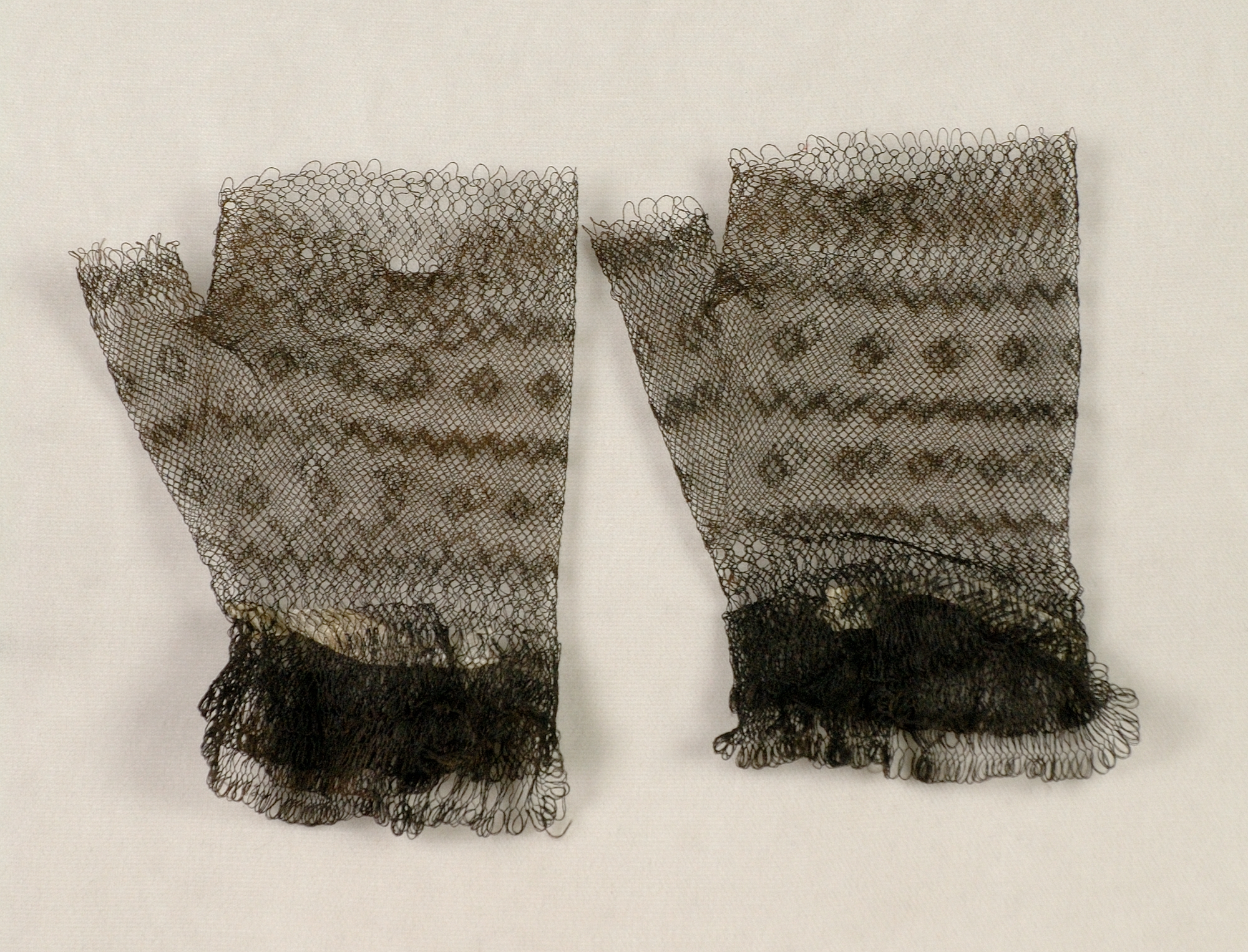
The Unassuming Masterpiece: Deconstructing the American Silk Mitt
In the rarefied ecosystem of haute couture, where garments often scream for attention through architectural volume or explosive embellishment, the mitt stands as a quiet paradox. It is at once intimate and public, functional and ornamental. At Katherine Fashion Lab, our latest standalone study focuses on an object of deceptive simplicity: the American silk mitt. This analysis moves beyond mere accessory classification to position the mitt as a critical text in the lexicon of American luxury—a testament to the nation’s evolving relationship with refinement, restraint, and the tactile poetry of silk.
Historical Roots and the American Vernacular
The mitt, distinct from the fully fingered glove, has a lineage rooted in practicality and modesty. In 18th and 19th-century America, mitts were worn by women for warmth and work, often knitted from wool or cotton. However, the transition to silk marked a profound shift. By the Gilded Age, American silk manufacturing—pioneered by mills in Paterson, New Jersey, and later, California—enabled a domestic luxury that rivaled European imports. The silk mitt became a symbol of the American woman’s newfound agency: she could now access refined adornment without crossing the Atlantic. This historical pivot is essential to understanding the contemporary piece. The mitt is not a derivative of European glove-making; it is an indigenous American form, reimagined through the lens of industrial innovation and democratic elegance.
The material choice of silk in this context is deliberate and loaded. Unlike the stiff, formal kid leather of French gloves, American silk offers a yielding, almost liquid quality. It conforms to the hand without constricting, allowing for gesture and expression. At Katherine Fashion Lab, we recognize this as a distinctly American ethos: luxury that enables movement, not inhibition.
Silk as Narrative: Materiality and Sensation
To analyze the mitt is to first surrender to its materiality. The silk used in this particular study—a 22-momme charmeuse with a matte finish—possesses an optical depth that shifts with every angle of light. When worn, it creates a second skin that is both protective and porous. The tactile experience is one of cool, smooth friction against the palm, while the back of the hand is caressed by a weightless drape. This duality is the genius of the American silk mitt: it simultaneously shields and reveals.
From a couture perspective, the construction is a feat of invisible engineering. The mitt is cut on the bias to allow for the natural splay of fingers and thumb, a technique borrowed from haute dressmaking but rarely applied to handwear. The seams are finished with a micro-rolled hem, no wider than a millimeter, ensuring that no raw edge interrupts the flow of silk against skin. The thumb gusset is integrated with a single, continuous stitch that follows the contour of the thenar eminence—the fleshy mound at the base of the thumb—allowing for unencumbered articulation. This is not a glove that fights the hand; it is a partner in motion.
The Aesthetics of Absence: Negative Space and Gesture
Where a full glove commands attention through coverage, the mitt commands through what it omits. The exposed fingertips are a deliberate act of vulnerability and precision. In a couture context, this exposure serves multiple functions. Practically, it allows for tactile engagement with the world—turning a page, clasping a clasp, touching a fabric. Philosophically, it acknowledges that true luxury is not about insulation but about heightened awareness. The wearer of the silk mitt is not shielded from reality; she is sensitized to it.
The length of the mitt—terminating just below the wrist bone—creates a visual line that elongates the hand and forearm. When paired with a sleeveless gown or a cropped jacket, the mitt acts as a transitional element, bridging skin and fabric. This is a masterclass in negative space design. The mitt does not compete with the garment; it completes the silhouette by introducing a textural pause. The American preference for understatement is thus elevated to a design philosophy: the mitt is a whisper, not a shout.
Couture Construction: The Unseen Labor
Behind the serene surface of the silk mitt lies a labyrinth of labor. At Katherine Fashion Lab, our artisans dedicate upwards of six hours to a single pair. The process begins with a hand-drawn pattern, adjusted for the specific proportions of the client’s hand—a service that underscores the bespoke nature of couture. The silk is then cut using a hot knife to seal the edges and prevent fraying, a technique borrowed from technical textiles but adapted for delicate charmeuse.
Hand-stitching is non-negotiable. The seams are sewn with a silk thread of the same weight as the fabric, using a backstitch that allows for a degree of stretch without compromising integrity. The hem is turned twice and blind-stitched, leaving no visible thread on the exterior. The thumb gusset, the most complex element, requires a three-dimensional understanding of anatomy. Each stitch must anticipate the rotation of the thumb, the flexion of the metacarpal joint. A single misstep would result in a buckle or a pull—an unforgivable fault in couture. This invisible labor is the true cost of the mitt, and it is a cost that the American consumer, increasingly attuned to craftsmanship, is learning to value.
Contextual Resonance: The Mitt in Contemporary Couture
This standalone study of the American silk mitt arrives at a moment when fashion is reexamining the boundaries of the accessory. The pandemic era, with its fetishization of the hand—sanitized, gloved, gestured—has given way to a renewed interest in what covers and uncovers the body. The mitt, in this context, is a response to a cultural desire for intimacy and distance simultaneously. It offers a barrier without isolation, a frame without a cage.
American designers, from the minimalist asceticism of Calvin Klein to the romantic pragmatism of Ralph Lauren, have long understood the power of the simple gesture. The silk mitt is the ultimate expression of this ethos. It is not an ornament to be admired from afar; it is an object to be experienced. In the hands of Katherine Fashion Lab, it becomes a study in restraint—a reminder that in couture, as in life, what is withheld is often more potent than what is displayed.
Conclusion: The Mitt as American Icon
The American silk mitt defies easy categorization. It is neither glove nor bracelet, neither tool nor jewel. It is a hybrid form, born from the marriage of industrial capability and artistic sensibility. At Katherine Fashion Lab, we see it as a microcosm of American couture itself: innovative, unpretentious, and deeply respectful of its materials. To wear it is to participate in a quiet revolution—one that values the hand that creates, the hand that touches, and the hand that is, finally, free.