Deconstructing the Nasca Dress Fragment: A Couture Analysis of Pre-Columbian Textile Intelligence
Material Alchemy: Cotton as a Medium of Cultural and Structural Expression
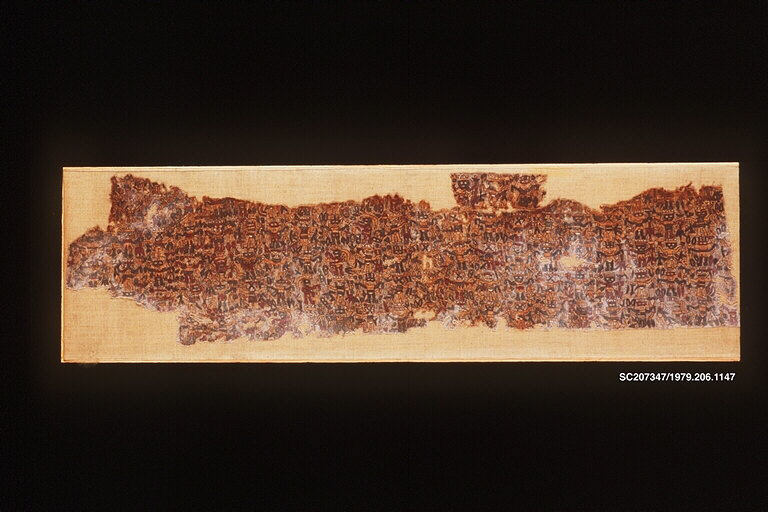
The Nasca dress fragment, rendered in cotton and pigment, offers a profound case study in the intersection of material science, aesthetic intent, and socio-cultural narrative. At first glance, the choice of cotton—a fiber native to the Andean region—signals a deliberate engagement with local resources, yet the fragment’s survival across centuries underscores an advanced understanding of textile durability. Unlike synthetic or animal-based fibers, cotton provides a unique tensile strength when woven with precision, allowing for intricate patterns that resist degradation. The pigment, likely derived from mineral or plant sources, is not merely decorative but functional: it binds to the cellulose structure, creating a chromatic resilience that speaks to the Nasca’s mastery of natural chemistry.
From a couture perspective, this fragment challenges the modern notion of fabric as a passive substrate. Instead, it embodies an active, intelligent material that communicates through texture, weight, and color saturation. The cotton’s thread count, though not measurable in modern terms, suggests a weaving technique that prioritized both flexibility and form—qualities essential for garments intended for ritual or status display. The pigment’s application, possibly through resist-dyeing or direct painting, reveals a layered process akin to haute couture’s emphasis on handcrafted detail. This is not mass production; it is a singular artifact of textile intelligence, where every fiber and hue is a deliberate choice in a lexicon of cultural expression.
Structural Semiotics: Weaving as a Language of Power and Identity
The fragment’s structural composition—a grid of warp and weft—transcends mere functionality to become a semiotic system. In Nasca society, textile production was a gendered and hierarchical craft, often reserved for elite women or specialized artisans. The fragment’s pattern, likely featuring geometric or zoomorphic motifs, serves as a visual code for clan affiliation, spiritual beliefs, or political authority. For instance, repeated stepped-diamond motifs may symbolize agricultural cycles, while avian or feline representations could denote shamanic power. This is not decorative art; it is a woven text that must be read within its cultural grammar.
In couture analysis, such structural semiotics parallel the role of branding or signature techniques in modern fashion houses. Just as a Chanel tweed jacket or a Dior bar jacket communicates luxury through construction, the Nasca fragment’s weave announces its maker’s status. The tension between the warp (vertical threads) and weft (horizontal threads) creates a dynamic equilibrium—a metaphor for social balance. The fragment’s edge, possibly unfinished or bound, indicates whether it was part of a larger garment or a standalone ceremonial piece. This ambiguity invites speculation: was it a fragment of a tunic, a headdress, or a funerary wrap? Each possibility alters its interpretive weight, much like a dress’s silhouette defines its role in a runway collection.
Chromatic Narratives: Pigment as a Carrier of Ritual and Temporal Meaning
The pigment on the Nasca fragment is not static color; it is a narrative agent. Analysis of surviving Nasca textiles reveals a palette dominated by reds, ochres, blacks, and whites—colors derived from cochineal, iron oxides, and lime-treated cotton. Each hue carries symbolic weight: red for blood and life force, black for the underworld or fertility, white for purity or cosmic order. The fragment’s color distribution—perhaps a central motif outlined in black against a red ground—suggests a binary cosmology, where light and dark, life and death, are in perpetual dialogue.
From a couture perspective, pigment application techniques such as resist-dyeing (ikat) or post-weave painting parallel modern fabric manipulation methods. The Nasca artisan’s control over pigment absorption—preventing bleeding or fading—demonstrates a chemical acumen that rivals contemporary textile engineering. The fragment’s colorfastness, despite exposure to arid desert conditions, implies a sophisticated mordanting process. This is not mere decoration; it is a chemical pact between fiber and color, ensuring the garment’s message endures beyond its wearer’s lifetime. In haute couture, such permanence is coveted—a dress that retains its hue through generations becomes an heirloom, a tangible link to the past.
Contextual Reimagining: From Archaeological Fragment to Contemporary Couture Inspiration
As a standalone study, the Nasca dress fragment invites a recontextualization within contemporary fashion discourse. Its fragmentary state—missing sleeves, hem, or full silhouette—forces the modern observer to engage in an act of speculative reconstruction. This is akin to a designer deconstructing a vintage garment to understand its construction logic. The fragment’s asymmetry, irregular edges, and faded zones become design elements in their own right, challenging the Western preference for symmetry and perfection. In the hands of a contemporary couturier, such a fragment could inspire a collection that celebrates impermanence, layering, and the beauty of decay.
Moreover, the fragment’s origin in the Nasca culture—a society that flourished in a harsh desert environment—offers lessons in sustainable design. The use of locally sourced, biodegradable materials and non-toxic pigments aligns with modern eco-conscious practices. The fragment’s durability, achieved without synthetic stabilizers, suggests a model for slow fashion. By studying its weave structure, modern textile engineers could develop biomimetic fabrics that mimic cotton’s strength without petrochemical inputs. This is not antiquarian nostalgia; it is a pragmatic dialogue between ancient wisdom and contemporary innovation.
Curatorial Reflections: The Fragment as a Pedagogical Tool in Couture Education
For Katherine Fashion Lab, the Nasca dress fragment serves as a pedagogical cornerstone. Its analysis requires interdisciplinary thinking—combining archaeology, chemistry, art history, and design theory. Students are challenged to move beyond aesthetic appreciation to interrogate the fragment’s production context, material constraints, and symbolic load. This fosters a critical understanding that couture is not merely about creating beautiful objects but about encoding meaning through material choices. The fragment’s survival also underscores the importance of preservation: every thread and pigment molecule is a data point for future generations.
In conclusion, the Nasca dress fragment is far more than a relic. It is a testament to the intellectual and artistic sophistication of a pre-Columbian civilization that understood textile as a medium of power, identity, and transcendence. For the modern couture analyst, it offers a blueprint for integrating material intelligence, structural semiotics, and chromatic storytelling into design practice. As we handle this fragment—its cotton softened by millennia, its pigments whispering of rituals long past—we are reminded that fashion is, at its core, a conversation between the hand, the material, and the culture that shapes them both.