Numismatic Elegance: A Study in Edo-Period Wealth and Aesthetic Refinement
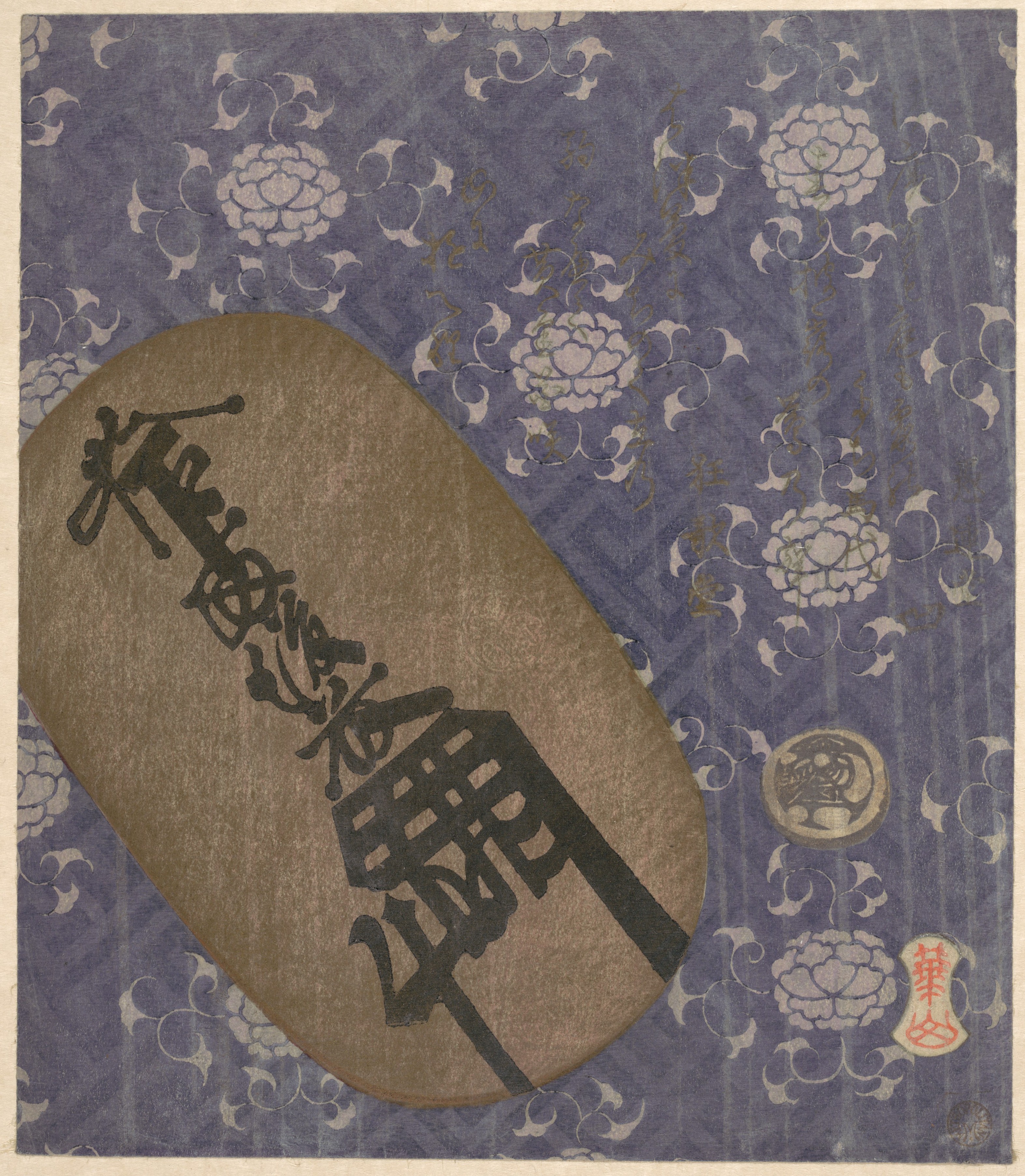
This exquisite surimono print, a standalone study of an Ōban gold coin and a scattering of mameita-gin silver "bean coins" against a ground of peony-motif decorated paper, presents a masterclass in symbolic opulence and technical precision. Far from a mere financial illustration, this work from Katherine Fashion Lab's archive is a profound meditation on the material culture of the Edo period (1603–1868), where currency, art, and social meaning were intricately woven. The composition leverages the inherent contrast between the singular, imposing Ōban and the multiple, diminutive silver coins to explore themes of scale, value, and the very nature of wealth within a strictly regulated, yet culturally flourishing, society.
The Sovereign and the Scatter: Hierarchies in Metallic Form
The Ōban gold coin commands the visual field. As the largest and highest-denomination coin in Tokugawa Japan, its representation here is an act of iconography. The woodblock technique captures not only its distinctive oblong shape and careful script but also its physical weight and authority as an instrument of state power and large-scale commerce. Its placement is central and deliberate, a solitary emblem of macro-economic transactions, daimyo stipends, and governmental treasure. In stark contrast, the mameita-gin, or "bean money," embodies the granularity of everyday economic life. These irregular, hand-cut silver scraps were used for common market transactions. Their scattered presentation around the Ōban is not chaotic but compositional, creating a dynamic counterpoint. This juxtaposition is a narrative device: the singular, monumental wealth of the state and the samurai elite is visually dialoguing with the multiple, fluid wealth of the merchant and artisan classes. The print acknowledges a complete ecosystem of value, from the colossal to the minute.
Ground as Context: The Peony Motif and Cultural Capital
The choice of a peony-motif decorated paper as the ground is a critical curatorial insight that elevates this study beyond numismatics. The peony (botan) in Japanese art is a symbol of prosperity, good fortune, and nobility—often referred to as the "king of flowers." Its lavish, layered blooms resonate with the themes of wealth and status inherent in the coins themselves. However, the peony also carries connotations of aesthetic sophistication and cultured appreciation. By setting the metallic currency against this ornate background, the artist (or the patron who commissioned this surimono) performs a crucial act of transubstantiation. The coins are not merely economic tools; they are transformed into objects of beauty and philosophical contemplation. The decorated paper acts as a frame of reference, suggesting that true value is not solely metallic but also cultural. This aligns perfectly with the ethos of the merchant class (chōnin), who, despite often being wealthier than their samurai superiors in cash terms, lacked social status. Their cultivation of the arts—through patronage of ukiyo-e, kabuki, and refined printing like surimono—was a way to build cultural capital. This print, therefore, can be seen as a tangible expression of that convergence: financial means enabling artistic production, which in turn reframes wealth as taste.
Material Intelligence: The Surimono as a Medium of Exclusivity
The selection of the surimono format is itself a statement of luxury and exclusivity. Unlike mass-produced ukiyo-e prints, surimono were privately commissioned, often for special occasions like poetry competitions or New Year's greetings, and were characterized by their exceptional quality. They frequently employed expensive techniques such as embossing (karazuri), metallic pigments, and meticulous bokashi gradation. While this analysis focuses on the depicted subject, the very fact of its execution as a surimono implies the use of such refined methods. One can infer the potential for blind-embossing to simulate the coins' relief, or the application of mica or powdered metal to mimic their sheen against the matte, peony-textured ground. This material intelligence underscores a meta-commentary: the print is a luxury object about luxury objects. It is an artifact that would have been owned and appreciated by a connoisseur, for whom the appreciation of artistry and the representation of wealth were mutually reinforcing pleasures.
A Couture Perspective: Texture, Pattern, and Symbolic Layering
From a couture analysis standpoint, this print is a premodern study in textural contrast and pattern mixing—a foundational principle in high fashion. The implied cold, hard smoothness of the stamped metal plays against the soft, organic complexity of the peony blooms. The precise, geometric script on the Ōban contrasts with the irregular, organic shapes of the scattered bean coins. This is a composition deeply concerned with tactile sensation and visual weight. For a contemporary fashion lab, this study offers rich inspiration: the concept of a "ground" or foundational print (the peony) acting as a stage for bold, emblematic appliqués (the coins); the idea of scaling a singular, statement motif (the Ōban) against a field of smaller, repeating elements (the mameita-gin); and the symbolic layering of meaning, where a surface pattern carries a narrative as deep as the central objects. The work teaches that ornamentation is never merely decorative; it is contextual and constitutive of value.
In conclusion, this standalone study is a remarkably dense cultural artifact. It captures the economic hierarchy of Edo Japan through elegant formal contrast, reframes metallic wealth within the realm of aesthetic and cultural sophistication, and exemplifies the luxurious craftsmanship of the surimono tradition. For Katherine Fashion Lab, it serves as a timeless reminder that true luxury resides at the intersection of material excellence, symbolic depth, and the intelligent layering of meaning—principles as vital to the atelier today as they were in the refined circles of Edo-period Japan.