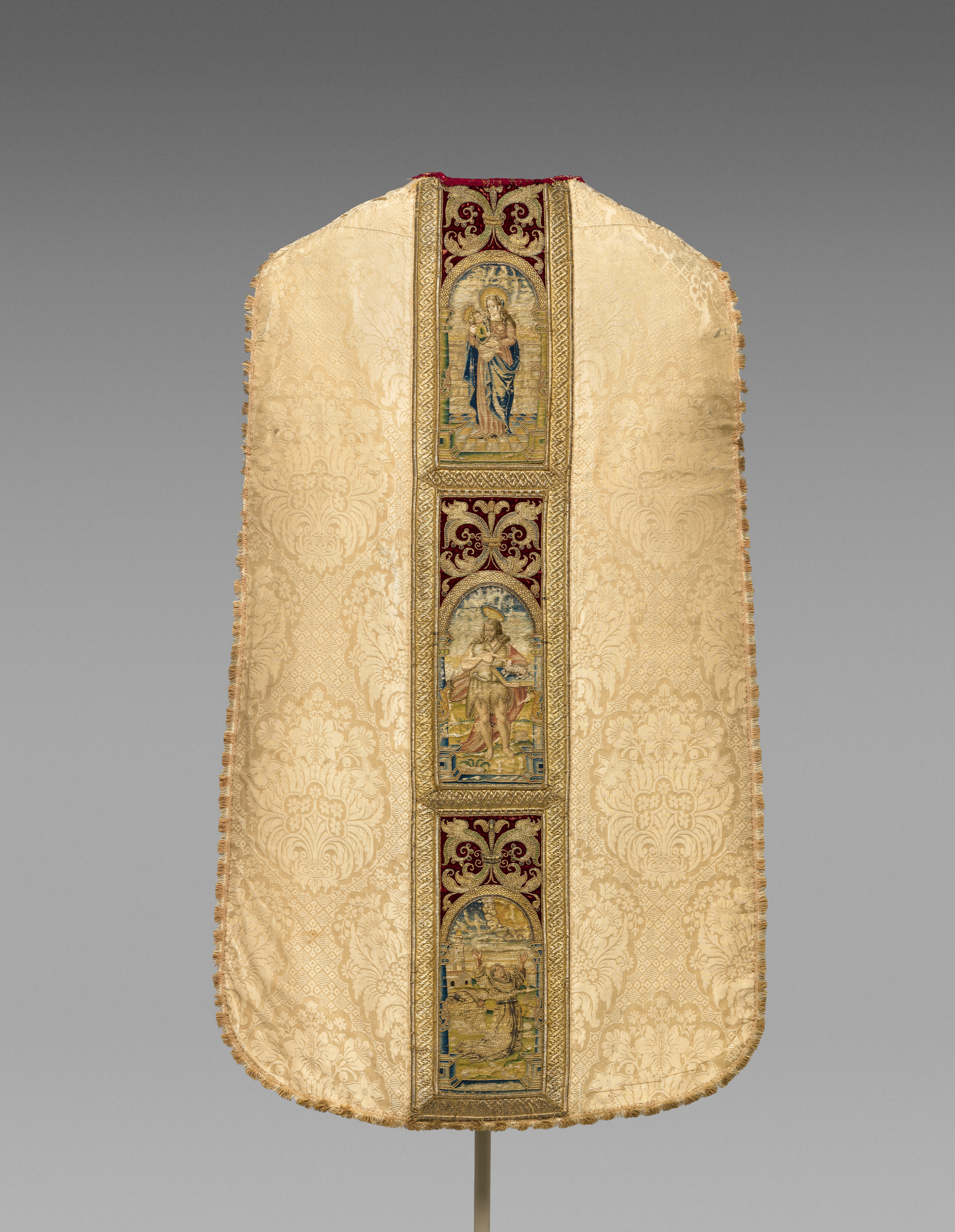
The Chasuble Reimagined: A Couture Analysis of Global Heritage and Material Mastery
In the rarefied world of haute couture, where tradition often serves as both foundation and foil, Katherine Fashion Lab presents a singular study: the chasuble. This garment, historically a liturgical vestment, is dissected and reconstructed through a lens of global heritage and unparalleled material expertise. The subject is not merely a garment but a thesis—a standalone exploration of how sacred form can be translated into secular, high-fashion expression. The chosen materials—silk and metal thread worked in the intricate technique of or nué—elevate this piece from ceremonial object to a masterclass in textile art and strategic design.
Historical Context and the Secularization of the Sacred
The chasuble, originating from the Latin casula (little house), has for centuries been a symbol of ecclesiastical authority and spiritual devotion. Its poncho-like silhouette, traditionally voluminous and unconstructed, was designed to envelop the wearer in a cocoon of ritual significance. Katherine Fashion Lab’s analysis deconstructs this heritage, stripping away the overtly religious connotations to reveal a pure, sculptural form. The garment is recontextualized as a standalone study in volume, drape, and the interplay between concealment and revelation. This secularization is not an act of irreverence but of intellectual rigor—a strategic repositioning that allows the chasuble to speak to contemporary fashion’s fascination with architectural silhouettes and the narrative power of clothing.
The global heritage lens is critical here. The chasuble, while deeply rooted in Western Christian tradition, shares formal and symbolic resonances with garments from diverse cultures: the Japanese haori, the Indian choga, and the Andean poncho. By invoking this broader heritage, Katherine Fashion Lab positions the chasuble as a universal archetype of draped, enveloping garment, transcending its specific liturgical origins. This approach aligns with the modern luxury consumer’s desire for pieces that carry cultural depth without being bound by rigid dogma.
Materiality as Narrative: Silk and Metal Thread
The selection of silk as the primary fabric is a deliberate nod to both historical luxury and functional excellence. Silk’s natural luster, tensile strength, and ability to absorb dye with breathtaking depth make it an ideal canvas for the chasuble’s expansive surface. In this study, the silk is not merely a backdrop but an active participant in the garment’s story. Its fluidity allows the chasuble to move with a liquid grace, while its weight ensures a structured fall that respects the garment’s architectural intent.
The introduction of metal thread—specifically worked in or nué—transforms the chasuble into a luminous, tactile landscape. Or nué, a technique originating in 15th-century Italy and perfected in the ecclesiastical vestments of the Renaissance, involves laying gold or silver threads side by side and couching them with colored silk stitches. The result is a shimmering, painterly effect where the metal ground interacts with the silk overlay to create subtle gradations of light and color. In Katherine Fashion Lab’s analysis, this technique is not decorative but structural: the metal threads define the chasuble’s visual rhythm, guiding the eye across the garment’s surface in a choreographed dance of reflection and absorption.
The strategic use of metal thread also serves a functional purpose. In a standalone study, the chasuble must command attention without relying on layering or accessories. The reflective properties of the metal thread create a dynamic interplay with ambient light, ensuring the garment evolves as the wearer moves. This is a masterclass in material-driven design, where the fabric itself becomes the narrative.
Technique in Focus: Or Nué as Couture Craft
Or nué is a technique that demands extraordinary precision and time—a hallmark of true couture. In this chasuble, the metal threads are not randomly placed but meticulously arranged to form a subtle, abstract pattern inspired by global textile motifs. The pattern draws from Islamic geometric interlacing, Byzantine goldwork, and pre-Columbian textile traditions, creating a visual language that is both ancient and modern. The effect is a surface that appears to vibrate with latent energy, the metal catching light in a way that suggests the sacred without being explicitly religious.
The labor-intensive nature of or nué aligns with the contemporary luxury market’s emphasis on artisanship and scarcity. Each chasuble requires hundreds of hours of handwork, making it a unique artifact rather than a mass-produced commodity. This exclusivity is a key strategic asset for Katherine Fashion Lab, positioning the garment as an investment piece for the discerning collector who values the intersection of heritage craft and avant-garde design.
Silhouette and Structure: The Standalone Study
As a standalone study, the chasuble is stripped of its traditional undergarments (the alb and stole) and presented as a complete, self-sufficient garment. The silhouette is refined: the traditional voluminous A-line is subtly tapered at the shoulders, creating a more structured, modern line that still retains the garment’s characteristic sense of envelopment. The front and back panels are cut with precision to allow for ease of movement while maintaining a clean, architectural fall. The neckline is a key focal point—a deep, rounded scoop that frames the collarbone and décolletage, drawing the eye to the interplay of skin and fabric.
The closure is minimal, often a single, hidden clasp at the back or side, ensuring that the front remains unbroken and the visual focus stays on the or nué work. This simplicity of construction is a deliberate contrast to the complexity of the textile, creating a tension that is central to the garment’s appeal. The chasuble becomes a canvas for the material, not a showcase for tailoring tricks.
Strategic Implications for the Luxury Market
Katherine Fashion Lab’s analysis of the chasuble offers several strategic insights for the haute couture sector. First, it demonstrates how heritage techniques can be revitalized for a contemporary audience without losing their intrinsic value. Or nué, once relegated to ecclesiastical and ceremonial contexts, is repositioned as a viable, even desirable, technique for high-fashion eveningwear and statement pieces. This opens new avenues for collaboration with artisan workshops and textile conservators, creating a supply chain that is both sustainable and culturally rich.
Second, the standalone study model challenges the traditional reliance on layering and accessories. By presenting the chasuble as a complete garment, Katherine Fashion Lab underscores the power of minimalist design when paired with maximalist materiality. This approach resonates with the modern consumer’s preference for investment pieces that are versatile, timeless, and capable of standing alone.
Finally, the global heritage lens allows the chasuble to transcend its Western origins, appealing to a diverse, international clientele. The garment’s references to multiple cultural traditions make it a global artifact, not a regional one. This broadens its market appeal and positions Katherine Fashion Lab as a leader in culturally literate design.
Conclusion: The Chasuble as a Testament to Couture’s Future
In this standalone study, the chasuble emerges not as a relic of the past but as a forward-looking statement on the possibilities of couture. Through the masterful combination of silk and metal thread, the ancient technique of or nué, and a global heritage perspective, Katherine Fashion Lab has created a garment that is at once a historical homage and a radical redefinition. The chasuble is no longer a vestment; it is a vessel for light, texture, and cultural memory. For the luxury market, it represents a new paradigm: one where tradition is not a constraint but a catalyst for innovation. This analysis affirms that in the hands of a visionary lab, even the most sacred of garments can be reborn as a secular masterpiece of wearable art.