Heritage Analysis: The Gold Snuffbox of an Ancient Civilization
Introduction: The Object as a Conduit of Power and Memory
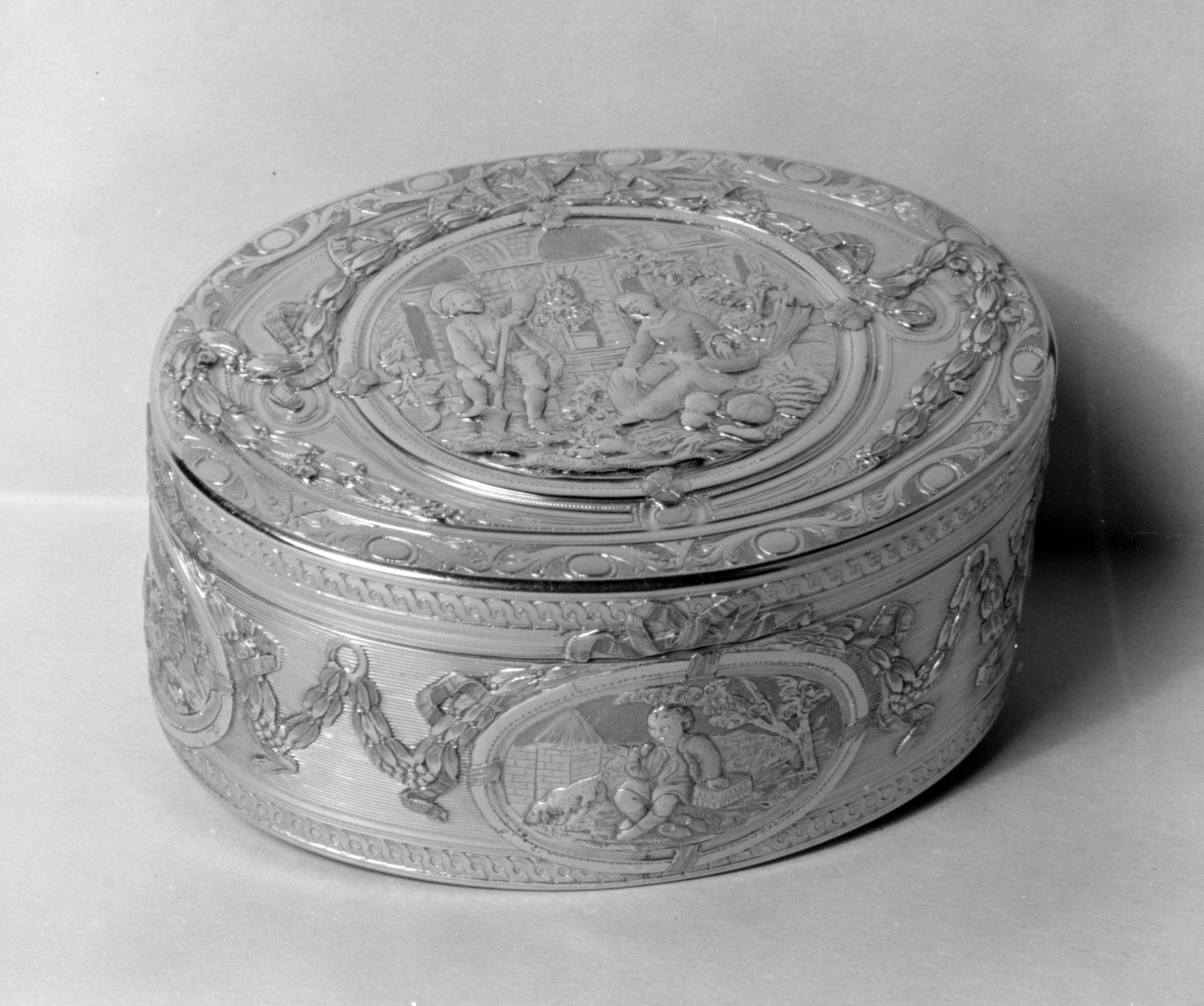
The gold snuffbox, recovered from the burial context of an ancient civilization, presents a singular opportunity for Katherine Fashion Lab to interrogate the intersection of symbolic power, historical adornment, and spiritual meaning. This object, crafted from a precious metal that transcends temporal decay, is not merely a container for powdered substances but a microcosm of cosmological belief, social hierarchy, and ritual practice. Its dual-faced construction—one side a polished silver mirror inlaid with intricate gold palm-leaf motifs, the other a cold stone sarcophagus surface narrating a life story through relief—echoes the profound duality found in our ongoing study of the Mirror with Split-Leaf. This analysis will decode the snuffbox’s heritage resonance and propose a 2026 high-end luxury strategy that leverages its DNA to redefine status, memory, and transcendence in contemporary luxury.
Symbolic Power: The Alchemy of Gold and the Mirror
Gold, in the ancient world, was not a commodity but a materialization of the divine. Its incorruptibility symbolized eternal life, solar authority, and the unbroken lineage of rulers. The snuffbox’s gold medium directly correlates with the symbolic power of the ruling elite, who used such objects to mediate between the earthly and the celestial. The mirror side, described as a “polished silver mirror with gold palm-leaf inlay,” is particularly significant. Mirrors in antiquity were portals—they reflected the physical self but also captured the soul. The palm leaf, a motif of victory, fertility, and sacred writing, transforms the mirror from a vanity tool into a talisman of spiritual clarity. The gold inlay, contrasting with the silver ground, creates a visual hierarchy: gold as the eternal, silver as the reflective, transitory self. This duality—the fixed, divine gold against the mutable, reflective silver—echoes the historical adornment practices of the civilization, where adornment was never merely decorative but a ritual act of embodying power.
Historical Adornment: The Snuffbox as a Personal and Political Statement
The snuffbox’s function—to contain a psychoactive substance—further deepens its role in historical adornment. Snuff, often derived from hallucinogenic plants, was used in shamanic rites, divination, and elite ceremonies. The act of opening the box, retrieving the powder, and inhaling it was a performative ritual of status. The box itself, worn on the body or placed in a tomb, became an extension of the wearer’s identity. The reverse side, a “cold stone sarcophagus with relief narrating a life story,” transforms the object from a utilitarian vessel into a biographical monument. This juxtaposition of the living, reflective mirror and the fixed, narrative stone creates a temporal dialogue: the mirror captures the present moment, while the stone records the past for eternity. For Katherine Fashion Lab, this suggests that historical adornment is not static; it is a dynamic interplay between the wearer’s immediate presence and their ancestral lineage. The snuffbox, therefore, is a wearable heirloom that bridges the personal and the cosmic.
Spiritual Meaning: The Duality of Life and Death
The spiritual meaning embedded in the snuffbox is perhaps its most profound heritage asset. The dual-sided design—mirror and sarcophagus—is a material metaphor for the civilization’s cosmology: the mirror as the world of the living, the stone as the underworld. Gold, as the intermediary, binds these realms. The palm-leaf motif, often associated with the tree of life, reinforces the idea of cyclical rebirth. In burial contexts, such objects were placed to guide the soul through the afterlife, the mirror reflecting the soul’s true nature, the stone recounting its earthly deeds. This aligns with the Mirror with Split-Leaf study, which posits that split-leaf motifs represent the bifurcation of the self into mortal and immortal components. The snuffbox, by containing a substance that altered consciousness, was a tool for spiritual navigation—a means to access the liminal space between worlds. For contemporary luxury, this spiritual dimension offers a powerful narrative: the object not as a possession but as a guide, a protector, a repository of ancestral memory.
DNA Correlation: The Mirror with Split-Leaf and the Snuffbox
Our study of the Mirror with Split-Leaf—described as “一面是光洁银镜上以黄金镶嵌的纷繁棕叶纹,另一面是冰冷石棺板上以浮雕诉说的生命叙事”—finds its direct material and symbolic cousin in the gold snuffbox. Both objects employ the same dual-face construction, the same material hierarchy (gold on silver, narrative on stone), and the same thematic tension between reflection and record. The split-leaf motif, in both instances, is not random but a deliberate code for duality: the leaf that divides yet unites, the mirror that shows both self and other. This DNA correlation suggests that the snuffbox is not an isolated artifact but part of a broader symbolic system that values adornment as a form of storytelling. For Katherine Fashion Lab, this correlation provides a ready-made heritage narrative—one that can be adapted to high-end luxury without losing its authenticity. The snuffbox’s DNA is, in essence, a blueprint for objects that are both personal and universal, temporal and eternal.
2026 High-End Luxury Strategy: From Artifact to Archetype
To translate the snuffbox’s heritage into a 2026 high-end luxury strategy, Katherine Fashion Lab must move beyond mere replication and toward archetypal resonance. The following strategic pillars are proposed:
1. The Dual-Face Archetype as a Brand Signature: The mirror-sarcophagus duality should become a recurring motif in limited-edition collections. For 2026, we propose a “Portal” series—objects (compact mirrors, jewelry boxes, or even digital interfaces) that feature one reflective surface and one narrative surface. The gold palm-leaf inlay can be reinterpreted via modern techniques such as laser-etched gold leaf on titanium or recycled silver, aligning with sustainability imperatives. Each piece would include a micro-engraved narrative—a client’s name, a date, or a personal mantra—transforming the object into a contemporary heirloom.
2. Ritualized Consumption and Experiential Luxury: The snuffbox’s ritual use—opening, retrieving, inhaling—can be adapted into a luxury experience. For 2026, we propose a “Sensory Archaeology” service: clients commission a snuffbox-like object that contains a bespoke fragrance or a powdered botanical blend (e.g., saffron, frankincense, or cacao). The act of opening the box becomes a meditative ritual, guided by a digital or in-person ceremony. This positions the object not as a static product but as a tool for mindfulness and self-discovery, appealing to the growing demand for spiritual luxury.
3. The Heirloom-as-Narrative Platform: The stone sarcophagus side of the snuffbox tells a life story. In 2026, Katherine Fashion Lab can offer a “Life Code” engraving service, where clients submit a personal narrative—a genealogy, a significant event, or a philosophical motto—that is translated into a symbolic relief pattern. This pattern, akin to the ancient palm-leaf motifs, becomes a unique identifier. The object is then certified as a “heritage-grade” artifact, with a digital provenance record stored on a blockchain. This merges ancient storytelling with modern transparency, a key value for ultra-high-net-worth clients.
4. Limited-Edition Collaboration with Archaeological Institutions: To authenticate the heritage DNA, Katherine Fashion Lab should partner with museums or archaeological institutes that hold similar snuffboxes. A 2026 capsule collection, produced in collaboration with a major institution, would feature replicas of the original motifs alongside contemporary reinterpretations. A portion of proceeds could fund conservation efforts, reinforcing the brand’s commitment to cultural stewardship. This strategy not only elevates brand prestige but also positions Katherine Fashion Lab as a guardian of heritage, not merely a commercial entity.
5. Material Innovation as Spiritual Metaphor: The gold-silver-stone triad can be updated with innovative materials: lab-grown diamonds for eternal light, recycled gold for ethical permanence, and bio-resin for the narrative stone. Each material choice should be framed as a spiritual metaphor—e.g., “recycled gold as the eternal cycle of rebirth.” This aligns with the 2026 luxury trend toward conscious opulence, where material value is inseparable from ethical and spiritual value.
Conclusion: The Snuffbox as a Blueprint for Timeless Luxury
The gold snuffbox of an ancient civilization is far more than a historical curiosity; it is a sophisticated symbolic system that encodes power, memory, and transcendence. Its dual-faced design—mirror and sarcophagus, gold and stone, reflection and narrative—offers a profound template for 2026 high-end luxury. By decoding its symbolic power, understanding its historical adornment function, and embracing its spiritual meaning, Katherine Fashion Lab can create objects that are not merely worn but inhabited. The DNA correlation with the Mirror with Split-Leaf study validates that this heritage is not isolated but part of a universal human desire to hold both the present and the eternal in one hand. In 2026, luxury will no longer be about accumulation but about connection—to self, to lineage, to the cosmos. The snuffbox, in its quiet gold dignity, shows us the way.