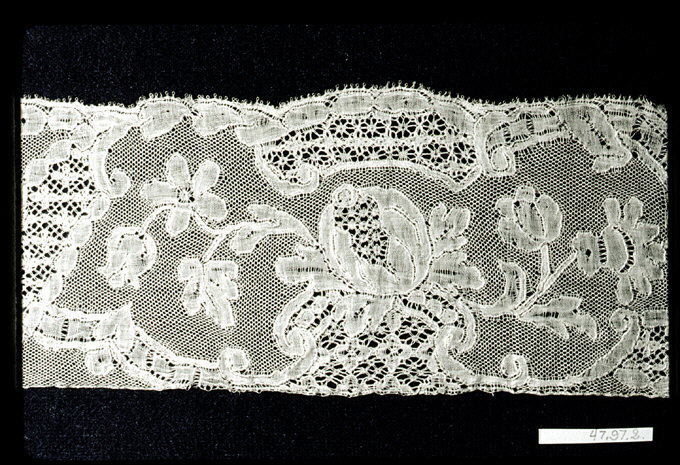
The Art of Absence: Deconstructing Strip Through Bobbin Lace at Katherine Fashion Lab
In the rarefied sphere of haute couture, where fabric is often a canvas for excess, Katherine Fashion Lab presents a radical thesis: that the most profound statement can be made through what is removed. The subject of this standalone study is Strip, a conceptual exploration that redefines the relationship between body, garment, and void. Drawing from a Global Heritage of textile craftsmanship, the collection’s primary material—bobbin lace—serves not as a decorative trim but as the structural and philosophical core. This analysis dissects how Katherine Fashion Lab transforms a traditional craft into a contemporary lexicon of exposure, layering, and intentional absence.
Deconstructing the Subject: Strip as a Conceptual Framework
The term “strip” in a couture context typically evokes reduction, the removal of layers, or the baring of skin. However, Katherine Fashion Lab elevates this concept beyond mere nudity. Here, Strip is an architectural principle—a method of carving form from negative space. The collection interrogates the idea that a garment’s identity is as much about the gaps as the fabric. By using bobbin lace, a material inherently defined by its holes, the Lab creates a dialogue between presence and absence. Each strip of lace is not a covering but a framing device, directing the eye to the skin beneath or the void beyond. This is not a celebration of exposure for its own sake; rather, it is a calculated study in tension, where the body becomes both the canvas and the sculpture.
The Global Heritage aspect is critical here. Bobbin lace, with origins spanning from 16th-century Flanders to the convents of Italy and the courts of France, carries a legacy of meticulous labor and cultural exchange. Katherine Fashion Lab honors this lineage by not appropriating but adapting. The strips are not random; they are engineered to mimic the rhythm of traditional lace patterns—geometric, floral, or scalloped—but in deconstructed sequences. A sleeve might consist of a single, elongated strip of lace that spirals from shoulder to wrist, leaving the arm partially exposed. A bodice might feature vertical strips that converge at the waist, creating a corset-like effect without the rigidity of boning. The result is a garment that breathes, moves, and reveals in calculated measures.
Material Mastery: Bobbin Lace as Structural Narrative
Bobbin lace is a demanding medium. Unlike needle lace, which is built with a single needle and thread, bobbin lace involves multiple threads wound on bobbins, twisted and crossed over a pillow. The process is slow, requiring hours to produce even a few inches. Katherine Fashion Lab’s decision to use this material for a collection centered on Strip is a deliberate juxtaposition: the painstakingly constructed lace is then “stripped” down to its essential elements. The Lab’s artisans work with silk, linen, and metallic threads, each chosen for its ability to hold tension and drape. The lace is not merely a surface; it is the structure itself. In many pieces, the lace strips are the only fabric, with no lining or undergarment beneath. This demands precision—the lace must be strong enough to support its own weight while remaining delicate enough to convey fragility.
The material’s inherent transparency becomes a tool. When layered, the strips create moiré effects, where overlapping lace produces new patterns and shadows. When spaced apart, they create a lattice that reveals the body in fragments. This technique recalls the modesty veils of Renaissance portraits, but subverts them: here, the lace does not conceal; it accentuates. A skirt might consist of vertical strips that part with each step, offering glimpses of leg. A halter neck might be formed by two strips that cross at the nape, leaving the back entirely bare. The effect is both sensual and intellectual, inviting the viewer to consider what is shown and what is withheld.
Global Heritage: A Tapestry of Influences
The Global Heritage of bobbin lace is not monolithic. Katherine Fashion Lab draws from multiple traditions to inform the collection’s vocabulary. Flemish lace, known for its dense, floral motifs, inspires the more intricate panels. Italian merletto offers a lighter, airier aesthetic, which the Lab uses for strips that float away from the body. Spanish encaje de bolillos contributes geometric precision, evident in the angular strips that form architectural collars and cuffs. This is not a pastiche; it is a synthesis. The Lab’s design team has spent years studying historical lace books and collaborating with lace-makers in Bruges, Burano, and Almagro. The result is a collection that feels both timeless and avant-garde.
One standout piece, the “Mosaic Gown,” exemplifies this synthesis. The gown is composed of dozens of lace strips, each varying in width and pattern, that are joined at irregular intervals. The strips are dyed in a gradient from ivory to deep charcoal, creating a visual rhythm that echoes the movement of the wearer. The gown’s construction references the patchwork quilts of Eastern Europe, but the material and technique are purely lace. Another piece, the “Ribbon Corset,” uses wide strips of bobbin lace that are stiffened with a light resin, allowing them to stand away from the body. The corset’s front is open, with strips crossing diagonally to create a cage-like structure. This piece directly challenges the notion of the corset as restrictive; here, the strips are liberating, framing the torso without compressing it.
Contextualizing the Standalone Study: Strip in the Contemporary Couture Landscape
As a standalone study, Strip is not intended for mass production or even for a full runway collection. It is a focused investigation, akin to a scientific paper or a musical étude. This format allows Katherine Fashion Lab to push boundaries without commercial constraints. The study’s context is the ongoing dialogue between tradition and innovation in haute couture. In an era where fashion often prioritizes speed and spectacle, the Lab’s commitment to a single material and a single concept is a deliberate act of resistance. The collection asks: what happens when we strip away the superfluous? The answer is a new language of form, where the negative space is as intentional as the positive.
The study also engages with contemporary issues of body positivity and ownership. By using lace strips that reveal rather than conceal, the Lab empowers the wearer to control their own narrative of exposure. The garments are not designed for a specific body type; the strips can be adjusted, tightened, or loosened, allowing the wearer to define their own silhouette. This flexibility is a quiet rebellion against the rigid sizing of traditional couture. Furthermore, the use of bobbin lace—a material historically associated with women’s domestic labor—reclaims that labor as high art. The strips are not just decorative; they are a testament to the skill and patience of the artisans who made them.
Conclusion: The Strip as a Statement of Intent
Katherine Fashion Lab’s Strip is more than a collection; it is a manifesto. Through the disciplined use of bobbin lace, the Lab demonstrates that couture can be both minimal and ornate, both fragile and strong. The strips are not remnants but the core of the design, each one a line in a visual poem about the body and its boundaries. This standalone study challenges the industry to reconsider the role of material and technique, proving that the most powerful statements often come from what we choose to leave out. In a world of excess, Strip is a breath of air—a reminder that absence, when crafted with intention, can be the most luxurious presence of all.