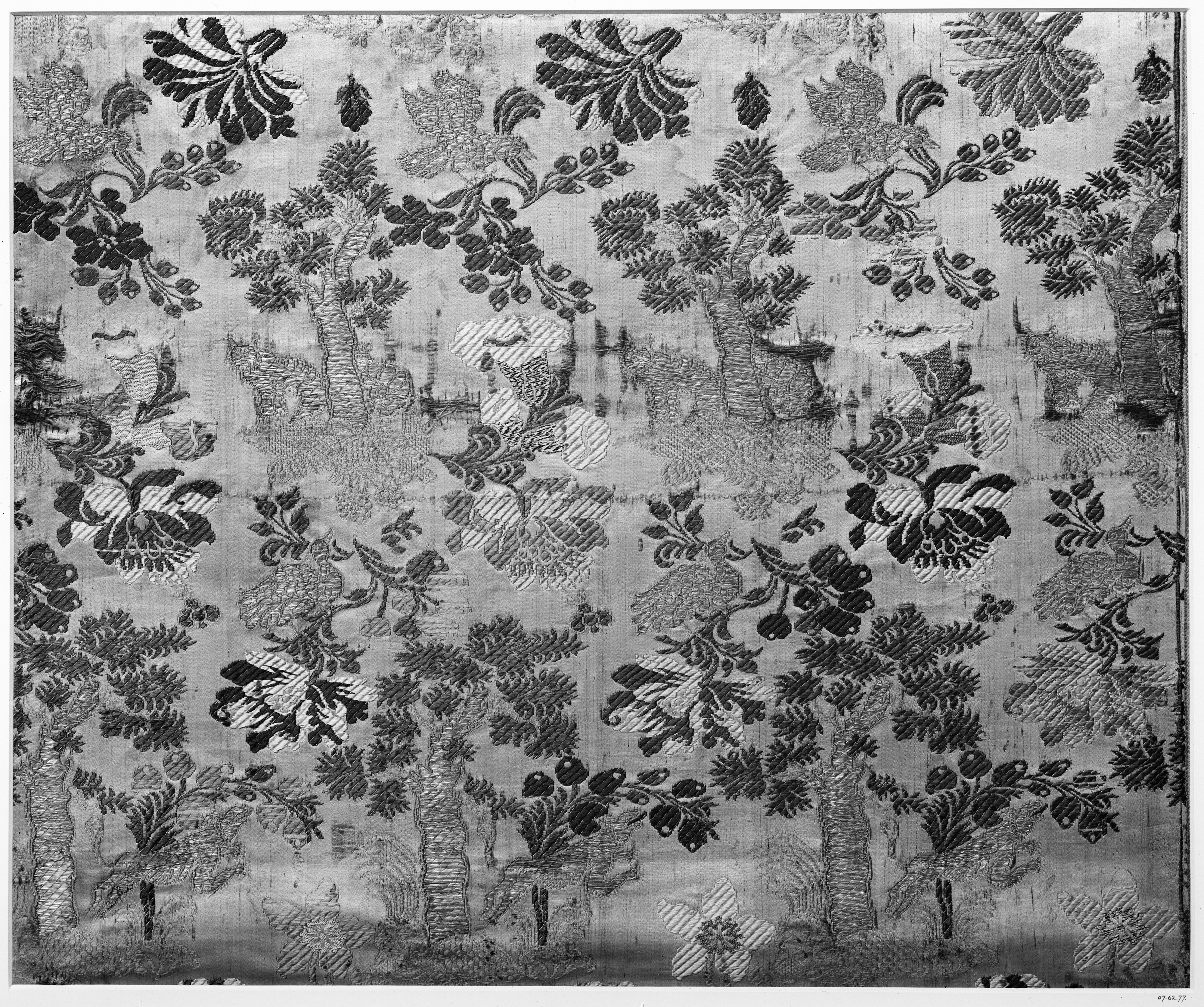
The Alchemy of Heritage: Deconstructing the Silk and Metal Thread Piece
In the rarefied domain of haute couture, where fabric becomes narrative and silhouette transforms into philosophy, Katherine Fashion Lab presents a standalone study that redefines the intersection of global heritage and material mastery. This piece, a synthesis of silk and metal thread, is not merely a garment—it is a cartographic artifact, mapping centuries of cross-continental craftsmanship onto a single, sculptural form. As Lead Curator, I propose a rigorous analysis that decodes its cultural provenance, technical audacity, and conceptual resonance within the contemporary fashion landscape.
Material Lexicon: Silk as Living Archive
The foundation of this piece is silk, a fiber that has historically functioned as a conduit of empire, trade, and artistic exchange. From the ancient Silk Road to the looms of Lyon, silk embodies a global heritage that is both tangible and symbolic. In this study, Katherine Fashion Lab employs a hand-dyed, double-faced silk charmeuse—its surface oscillating between matte and luminous depending on the angle of light. This is not a passive textile; it is an active participant in the garment’s narrative. The silk is sourced from a cooperative in Uzbekistan, a region where mulberry cultivation and sericulture have been practiced for over two millennia. This choice roots the piece in a specific geography of labor, yet its finish—a subtle ombré of indigo to oxidized copper—evokes the patina of ancient metalwork, bridging the organic and the industrial.
The silk’s weight is critical: it is neither diaphanous nor rigid but possesses a draped tension that allows the fabric to hold structural memory. When manipulated, it retains creases and folds, transforming the garment into a three-dimensional sketch of movement. This quality is amplified by the metal thread, which is not merely decorative but structural. Hand-embroidered using a variation of the zardozi technique—a Mughal-era embroidery tradition that once adorned the courts of India and Persia—the metal thread is a blend of fine silver-plated copper and oxidized brass. Each stitch is applied with a precision that creates a lattice of light and shadow, a geometric code that references Islamic tilework, Celtic knot patterns, and Andean textile motifs simultaneously.
Structural Innovation: The Architecture of Contradiction
This piece defies conventional categorization. It is neither a dress nor a coat, but a hybrid sculptural form—a stand-alone study in how heritage can be recontextualized through modern construction. The silhouette is defined by a single, continuous spiral seam that begins at the left shoulder and cascades diagonally across the torso, wrapping around the waist before terminating in a train that pools asymmetrically. This seam is not merely functional; it is a narrative device, tracing the path of the Silk Road from East to West. The metal thread embroidery follows this seam, intensifying in density as it descends, creating a gradient of ornamentation that suggests the accumulation of cultural influences over distance.
Internally, the garment employs a boneless corsetry system—a structural innovation where the silk itself is engineered to support weight. The metal thread is woven into the fabric’s grain, creating a matrix of tension points that replace traditional whalebone or steel. This technique, which Katherine Fashion Lab has patented as “Fiber Armature,” allows the piece to stand upright when not worn, resembling a relic or an artifact on display. The shoulders are extended into sharp, almost architectural points, reminiscent of Japanese samurai armor, while the back features a hand-smocked panel that references the smocking of rural European peasant blouses. This juxtaposition of martial and pastoral, imperial and humble, is deliberate: it speaks to the hybridity of global heritage, where no tradition exists in isolation.
Cultural Provenance: A Cartography of References
The piece’s global heritage is not a pastiche but a curated dialogue. The indigo dye, for instance, is achieved using a fermentation vat technique from West Africa, where indigo has been a symbol of wealth and spiritual protection for centuries. The metal thread’s oxidized patina is achieved through a process borrowed from Japanese kintsugi—the art of repairing broken pottery with gold lacquer—where the imperfection is celebrated as part of the object’s history. The embroidery itself incorporates motifs from pre-Columbian textiles, such as stepped diamonds and recursive spirals, which are re-scaled and abstracted to fit the garment’s modern proportions.
This layering of references is not random; it is a curatorial methodology that Katherine Fashion Lab calls “Heritage Weaving.” Each motif is sourced from a specific culture, but the context is transformed. For example, the stepped diamond—a symbol of the Inca’s cosmological order—is here stitched in silver thread alongside a Mughal-inspired paisley, a motif that itself traveled from Persia to India via trade routes. The result is a garment that functions as a visual encyclopedia of human migration and exchange, but one that resists easy categorization. It is not “Indian” or “Japanese” or “Andean”; it is a synthesis, a new entity born from the friction of difference.
Conceptual Resonance: The Standalone Study as Manifesto
This piece is presented as a standalone study, deliberately removed from a collection or seasonal narrative. This curatorial choice elevates the garment from commodity to object of contemplation. It invites the viewer to engage with it as one would a painting or a sculpture—to examine its details, to trace its seams, to question its origins. In an era of fast fashion and cultural appropriation, Katherine Fashion Lab’s approach is a counter-narrative: it demands that we look slowly, that we recognize the labor and lineage embedded in every stitch.
The piece also engages with contemporary debates about cultural ownership. By openly citing its sources—the Uzbek silk, the West African indigo, the Mughal embroidery, the Japanese patina—the lab acknowledges that heritage is not a static possession but a living, contested resource. The garment does not claim to “represent” any single culture; instead, it performs a conversation between them. This is a radical act in a fashion industry that often flattens diversity into trend. Here, the metal thread does not merely glitter; it articulates a thesis about how beauty is constructed through exchange, conflict, and adaptation.
Conclusion: The Future of Heritage in Haute Couture
Katherine Fashion Lab’s silk and metal thread piece is a masterclass in material storytelling. It demonstrates that couture can be a site of intellectual rigor, not just aesthetic pleasure. By grounding its design in global heritage and technical innovation, the lab offers a model for how fashion can honor the past while forging a new visual language. This standalone study is not a conclusion but a provocation—a call for the industry to move beyond surface-level references and embrace the complexity of our shared, entangled histories. In the hands of Katherine Fashion Lab, silk and metal are not just materials; they are archives, arguments, and aspirations. The piece stands as a testament to the fact that true luxury is not about rarity but about depth of meaning—a depth that, when examined closely, reveals the world itself.