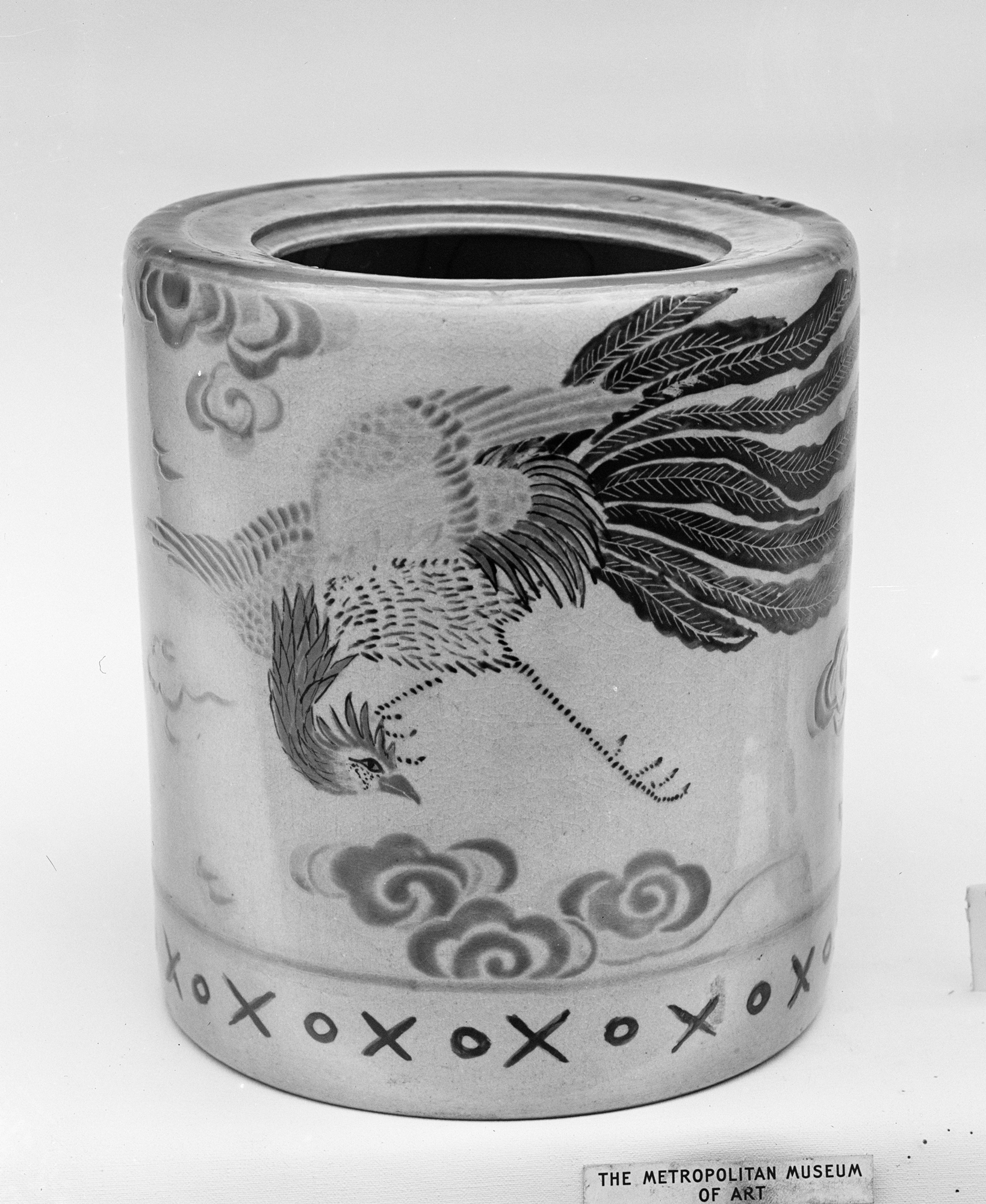
Heritage Analysis: The Fire Pot (Sanuki Ware, Takamatsu Type)
This analysis examines the Japanese Fire Pot, a ceremonial clay vessel from the Sanuki ware tradition of the Takamatsu type, as a subject of strategic standalone research for Katherine Fashion Lab. The object, characterized by a crackled transparent glaze, colored enamels, and gold embellishments, embodies a confluence of symbolic power, historical adornment, and spiritual meaning. For a luxury brand operating in the 2026 high-end market, the Fire Pot offers a profound template for integrating cultural authenticity, material mastery, and narrative-driven exclusivity. This paper deconstructs the Fire Pot’s heritage layers and translates them into actionable luxury strategy.
Symbolic Power: The Vessel as Catalyst
Transformation and Impermanence
The Fire Pot’s primary symbolic power resides in its function: to contain and transform fire, an element of destruction and creation. In Japanese aesthetics, fire is not merely a utility but a spiritual agent that purifies and renews. The crackled glaze—a deliberate imperfection celebrated in wabi-sabi philosophy—mirrors the transient nature of existence. Each fissure in the glaze tells a story of thermal stress and artistic acceptance, symbolizing resilience through fragility. For Katherine Fashion Lab, this translates into a brand narrative where imperfection is reframed as a marker of authenticity. A 2026 luxury strategy could embrace “flawed perfection” in materials, such as intentionally irregular stitching or patina-accelerated leathers, positioning these as signatures of curated, lived-in luxury rather than mass-produced uniformity.
Gold as a Marker of Sacred Value
The gold embellishments on the Fire Pot are not decorative but reparative, drawing from the kintsugi tradition where gold lacquer mends cracks, elevating breakage into a celebrated history. This gold signifies not wealth alone, but the spiritual value of repair and continuity. In the context of high-end fashion, gold becomes a metaphor for brand heritage repair—acknowledging past missteps or evolving cultural narratives, and gilding them into pillars of strength. A 2026 collection could feature gold-toned hardware or embroidery that deliberately highlights seams, joints, or transitions, transforming potential flaws into focal points of prestige.
Historical Adornment: Craftsmanship as Identity
Sanuki Ware and the Takamatsu Lineage
Sanuki ware, originating from the Kagawa Prefecture, distinguishes itself through a meticulous layering of clay, glaze, and enamel. The Takamatsu type, specifically, is known for its bold enamel colors—often vermilion, emerald, and deep blue—applied over a crackled transparent base. Historically, these pots were used in tea ceremonies and aristocratic households, where the interplay of glaze and gold was a silent language of status. The crackled surface was not hidden but highlighted, serving as a visual record of the kiln’s heat and the artisan’s hand. For Katherine Fashion Lab, this historical adornment underscores the value of process visibility. A 2026 luxury strategy could prioritize transparent craftsmanship, such as exposed stitching, visible seam allowances, or unlined garments that reveal construction, thereby inviting the client into the narrative of making.
Enamel and Gold as Status Codes
The colored enamels on the Fire Pot served as social signifiers. Vermilion indicated imperial or sacred association; deep blue suggested depth and wisdom; gold denoted the owner’s ability to patronize elite artisans. This chromatic hierarchy offers a blueprint for a 2026 color strategy where hues are not merely aesthetic but encoded with status and meaning. Katherine Fashion Lab could develop a “heritage palette” limited to colors derived from natural Japanese pigments—cinnabar red, indigo, and gold leaf—each restricted to specific product tiers or limited editions. This creates a visual language that communicates exclusivity without overt branding.
Spiritual Meaning: Ritual and Material Consciousness
Shinto and Zen Influences
The Fire Pot’s spiritual meaning is rooted in Shinto reverence for natural elements and Zen Buddhism’s emphasis on mindfulness. In Shinto, fire (hi) is a kami (spirit) that mediates between the human and divine realms. The pot, as its vessel, becomes a sacred object, not merely a tool. Zen influences further imbue the object with the concept of ichigo ichie—one encounter, one moment—where the pot’s use in a single ceremony is irreplaceable. For a luxury brand, this translates into a strategy of ritualized consumption. A 2026 product launch could be framed as a singular event, with each piece accompanied by a certificate of moment, a video of its creation, or a ritual care guide that elevates ownership to a spiritual practice. This moves beyond transactional luxury into experiential, soulful engagement.
Material Consciousness as Luxury
The clay itself is not neutral; it is sourced from specific riverbeds in Takamatsu, known for their iron content that reacts with the glaze. This material specificity—where origin determines aesthetic outcome—is a powerful lesson for fashion. A 2026 strategy could involve “terroir-driven” materials: wool from a single valley, silk from a specific silkworm lineage, or dyes from a particular soil. The Fire Pot teaches that luxury is not in the rawness of material but in the intentionality of its selection. Katherine Fashion Lab could develop a “source-to-skin” traceability program, where each garment’s material journey is documented, from field to atelier, mirroring the pot’s clay-to-kiln narrative.
2026 High-End Luxury Strategy: Translating Heritage into Market Leadership
Exclusivity Through Imperfection
The crackled glaze offers a direct product strategy: limited-edition collections where each piece is intentionally unique. By embracing controlled imperfections—asymmetric draping, hand-painted irregularities, or patina finishes—Katherine Fashion Lab can position itself as a house that values authentic craftsmanship over algorithmic perfection. Pricing can reflect the artisan’s time and the object’s singularity, with each piece numbered and its “crack map” documented, creating a secondary market of collectible items.
Gold as a Narrative Device
Gold should not be used as superficial embellishment but as a structural element. In 2026, consider gold-threaded seams that function like kintsugi, repairing or highlighting garment stress points. This repositions gold from mere opulence to a storytelling medium. A marketing campaign could feature the “mending of tradition” as a core brand value, appealing to a clientele seeking meaning alongside status.
Ritual-Based Brand Experiences
Leverage the Fire Pot’s spiritual dimension by creating ritual-based retail experiences. Pop-up spaces designed as tea ceremony rooms, where clients participate in a guided “unwrapping” of a garment, complete with incense and matcha. This transforms purchase into a ceremony, aligning with the 2026 trend of mindful luxury. Digital extensions could include a “virtual kiln” app where clients watch their bespoke piece being “fired” (produced) in real time, deepening emotional investment.
Color as Heritage Code
Develop a signature palette inspired by Sanuki ware enamels: Takamatsu Red (a deep vermilion), Kintsugi Gold, and Kiln Blue (a crackled indigo). Restrict these colors to flagship collections, creating immediate visual brand recognition. Use them in limited quantities, perhaps only in seasonal capsules, to maintain scarcity and desirability.
Conclusion
The Japanese Fire Pot, as a Sanuki ware artifact, is far more than a decorative object. It is a repository of symbolic power, historical adornment, and spiritual meaning. For Katherine Fashion Lab, it provides a rigorous framework for a 2026 luxury strategy that prioritizes authenticity, imperfection, material consciousness, and ritual. By translating the pot’s crackled glaze into product uniqueness, its gold into narrative repair, and its spiritual function into brand experience, the Lab can position itself at the vanguard of a new luxury paradigm—one where heritage is not referenced but lived, and where every garment carries the weight of a kiln-fired story.