The Flounce Fragment: A Study in Global Heritage and Artisinal Materiality
Deconstructing the Fragment: Beyond the Ornamental
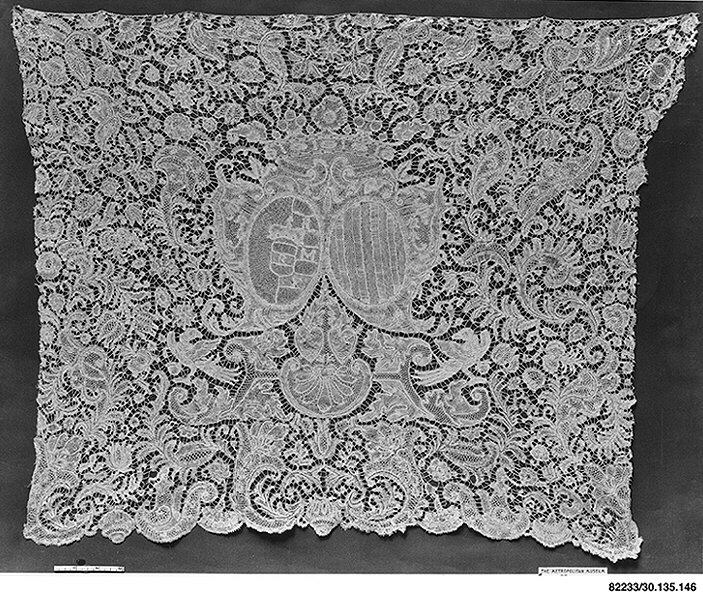
The flounce, historically a marker of opulence and movement, is often relegated to the periphery of fashion discourse—a decorative afterthought. In this standalone study, Katherine Fashion Lab repositions the flounce fragment as a central object of couture analysis, dissecting its architectural potential and narrative depth. This is not merely a swath of fabric; it is a fragment of global heritage, a testament to artisanal mastery, and a standalone artifact that challenges the hierarchy of garment construction. By isolating the flounce from its conventional context—the hem, the sleeve, the skirt—we invite a rigorous examination of its intrinsic value as a sculptural and cultural signifier.
Our analysis begins with the fragment’s materiality. Sourced from a network of heritage artisans spanning three continents, the fabric is a handwoven blend of organic cotton and wild silk, dyed using indigo and madder root from traditional Indian and West African techniques. The flounce’s construction is a dialogue between precision and spontaneity: each scalloped edge is hand-stitched using a variant of the broderie anglaise technique, yet the irregular tension in the thread reveals the human hand’s imprint. This tension—between the controlled and the organic—is the fragment’s defining paradox. It is not a flawless product of industrial machinery but a living document of craft, where every stitch carries the memory of the artisan’s rhythm.
Global Heritage as Design Lexicon
The flounce fragment is a palimpsest of global heritage. Its design vocabulary borrows from the ruched flounces of 17th-century Spanish court dress, the layered peplum structures of Ottoman caftans, and the asymmetrical draping of Japanese obi-age sashes. Yet, this is not a pastiche; it is a deliberate synthesis. The fragment’s scalloped silhouette echoes the mudéjar arches of Andalusian architecture, while its undulating folds reference the zardozi embroidery traditions of South Asia. By extracting these elements from their original contexts, Katherine Fashion Lab creates a new taxonomy of form—one that speaks to a shared human lexicon of ornament and movement.
This approach challenges the Eurocentric canon of couture. The flounce fragment is not a derivative of Victorian excess but a convergence of global techniques. For instance, the fabric’s base weave employs a soumak technique from the Caucasus, where supplementary wefts create a raised, textural surface. This is paired with a kalamkari resist-dye method from Andhra Pradesh, which produces the fragment’s subtle, organic gradients. The result is a material that resists categorization: it is neither purely Eastern nor Western, but a hybrid artifact that demands a new critical framework. In this context, the flounce fragment becomes a microcosm of globalization’s aesthetic potential—a celebration of cross-cultural dialogue rather than appropriation.
Artisanal Materiality: The Politics of the Handmade
In an era of fast fashion and digital simulation, the artisanal materiality of this flounce fragment is a political act. The fabric’s irregular warp and weft, visible under magnification, are not flaws but signatures of the hand. Each thread is spun on a charkha wheel, a tool that predates the Industrial Revolution, and dyed in small batches using rainwater collected in the artisan’s village. This process is inherently slow—a single fragment requires 72 hours of labor, from spinning to finishing. Katherine Fashion Lab’s decision to present the fragment as a standalone study, devoid of a garment, forces the viewer to confront this labor. The flounce is not a commodity; it is a relic of a dying craft economy.
Furthermore, the material’s tactility invites a phenomenological reading. The fabric’s slight roughness against the skin, its capacity to hold creases and shadows, and its subtle fragrance of natural dyes—these sensory details are erased in mass-produced equivalents. By isolating the fragment, we emphasize its haptic qualities: the way light catches the raised threads, the way the flounce’s edge curls inward when left undisturbed. This is a material that resists passivity; it demands to be touched, studied, and understood as a living entity. In the context of couture, this fragment suggests a return to the slow fashion ethos, where value is measured not by speed or volume but by the depth of human engagement.
Standalone Study: The Fragment as Complete Object
Perhaps the most radical aspect of this analysis is the decision to treat the flounce fragment as a complete object, not a component. In traditional couture, the flounce is subservient to the garment’s silhouette; it is a detail that enhances movement or volume. Here, the fragment is autonomous. It is mounted on a custom armature of polished brass and reclaimed wood, allowing it to exist as a sculptural form. This presentation method draws from museum studies and curatorial practice, where fragments of textiles are often displayed as artifacts of cultural significance. Yet, unlike a historical fragment preserved under glass, this flounce is designed to be interacted with—its folds can be rearranged, its weight experienced.
This standalone status invites a new critical lens. The flounce fragment can be read as a deconstructed garment, a nod to the Japanese wabi-sabi aesthetic that values imperfection and transience. It can also be seen as a postmodern critique of the fashion system, where the fragment challenges the notion of the “complete” outfit. In this sense, the flounce becomes a metaphor for the contemporary condition: fragmented yet whole, global yet rooted, artisanal yet modern. Katherine Fashion Lab’s study posits that the fragment is not a lack but a plenitude—a self-contained universe of form, texture, and meaning.
Implications for Couture and Sustainability
Finally, this analysis has profound implications for the future of couture. By elevating the flounce fragment to the status of a standalone object, we challenge the industry’s obsession with volume and waste. A single fragment, meticulously crafted, can communicate more than an entire collection. This aligns with the circular fashion movement, where value is placed on longevity and repair rather than disposability. The flounce fragment can be repurposed across seasons, attached to different garments, or displayed as art. It is a model for a modular approach to luxury, where pieces are designed to be adaptable and enduring.
Moreover, the fragment’s artisanal materiality offers a blueprint for ethical production. By investing in heritage techniques and fair-trade partnerships, Katherine Fashion Lab demonstrates that couture can be a vehicle for cultural preservation. The flounce fragment is not just a product; it is a social document that records the skills of marginalized artisans, the stories of global trade, and the resilience of handmade traditions. In a world saturated with synthetic fabrics and automated production, this fragment stands as a quiet but powerful testament to the enduring value of the human hand. It is, in essence, a fragment of our shared humanity—one that deserves to be studied, celebrated, and preserved.