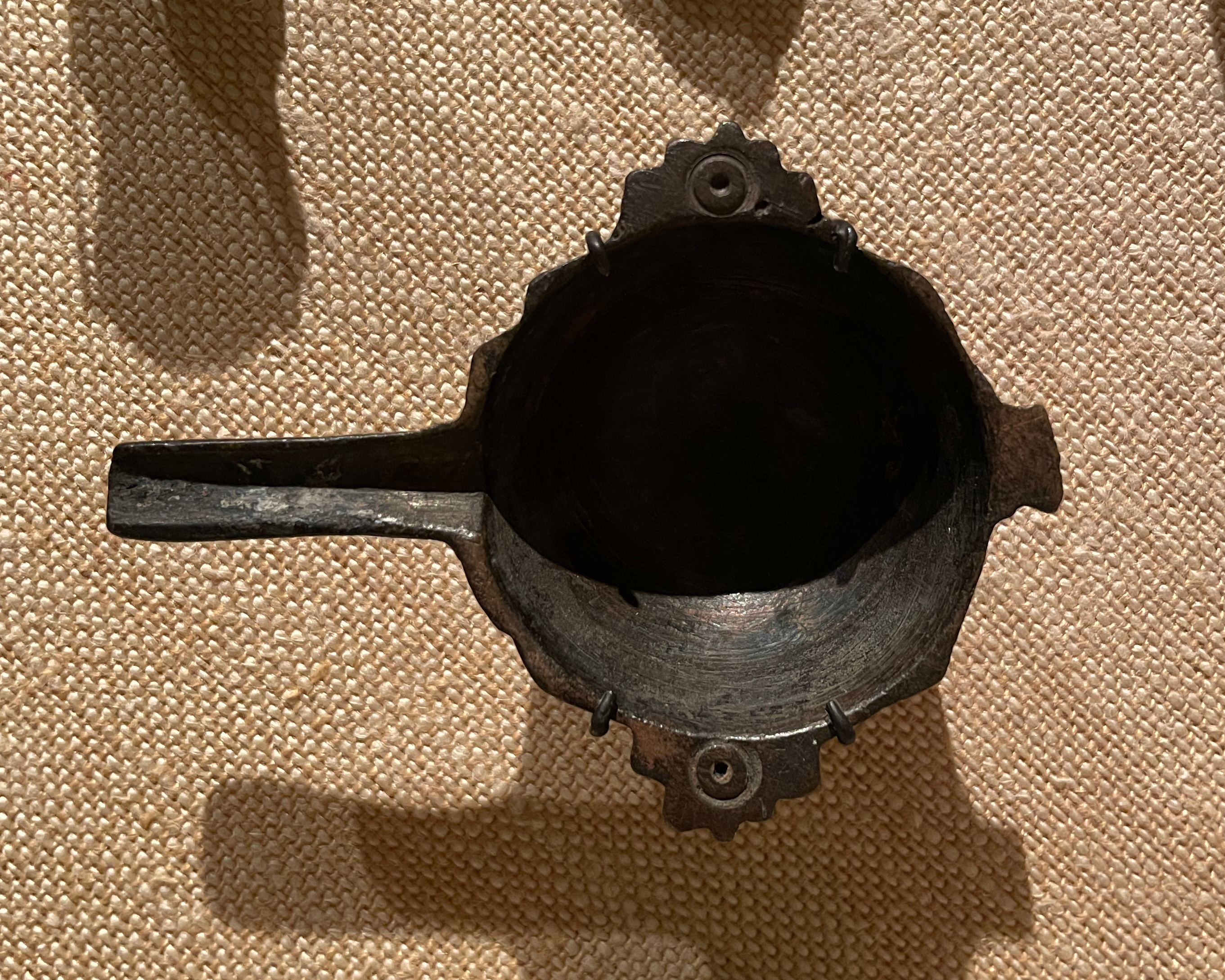
Heritage Analysis: The Bronze Mortar
The bronze mortar, an artifact of profound utility and symbolic resonance from ancient civilizations, stands as a testament to humanity’s earliest endeavors to transform raw materials into sustenance, medicine, and ritual objects. For Katherine Fashion Lab, this object offers a rich vein of heritage to be mined for high-end luxury strategy in 2026. The mortar is not merely a tool; it is a vessel of transformation, a symbol of alchemical power, and a bridge between the mundane and the sacred. This analysis will explore its symbolic power, historical adornment, spiritual meaning, and strategic application, drawing a critical correlation with our previous studies on the "Rock in the form of a fantastic mountain" and the "Jar in the shape of bronze container (hu)." These three objects, though seemingly disparate, reveal a unified narrative of material transcendence and cultural DNA that can inform a cohesive luxury brand identity.
Symbolic Power: The Alchemy of Creation
The bronze mortar embodies a dual symbolic power: it is both a weapon of destruction and an instrument of creation. In ancient civilizations, from the Zhou dynasty in China to the Mediterranean cultures, the mortar was used to crush grains, herbs, and minerals, transforming them into food, medicine, or pigments. This act of pulverization was seen as a microcosm of cosmic creation, where chaos is ordered into life. The mortar’s robust bronze construction—an alloy of copper and tin—further amplifies its symbolic weight. Bronze, in antiquity, was a metal of permanence and power, often reserved for ritual vessels and weapons. As noted in our analysis of the "Jar in the shape of bronze container (hu)," bronze objects were not merely functional but encoded with spiritual and political authority. The mortar, by extension, becomes a tool of mastery over nature, a symbol of the human capacity to harness elemental forces for transformation. For Katherine Fashion Lab, this symbolic power can be translated into a luxury narrative of "creative destruction"—the idea that true luxury emerges from the deliberate, artisanal reshaping of raw materials. In 2026, this could manifest in a collection that celebrates the process of making, where each piece carries the story of its own genesis through hammered, textured, or weathered bronze finishes, evoking the mortar’s enduring legacy.
Historical Adornment: From Utility to Ornament
The historical adornment of bronze mortars reveals a shift from pure utility to aesthetic significance. Early mortars were simple, undecorated vessels, but as civilizations advanced, they became canvases for artistic expression. In ancient China, mortars were often cast with intricate patterns—taotie masks, cloud scrolls, or geometric motifs—that mirrored the decorative language of ritual bronzes like the hu jar. This adornment served multiple purposes: it communicated status, invoked spiritual protection, and elevated the object from a kitchen tool to a ceremonial artifact. The "Rock in the form of a fantastic mountain," studied previously, shares this principle: a natural form is reimagined through human artistry, blurring the line between the organic and the crafted. Similarly, the bronze mortar’s adornment is not superficial but integral to its identity, a testament to the ancient belief that even the humblest tools deserve beauty. For Katherine Fashion Lab’s 2026 high-end strategy, this teaches us that luxury resides in the elevation of the everyday. A luxury accessory, such as a handbag or jewelry piece, can be designed with the mortar’s aesthetic DNA—robust, sculptural forms with engraved patterns that hint at ancient rituals. The adornment should not be merely decorative but symbolic, telling a story of transformation. For instance, a clutch bag with a hammered bronze clasp could reference the mortar’s textural surface, while a necklace with a pestle-shaped pendant evokes its functional counterpart. This approach positions the brand as a curator of heritage, where each piece is an artifact of timeless craftsmanship.
Spiritual Meaning: The Mortar as a Sacred Vessel
The spiritual meaning of the bronze mortar is deeply rooted in its role as a mediator between the material and the spiritual worlds. In many ancient traditions, the mortar was used in alchemical practices to prepare elixirs of immortality or ritual medicines. The act of grinding was seen as a metaphor for spiritual purification—breaking down the ego to reveal the soul’s essence. This aligns with the cosmological significance of the "Rock in the form of a fantastic mountain," which represented a microcosm of the sacred mountain, a bridge between earth and heaven. The bronze mortar, when used in ceremonies, became a vessel for this same bridging function. Its bronze material, associated with the element of metal in Chinese Five Phase theory, was believed to conduct spiritual energy, or qi, and its circular form symbolized the cycle of life, death, and rebirth. For Katherine Fashion Lab, this spiritual dimension offers a compelling narrative for 2026 luxury strategy: the brand can position itself as a purveyor of "objects of intention." Each product should be imbued with a sense of ritual and purpose, encouraging the wearer to engage in a personal transformation. For example, a perfume bottle shaped like a mortar could symbolize the alchemy of scent, while a bronze bracelet could be marketed as a talisman for inner strength. The spiritual meaning must be communicated through storytelling—in campaign imagery, packaging, and in-store experiences—that invites the consumer to participate in an ancient ritual of self-renewal. This taps into the growing luxury market for mindfulness and authenticity, where consumers seek products that offer more than aesthetic pleasure but a deeper connection to heritage and self.
2026 High-End Luxury Strategy: DNA Correlation and Brand Cohesion
The strategic application of the bronze mortar’s heritage for Katherine Fashion Lab in 2026 requires a synthesis of the symbolic, historical, and spiritual insights with the DNA uncovered in our prior studies. The "Rock in the form of a fantastic mountain" and the "Jar in the shape of bronze container (hu)" initially appear divergent—one an organic, fantastical form, the other a rigid, ritualistic vessel. Yet, both reveal a core cultural principle: the transformation of material into meaning. The rock reimagines nature through artifice; the hu jar codifies spiritual power through geometry. The bronze mortar sits at the intersection of these two: it is a tool of practical transformation (like the rock’s reshaping of landscape) and a vessel of ritual significance (like the hu jar’s containment of offerings). This tripartite correlation forms a coherent heritage DNA for the brand: transformation through material mastery. For 2026, Katherine Fashion Lab should launch a "Heritage of Alchemy" collection that draws from all three artifacts. The collection could include:
- Structural pieces that mimic the mortar’s robust, cylindrical form, such as sculptural handbags with bronze hardware.
- Ornamental details inspired by the hu jar’s geometric patterns, applied as embossing on leather or metal.
- Organic textures reminiscent of the fantastic rock, achieved through irregular, hand-finished surfaces on accessories.
The color palette should evoke bronze’s patina—deep greens, ochres, and burnished golds—while materials should include genuine bronze alloys, oxidized metals, and leathers treated with natural dyes. The brand’s marketing narrative should emphasize the "alchemy of luxury," where each piece is a result of a transformative process, much like the mortar’s grinding action. This strategy positions Katherine Fashion Lab not as a trend follower but as a heritage curator, appealing to discerning consumers who value cultural depth and artisanal integrity. By weaving the mortar’s story into a broader heritage tapestry, the brand can achieve a distinctive voice in the crowded 2026 luxury market, one that resonates with timelessness, power, and spiritual resonance. The bronze mortar, once a humble tool, thus becomes a cornerstone of a luxury philosophy that celebrates the enduring human desire to create meaning from matter.