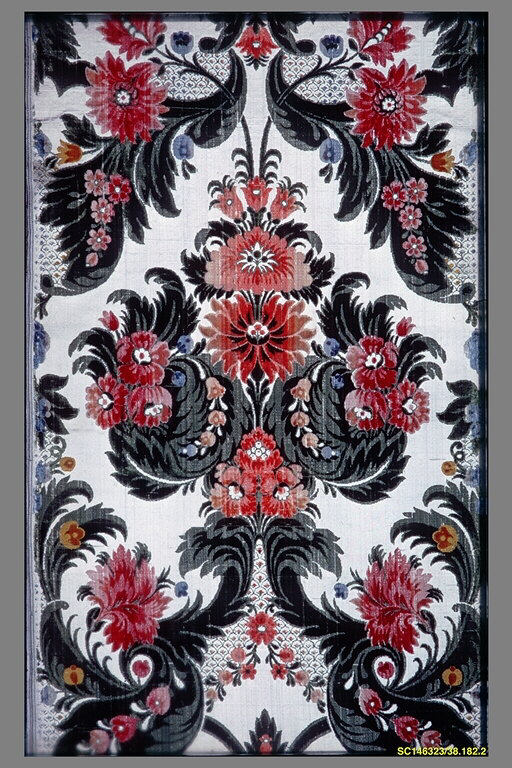
Deconstructing the Silk Standard: A Standalone Study in Global Patrimony
In the rarefied atmosphere of haute couture, where narrative and craftsmanship converge, a single piece is never merely an object; it is a thesis. This standalone study from Katherine Fashion Lab, crafted from the primordial luxury of silk, presents itself as such—a deliberate, focused proposition. Eschewing the context of a collection, it operates as a singular, potent artifact, compelling us to examine silk not as a mere material but as a vessel of global heritage. The piece becomes a laboratory for exploring how a fiber, with its origins shrouded in ancient Sino-centric myth, can be re-contextualized to speak a polyphonic language of shared human ingenuity and cross-continental dialogue.
The Material as Historical Palimpsest
To engage with this piece is to first engage with the profound biography of silk itself. For millennia, its production was a fiercely guarded secret, a form of geopolitical capital that defined the Silk Road and, by extension, the early networks of global exchange. The very substance is a palimpsest of history: it carries the imprint of Chinese emperors, Byzantine opulence, and Renaissance Florentine banking power. Katherine Fashion Lab’s approach acknowledges this weighty lineage but refuses to be subsumed by a singular, orientalist narrative. Instead, the cut and construction of the piece perform an act of scholarly re-interpretation. The silk is treated not as a relic but as a living text. The hand of the couturier becomes that of a curator, selecting techniques—perhaps a subtle allusion to Japanese shibori resist-dyeing juxtaposed with the architectural precision of a Parisian coupe—that inscribe new meaning onto the historic fiber. This creates a dialogue between heritage and innovation, where the past is not copied but cited and expanded upon.
Form and Philosophy: The Standalone as Argument
The decision to present this as a standalone study is a critical, strategic one. Liberated from the thematic constraints of a seasonal collection, the piece makes a philosophical argument about fashion’s capacity for deep, object-based meditation. Its form follows a logic of essentialism and complexity. The silhouette may appear deceptively simple—a column, a draped form, a structured sheath—allowing the material’s behavior and the intricacy of its manipulation to command attention. Every seam, dart, and fold is elevated to the level of rhetoric. We might observe a hyper-engineered internal architecture, typically reserved for woolens or technical fabrics, applied here to silk, challenging its perceived delicacy. This subversion is the core of the Lab’s methodology: it interrogates material assumptions through couture’s most rigorous technical grammar. The piece asks, "What histories are woven into this thread?" and simultaneously, "What future expressions can it be forced to articulate?"
Global Techniques in Concert
The true manifestation of "Global Heritage" lies in the synthesis of techniques that transcend their points of origin. This silk piece serves as a neutral ground—or rather, a highly charged diplomatic venue—for these encounters. Imagine a foundation of Italian jacquard weaving, depicting a pattern that abstracts both Celtic knots and Mughal jali (perforated stone screen) work. Upon this ground, French broderie might be applied, but using a variation of Indian zardozi (metallic thread embroidery) executed with the microscopic precision of Swiss lunéville hook embroidery. The hand-pleating could reference the crisp, geometric forms of Korean hanbok or the fluid, organic drapery of ancient Hellenistic sculpture. The Lab’s mastery is not in mere appropriation but in seamless, respectful integration. These techniques converse, creating a material dialect that is entirely new yet eerily familiar, a sartorial echo of the creolized cultures born from centuries of trade, migration, and exchange. The silk becomes the common tongue, its inherent luster and dye affinity unifying the diverse artistic signatures.
Cultural Capital and the Future of Couture
Ultimately, this standalone study is a profound commentary on cultural capital in the 21st century. In an industry often critiqued for superficial cultural borrowing, Katherine Fashion Lab posits a model of deep engagement. The piece operates on a principle of heritage as a shared, renewable resource, not a static commodity to be owned. By divorcing these global techniques from their expected cultural outputs and recombining them on the foundational medium of silk, the Lab argues for a couture that is intellectually rigorous and ethically considerate. It suggests that the future of true luxury lies not in novelty for its own sake, but in the expert, alchemical recombination of humanity’s finest artistic achievements. The silk is the constant, the eternal, while the applied human artistry is the variable, the evolving narrative.
Conclusion: The Artifact as Archive
This piece, in its splendid isolation, resists easy consumption. It is not a "look" to be worn and discarded by trends, but an artifact to be studied, an archive in three dimensions. It demonstrates that couture, at its highest potential, is a form of material philosophy. Through the exclusive medium of silk and the inclusive framework of global heritage, Katherine Fashion Lab has crafted a powerful statement. The piece asserts that our shared histories are woven from countless threads, and that by understanding and recombining these threads with intention and mastery, we can create objects that speak not of one time or one place, but of the enduring, interconnected, and beautiful complexity of human creation. It stands as a testament to the idea that the most forward-looking creation is often achieved through the most thoughtful engagement with the past.