Heritage Analysis: The Gold Boss (Appliqué) of Iran – A Study in Symbolic Power, Historical Adornment, and Spiritual Meaning
Introduction to the Artifact
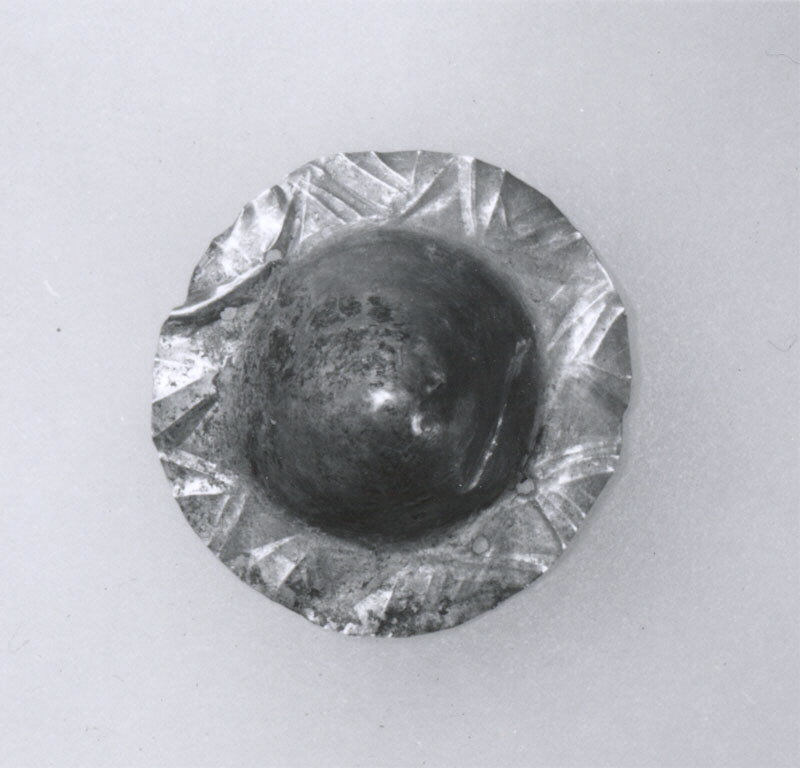
The gold boss, or appliqué, from ancient Iran represents a pinnacle of metallurgical artistry and cultural symbolism. Typically crafted from hammered sheet gold, these circular or oval ornaments were sewn onto ceremonial garments, horse trappings, or royal regalia. Their function transcended mere decoration: they served as markers of divine authority, social hierarchy, and spiritual protection. For Katherine Fashion Lab, understanding the boss’s layered heritage offers a profound DNA correlation with our ongoing study of the “Mirror with Split-Lea”—a dual-sided artifact that juxtaposes a polished silver mirror adorned with intricate gold palmettes against a stone sarcophagus narrating life through relief. This parallel reveals how surface ornamentation and underlying narrative converge in Iranian luxury objects.
Symbolic Power: The Boss as an Emblem of Sovereignty
In pre-Islamic Iran, particularly during the Achaemenid (550–330 BCE) and Sassanian (224–651 CE) empires, gold bosses were imbued with political and cosmic authority. The circular form echoed the sun and the celestial dome, linking the wearer to the divine order. Kings and high priests adorned their garments with rows of gold appliqués, each embossed with motifs such as the winged lion, the rosette, or the palm leaf—symbols of royal power, fertility, and victory. The boss was not merely a fastener but a visual declaration of the ruler’s role as the intermediary between heaven and earth. This aligns with the “Mirror with Split-Lea” study, where the silver mirror’s reflective surface, inlaid with gold palmettes, similarly asserts the owner’s ability to command light and truth. Both objects use gold to project an aura of invincibility and divine favor.
Historical Adornment: Craftsmanship and Social Hierarchy
The production of gold bosses required extraordinary skill. Artisans employed techniques such as repoussé (hammering from the reverse side) and chasing (detailed surface engraving) to create high-relief patterns. The gold was often alloyed with copper or silver to enhance durability, then polished to a radiant sheen. These bosses were sewn onto fabrics using small perforations along their edges, allowing them to catch light with every movement. In Sassanian court attire, rows of bosses adorned the kamarband (belt), the hem of the qaba (coat), and the crown. The density and size of the appliqués directly correlated with the wearer’s rank: a king might wear a belt with twenty large gold bosses, while a nobleman would wear fewer, smaller ones. This hierarchical codification mirrors the “Mirror with Split-Lea” sarcophagus, where the depth of relief and the density of narrative scenes indicate the status of the deceased. In both cases, ornamentation becomes a language of social differentiation.
Spiritual Meaning: Protection and Cosmic Connection
Beyond political symbolism, gold bosses held profound spiritual significance. In Zoroastrian cosmology, gold was considered a pure, incorruptible metal associated with the divine fire and the sun god Mithra. The circular boss was often interpreted as a sun disk or a protective amulet, warding off evil spirits and ensuring the wearer’s safe passage through life and death. Some bosses were inscribed with prayers or symbols of the Faravahar (the winged guardian spirit). When sewn onto funerary garments, they guided the soul in the afterlife. This protective function parallels the “Mirror with Split-Lea” sarcophagus, where the stone relief tells the life story of the deceased while the mirror side reflects the soul’s eternal light. Both artifacts use gold—whether as applied bosses or inlaid leaf—to bridge the material and spiritual realms.
DNA Correlation with the “Mirror with Split-Lea” Study
Our research at Katherine Fashion Lab has identified a structural and symbolic resonance between the gold boss and the “Mirror with Split-Lea”. The mirror’s dual nature—one side polished silver with gold palmettes (surface beauty, reflection, and light), the other side a stone sarcophagus with relief (narrative, memory, and mortality)—mirrors the boss’s dual function as both decorative appliqué and spiritual talisman. Just as the boss’s gold surface catches the eye while its circular form invokes cosmic order, the mirror’s gold leaf catches light while its silver base reflects the viewer’s own image, creating a dialogue between self and cosmos. The sarcophagus side, like the boss’s protective role, grounds the object in mortal reality and spiritual journey. This DNA correlation suggests that Iranian luxury objects consistently employ contrasting materials and surfaces to convey layered meanings—a principle that can inform high-end design strategies.
2026 High-End Luxury Strategy for Katherine Fashion Lab
Leveraging the heritage of the Iranian gold boss, Katherine Fashion Lab can develop a 2026 luxury collection that reinterprets this ancient adornment for the contemporary elite. The strategy should focus on three pillars:
1. Symbolic Power through Material Storytelling. Design pieces that integrate circular gold appliqués onto modern silhouettes—such as evening gowns, structured blazers, or leather accessories. Each boss should be embossed with a signature motif (e.g., a stylized palm leaf or winged lion) that references the wearer’s personal narrative. The gold can be 24-karat or high-karat alloys, with a matte-burnished finish to evoke ancient authenticity. This aligns with the “Mirror with Split-Lea” principle of using gold to assert authority and divine favor.
2. Historical Adornment as a Marker of Exclusivity. Introduce a bespoke hierarchy system where clients commission bosses based on their social or spiritual aspirations. For example, a “Sovereign” tier might feature seven large bosses on a belt or cape, while a “Guardian” tier uses five smaller ones. Each piece would be handcrafted by master goldsmiths, with a certificate detailing the motif’s historical meaning. This mirrors the Sassanian practice of using boss density to indicate rank, and the sarcophagus side of the “Mirror with Split-Lea” where narrative depth signals status.
3. Spiritual Meaning and Protective Luxury. Collaborate with contemporary Zoroastrian scholars or spiritual advisors to embed hidden inscriptions or protective symbols on the reverse of each boss. These could be laser-engraved prayers or the Faravahar motif, visible only to the wearer. The collection could be marketed as “Armor for the Soul,” emphasizing the boss’s ancient role as a talisman. This taps into the growing demand for meaningful luxury that connects the material with the spiritual, as seen in the “Mirror with Split-Lea” where the mirror side reflects light and the sarcophagus side tells a life story.
Conclusion
The Iranian gold boss is far more than a decorative ornament; it is a convergence of political power, social identity, and spiritual protection. Its DNA correlation with the “Mirror with Split-Lea” reveals a consistent Iranian aesthetic: the use of contrasting surfaces (gold vs. silver, polished vs. relief) to convey dualities of life and death, light and shadow, surface and depth. For Katherine Fashion Lab, this heritage provides a rich foundation for a 2026 luxury strategy that honors ancient craftsmanship while addressing contemporary desires for exclusivity, narrative, and spiritual resonance. By reimagining the boss as a modern talisman, we can create objects that are not only beautiful but also deeply meaningful—a true reflection of the wearer’s soul.