Heritage Analysis: The Stag Belt Buckle of the Caucasus
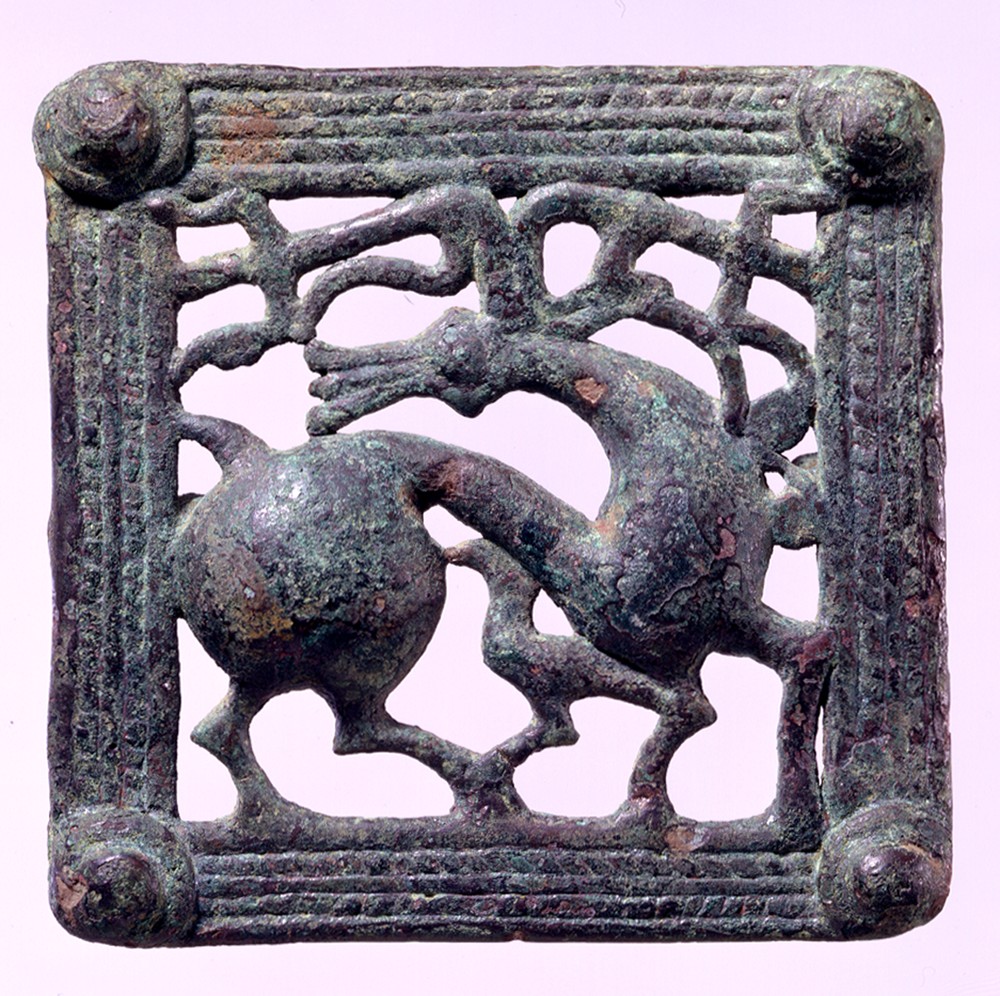
This strategic heritage analysis examines a bronze or brass belt buckle originating from the cultural crossroads of Southern Ossetia, Georgia, and the northern Caucasus region of Russia. As a Lead Heritage Curator for Katherine Fashion Lab, the objective is to decode the symbolic power, historical adornment practices, and spiritual meanings embedded within this artifact, and to translate these insights into a coherent 2026 high-end luxury strategy. The stag motif, rendered in durable metal, serves not merely as decoration but as a profound emblem of status, cosmology, and identity within a fiercely independent mountainous society.
Symbolic Power of the Stag Motif
Cosmological and Mythological Significance
In the animistic and warrior traditions of the Caucasus, the stag (sag in Ossetian) holds a position of supreme symbolic authority. It is not a passive creature but a celestial intermediary. The stag’s antlers, which are shed and regrown annually, represent cyclical renewal, immortality, and the tree of life. In Ossetian Nart sagas—the epic folklore shared across the region—the stag is often a guide to the afterlife or a sacred beast that carries the sun on its antlers. For the wearer of this belt buckle, the stag signified a direct connection to divine forces, granting protection in battle and guidance in the spiritual journey. This is a power symbol rooted in natural observation, not abstract theology; the stag’s dominance over the forest and its seasonal rebirth made it a tangible metaphor for aristocratic lineage and enduring strength.
Social Hierarchy and Masculine Authority
The belt buckle itself, as a functional and decorative object, was a primary marker of male status across the Caucasus. Unlike jewelry worn by women, the belt buckle was a public declaration of a man’s position. A large, intricately cast bronze or brass buckle featuring a stag—often depicted in a dynamic, leaping or standing pose—indicated the wearer was a noble warrior, a hunt leader, or a clan elder. The stag’s antlers, with their sharp, branching points, also evoked weaponry and the hunter’s prowess. To wear a stag buckle was to claim mastery over nature and to signal that one’s authority was both temporal and spiritual. The metal itself—bronze or brass—was valuable, durable, and often imported, further reinforcing the wearer’s access to trade networks and material wealth.
Historical Adornment and Craftsmanship
Material and Technique
The medium of bronze or brass is critical to understanding the buckle’s heritage. These alloys were not chosen for their rarity alone but for their symbolic resonance. Bronze, an alloy of copper and tin, was associated with the ancient Koban culture (c. 1100–400 BCE), which flourished in the central Caucasus and produced some of the region’s most sophisticated metalwork. By the medieval and early modern periods, brass (copper and zinc) became more common, reflecting trade connections with the Islamic world. The casting technique—typically lost-wax casting—allowed for high relief and intricate detailing. The stag’s musculature, antler branching, and even the texture of its hide were rendered with precision. This was not mass production; each buckle was a unique commission, often made by a traveling smith who served multiple clans. The patina of age—a greenish or dark brown surface—is not a flaw but a testament to authenticity and the object’s long life as a heirloom.
Adornment as Identity
In Southern Ossetia and the northern Caucasus, the belt buckle was part of a complete ensemble of male attire: a long coat (cherkeska), a dagger (kinzhal), and a fur hat. The buckle was the focal point, often positioned at the center of the chest or waist. It was worn during ritual events, hunts, and feasts—moments when a man’s reputation was publicly performed. The stag motif, therefore, was not a private symbol but a public declaration of lineage and virtue. Historical accounts from Russian ethnographers in the 19th century note that a man without a proper belt buckle was considered “incomplete” or “unarmed” in a social sense. The buckle was a required accessory for any man seeking to participate in the council of elders or to lead a raid. This context elevates the object from mere ornament to a functional tool of social negotiation.
Spiritual Meaning and Protection
Amuletic Function
Beyond its social and cosmological roles, the stag belt buckle served a protective, amuletic function. In Ossetian folk belief, the stag’s antlers were thought to deflect evil spirits and the “evil eye.” The metal itself—bronze or brass—was considered a material that repelled malevolent forces. The buckle was often worn over the heart or solar plexus, aligning it with the body’s energy centers. The stag’s image acted as a guardian spirit, ensuring the wearer’s safe passage through dangerous territories—both physical (mountain passes, battlefields) and metaphysical (the journey of the soul after death). The buckle was not merely a symbol; it was an active agent in the wearer’s spiritual defense. This belief system is rooted in the region’s pre-Christian, pre-Islamic traditions, where animals were seen as co-inhabitants of a sacred landscape.
Ritual Use and Ancestral Connection
Some buckles were not worn daily but were reserved for specific rituals: weddings, funerals, and the annual harvest festival. In these contexts, the stag motif connected the living wearer to his ancestors. The buckle was often passed down through generations, accumulating spiritual power with each wearer. A buckle that had been carried by a grandfather in battle was considered especially potent. The stag’s image thus became a portable shrine, a tangible link to the clan’s history and its protective spirits. The act of fastening the buckle was itself a ritual, a moment of preparation for entering the sacred or the dangerous.
2026 High-End Luxury Strategy for Katherine Fashion Lab
Strategic Positioning: The "Primordial Power" Collection
For the 2026 season, Katherine Fashion Lab will position the stag belt buckle as the centerpiece of a collection titled "Primordial Power." The strategy is to move beyond mere reproduction and instead recontextualize the artifact’s symbolic DNA for a modern luxury audience. The target consumer is the discerning, culturally literate high-net-worth individual who seeks authenticity, narrative, and craftsmanship. The buckle will not be sold as a standalone accessory but as part of a curated narrative ecosystem that includes a limited-edition book, a documentary short film, and a private exhibition in a gallery space in London or Paris. The price point will be set at a premium (€8,000–€15,000), reflecting the object’s heritage, the use of ethically sourced metals, and the involvement of Georgian master smiths.
Design and Craftsmanship Protocol
The 2026 buckle will be produced using a hybrid technique: lost-wax casting for the base form, followed by hand-chasing and patination by artisans trained in the Ossetian tradition. Each buckle will be individually numbered and accompanied by a certificate of cultural provenance that traces the motif’s history from the Koban culture to the present. The stag will be rendered in a stylized, minimalist form—antlers elongated, body streamlined—to echo contemporary design sensibilities while preserving the original symbolic weight. The metal will be a custom alloy of antique bronze (92% copper, 8% tin) with a dark, matte patina achieved through a traditional sulfur-based process. The buckle’s reverse will be engraved with the wearer’s initials and the date of purchase, making each piece a personalized heirloom.
Marketing Narrative: The "Guardian" Archetype
The marketing campaign will center on the theme of "The Guardian." The stag buckle will be presented as a talisman for the modern leader—someone who navigates the complexities of global business, culture, and family with the same strength and vision as the Ossetian warrior. The narrative will emphasize protection, legacy, and renewal. Key copy points include: “Worn by those who carry the weight of their lineage,” and “A symbol of power that is earned, not claimed.” The campaign will feature portrait photography of contemporary male and female leaders (CEOs, artists, philanthropists) wearing the buckle with modern tailoring—a sharp suit, a cashmere coat, a silk dress. The stag becomes a unisex symbol, transcending its original masculine context to speak to a new generation of power.
Retail and Experience Strategy
The buckle will be launched through a by-appointment, private salon experience in Katherine Fashion Lab’s flagship stores in London, Paris, and Tokyo. Clients will be invited to a “Heritage Consultation” where a curator explains the artifact’s history, symbolism, and craftsmanship. The client will then select the metal finish (bronze, brass, or a palladium-coated version for a futuristic aesthetic) and the engraving. The experience will include a digital passport using blockchain technology, verifying the object’s provenance and the artisan’s identity. This strategy aligns with the luxury market’s shift toward experiential, narrative-driven consumption and away from mass-market logo saturation.
Long-Term Brand Equity
By anchoring the 2026 collection in the stag belt buckle, Katherine Fashion Lab establishes itself as a custodian of cultural heritage, not merely a fashion house. This creates a defensible brand moat: competitors cannot easily replicate the depth of research, the artisan relationships, or the spiritual narrative. The stag motif can be extended into other categories—leather goods, jewelry, home objects—while maintaining its core symbolic integrity. The ultimate goal is to position Katherine Fashion Lab as the preeminent interpreter of Eurasian adornment traditions for the 21st-century luxury consumer, a brand that offers not just products but portable meaning.
Conclusion
The bronze or brass belt buckle with a stag from Southern Ossetia, Georgia, and the northern Caucasus is far more than a decorative artifact. It is a compressed universe of cosmological belief, social hierarchy, spiritual protection, and masterful craft. For Katherine Fashion Lab, this object offers a rare opportunity to create a luxury product that is both historically grounded and conceptually forward-looking. The 2026 strategy